As our dependence on tech keeps growing, Ups Batteries are becoming more and more crucial for keeping the lights on and ensuring everything runs smoothly. I came across a report from MarketsandMarkets that predicts the global market for UPS batteries will hit around $12.34 billion by 2026—that’s a huge jump! It really shows how much people are needing reliable backup power, especially in vital sectors like healthcare and telecom.
Choosing the right ups battery isn’t always a walk in the park, though. There are so many options out there, and not all of them deliver the same performance or last as long. For example, if you’re working with a telecom system, a 2V UPS battery is often a solid pick because it tends to be more stable and durable—something worth considering. When shopping around, you'd want to look at things like capacity, how it’s built, and how much upkeep it might need.
Thinking back on past experiences can really help when trying to find a dependable power backup. Some companies have had trouble with batteries failing when they needed them most, which is definitely a headache. By understanding these kinds of issues, we can make smarter choices down the line and keep our operations running smoothly no matter what. At the end of the day, investing in a top-quality UPS battery is really about protecting your data and keeping those crucial services up and running—because, let’s face it, nobody wants to deal with unexpected outages.

Understanding UPS Systems and Their Importance for Power Backup
Uninterruptible Power Supply (UPS) systems provide essential power backup in critical situations. They can prevent data loss and equipment damage during outages. According to the 2022 Global Energy Report, nearly 30% of businesses worldwide experience power interruptions. This percentage underscores the importance of having a reliable UPS system. Without it, even a brief power failure can lead to significant financial losses and operational disruptions.
UPS systems come in various types and capacities. For example, online UPS units offer continuous power, while line-interactive models are more cost-effective. Many users overlook the impact of battery maintenance. A UPS system with a well-maintained battery can last over five years. However, studies indicate that 20% of UPS failures are attributed to battery issues. This emphasizes the need for regular checks and replacements to ensure peak performance.
Another crucial aspect is estimating power needs accurately. Businesses often overestimate or underestimate their requirements. A survey from the Energy Information Administration shows that roughly 45% of small businesses are unsure of their power needs. This confusion can result in selecting inadequately sized UPS systems. Ensuring you have the right capacity is vital for dependable backup power.
Key Features to Consider When Choosing a UPS Battery
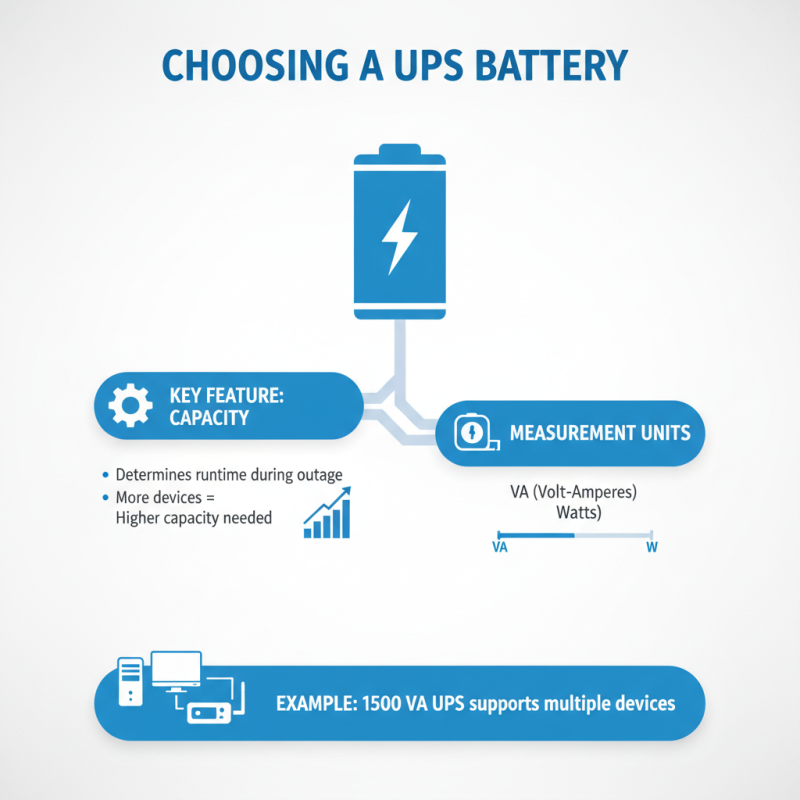
When choosing a ups battery, several key features matter. Capacity is critical. It determines how much power your devices can run during an outage. Typically, capacity is measured in VA (volt-amperes) or watts. A higher capacity allows more devices to be connected. For instance, a system with a 1500 VA UPS battery can support multiple devices reliably.
Runtime is another essential factor. This indicates how long the UPS can provide power. The average UPS can run anywhere from 5 to 30 minutes, depending on the load. Power management software often tracks these metrics. Such tools can help optimize your energy usage during critical moments.
Don't overlook battery type either. Most UPS batteries fall into two categories: lead-acid and lithium-ion. Lead-acid batteries are more commonly used, but they have a shorter lifespan, about 3 to 5 years. In contrast, lithium-ion alternatives last significantly longer, often exceeding 10 years. The choice here shapes your return on investment. Regular maintenance and awareness of battery age is vital, as neglect can lead to unexpected failures.
Top UPS Battery Brands and Their Popular Models in 2026
When it comes to UPS battery options in 2026, reliability is key. Each brand has unique features that cater to different needs. Some popular models are known for their long-lasting performance. Many users appreciate batteries that provide consistent power for essential devices. Others look for models that offer advanced technologies. Features such as fast recharging and energy efficiency are becoming increasingly important.
One significant area for improvement lies in battery lifespan. Users often wish for longer durations before replacements are needed. Some models struggle with this aspect, leading to user dissatisfaction. It's crucial to consider real-world usage and user feedback. Compatibility with various devices also comes into play. An optimal Ups Back Up Battery should support a range of electronics. This ensures seamless operation during outages.
Expectations for capacity and performance can be tricky. Many users experience pitfalls due to overestimating their power needs. Balancing cost with quality is vital. Some options appear cheaper upfront but may lead to higher long-term costs. Finding a UPS back up battery that meets specific requirements takes time and research. Always weigh the pros and cons before committing to a model.
Comparative Analysis of UPS Battery Types: Lead-Acid vs. Lithium-Ion
When choosing a UPS battery, the type can significantly impact performance. Lead-acid batteries are the traditional choice. They are often heavier and bulkier. However, they are generally more affordable. A downside is their shorter lifespan. They tend to require more maintenance.
On the other hand, lithium-ion batteries offer several advantages. They are lighter and more compact. Their lifespan is typically much longer. However, they come with a higher upfront cost. You might need to weigh these factors carefully.
**Tips:** Consider your power needs. If you have high power demands, a Smf Ups Battery might fit well. Always check the warranty details before purchasing. Researching other users' experiences can provide insights too. Choosing the right battery can make a big difference in reliability and cost over time.
Best Practices for Maintaining UPS Batteries for Longevity
Maintaining UPS batteries is essential for ensuring longevity and reliability. Regular checks can prevent unexpected failures. Start by inspecting connections; loose or corroded terminals can decrease efficiency. Cleaning the terminals with a cloth regularly can help maintain a solid connection.
Temperature plays a critical role in battery health. Keeping batteries in a cool, dry environment can enhance their lifespan. High temperatures can lead to overheating, which deteriorates battery performance.
Don't ignore warning signs, such as swelling or unusual noises. These can indicate deeper issues needing attention.
Also, testing battery performance periodically is vital. Use a multimeter to check voltage levels. A drop in voltage might suggest it's time for replacement. Remember, neglecting these practices can lead to bigger problems later. Battery life might seem long, but regular maintenance is key to sustaining reliable power.
User Reviews and Ratings: What Customers Say About Top UPS Batteries
When it comes to power backup, many users rely on UPS systems. Customer reviews provide valuable insights into the best options available. Users often prioritize durability and efficiency in their ratings. Most customers appreciate how reliable these UPS system batteries are during outages. They report feeling secure knowing their devices are protected.
Many users highlight specific features in their feedback. Some appreciate the compact design, which saves space. Others mention the ease of use and quick setup. However, complaints occasionally arise about noisy operation or insufficient runtime. Such feedback is crucial for potential buyers. It illustrates the need to weigh the pros and cons before purchasing.
Users recommend checking online reviews for detailed experiences. An informed choice can prevent dissatisfaction later. Overall, the opinions shared by real customers shed light on the performance of UPS system batteries. These insights are invaluable for selecting a reliable power backup solution.
Cost Considerations: Budgeting for a Reliable UPS Battery Solution
When budgeting for a reliable UPS battery solution, it's essential to evaluate your power needs. Consider how much equipment you want to protect. This includes computers, servers, and other critical devices. Calculate the total wattage required during an outage. This will give you an idea of the battery capacity you need.
Next, assess the costs. Reliable UPS batteries can range widely in price. A higher price often means better performance and longer life. However, some cheaper options might suffice for basic needs. Keep in mind that costs go beyond just purchase. Maintenance and replacement batteries can add to your expenses over time.
It's also vital to think about your environment. If you live in an area prone to outages, investing more upfront makes sense. Yet, if outages are rare, a basic model might meet your needs. Always analyze your situation and weigh your options carefully. This way, you can make an informed decision that balances budget against reliability.
Boosting Motorcycle Performance: Insights from Industry Reports on the 12N4-3B MHB Motorcycle Battery 12V 4AH
When it comes to enhancing motorcycle performance, selecting the right battery is crucial. The 12V 4AH motorcycle battery stands out as a reliable choice among riders seeking improved performance and longevity. This battery model features precision alloy plates that ensure stable power output, essential for maintaining the functionality of various motorcycle systems and boosting overall performance on the road.
The design of the 12N4-3B battery not only aids in delivering consistent energy but also contributes to a longer lifespan, which is vital for riders who rely on their motorcycles for both daily commutes and adventurous trips. The 4AH capacity offers an adequate charge for starting the engine and powering electrical components, providing assurance that the motorcycle will be ready to go at a moment’s notice. Investing in a quality battery such as this one can be a game-changer for motorcycle enthusiasts looking to optimize their ride.
FAQS
: The product enhances daily convenience. It offers improved effectiveness in daily tasks. Many users report increased satisfaction and efficiency.
Following the instructions is crucial for success. Many users find a routine helps. Consistency leads to better outcomes.
Some users experience minor difficulties initially. Adjusting to the product may take time. Patience is important while learning.
Results can vary for each user. Many notice improvements within a few weeks. Others may need more time to adapt.
While many benefit, not everyone may find it suitable. Individual preferences and needs differ. It’s wise to assess your own situation.
Troubleshooting is often effective. Review instructions carefully for guidance. If issues persist, consider seeking support for clarity.
Conclusion
In 2026, selecting the right UPS battery is crucial for ensuring a reliable power backup system. Understanding UPS systems and their significance can help users make informed decisions. Key features such as capacity, efficiency, and runtime should be considered when choosing a UPS battery. The comparative analysis of battery types, notably lead-acid vs. lithium-ion, highlights differences in performance and maintenance needs.
To extend the life of UPS batteries, following best practices for maintenance is essential. User reviews shed light on the experiences of customers with various UPS batteries, offering valuable insights into their reliability. Finally, cost considerations play a critical role in budgeting for a UPS battery solution, guiding users to balance quality and affordability effectively.