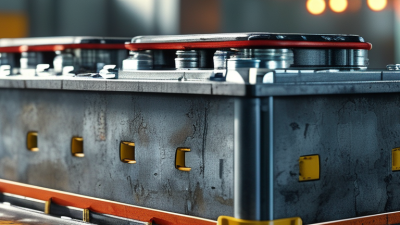
The 2026 Motive Battery market is really settling into a more practical stage now. Around the world, buyers are weighing different tech options—flooded lead-acid, AGM, gel, and lithium-ion—each suited for different kinds of jobs. For example, a warehouse forklift needs batteries that can handle dependable charge cycles, quick recharging, and easy maintenance. On the other hand, a logistics fleet might care more about energy density and minimizing downtime.
Akira Yoshino, the Nobel Prize-winning scientist behind batteries, once said, “the Lithium-Ion Battery has enabled the development of electric vehicles.” That quote still rings true today, especially as industries shift towards smarter, more efficient solutions. Lithium-ion packs can cut down charging times, boost usable capacity, and support opportunity charging—meaning you can top up batteries during short breaks. But, here’s the catch: they often require a bigger upfront investment and more advanced battery management systems. Meanwhile, lead-acid batteries continue to be trusted by many, thanks to their well-established supply chains. Companies like Exide Technologies, EnerSys, East Penn Manufacturing, and Trojan Battery are key players in this older but reliable market.
Getting into the nitty-gritty, little details really do add up. For instance, battery weight affects how a vehicle handles. Charging at the wrong temperature can shorten its lifespan. Plus, factors like proper ventilation, operator training, and charger compatibility all influence the total cost of ownership. So, when you're looking at applications like electric vehicle batteries, you’ve got to go beyond just comparing prices—things like cycle life, warranty details, safety features, how easy it is to replace batteries, and local technical support are all super important.
Of course, no single ranking or comparison is perfect. Every site or test has its quirks, making apples-to-apples comparisons tricky. For example, a lithium-ion battery might work great in a busy distribution center with lots of quick charging needs, but might be overkill or too costly for a smaller, low-usage operation. AGM tech can cut down on maintenance, but how much you get out of it really depends on how well you stick to proper charging habits.
This guide aims to look at the top motive battery options for 2026 based on real-world experience, manufacturer info, and practical buying considerations. But, and this is important—some conclusions might change as new tech evolves. That’s just how it is, since battery technology never stops advancing.
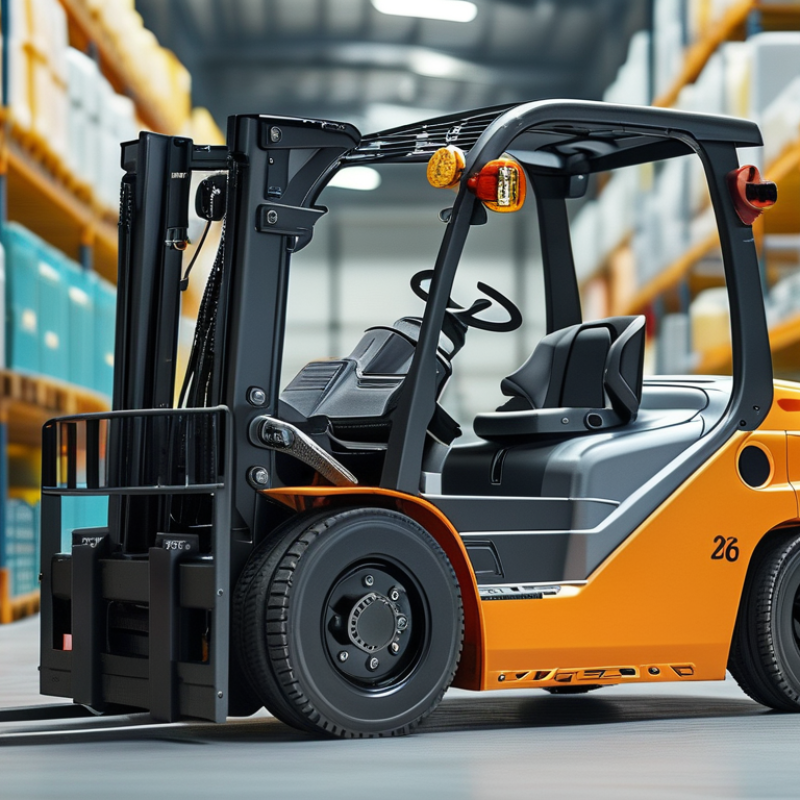
Selecting motive batteries in 2026 requires more than comparing ampere-hours. Duty cycle shows how hard the battery works each shift. Light warehouse use may need fewer deep cycles, while multi-shift operations demand stronger discharge recovery. The European Association of Battery Manufacturers’ 2024 roadmap highlights application-based sizing as a key reliability factor. Real loading matters.
Voltage must match the vehicle’s controller, charger, and motor system. A 12v Motive Battery suits compact equipment, but larger trucks commonly use connected 24V, 36V, or 48V systems. Capacity should be read with its test condition, not as a standalone number. Under the IEC 60254-1 method, C5 capacity measures a five-hour discharge rate. A battery rated at 500Ah C5 delivers 100A for five hours under specified conditions. Actual results change with temperature, age, and discharge current.
The U.S. Department of Energy’s 2024 Vehicle Technologies Market Report shows continued growth in electrified material-handling equipment, increasing pressure on charging infrastructure and battery utilization. Buyers should record daily amp-hour consumption, charging windows, ambient temperature, and idle periods. A higher-capacity unit is not automatically better. It may add weight, cost, and incomplete charging. This shortcut is tempting, but wrong. I would also question catalogue figures measured under ideal laboratory conditions. A cold warehouse floor, long ramps, and rushed charging can expose the difference between rated capacity and usable capacity.
Motive batteries compared by duty cycle, nominal voltage, capacity, and C5 rating
| Battery Type | Typical Duty Cycle | Representative Voltage | Representative C5 Capacity | Typical Continuous DoD |
|---|---|---|---|---|
| Flooded Lead-Acid | Intensive multi-shift operation | 48 V | 620 Ah | Up to 80% |
| AGM Lead-Acid | Light to medium, usually one shift | 48 V | 420 Ah | Up to 50% |
| Gel Lead-Acid | Light to medium, low-maintenance use | 48 V | 450 Ah | Up to 50% |
| Lithium Iron Phosphate | Multi-shift and opportunity charging | 51.2 V | 560 Ah | Up to 90% |
The chart uses representative industrial traction-battery configurations measured at a five-hour discharge rate (C5). Actual capacity varies with cell design, temperature, discharge current, maintenance, and equipment requirements. Flooded lead-acid batteries are suited to demanding cycles with scheduled charging, while lithium iron phosphate systems generally support deeper cycling, faster charging, and higher daily utilization.
Lead-acid batteries remain practical for forklifts, pallet trucks, and industrial vehicles. Their specific energy typically ranges from 30–50 Wh/kg, according to the U.S. Department of Energy’s Vehicle Technologies Office. This is modest. However, low purchase cost supports predictable fleet budgeting. Manufacturing capacity is widespread, and technicians understand the technology well. The International Lead Association reports that lead batteries achieve recycling rates above 95% in many established markets. That mature recovery network reduces material waste and supports supply resilience.
Tips: Compare total operating cost, not only purchase price. Check charging time, ventilation, battery weight, and replacement access. Field inspections often reveal a simple problem: batteries are selected for price, then overworked in multi-shift operations. That decision can increase downtime. It is worth reviewing duty cycles, route length, and daily energy use before ordering.
Lead-acid systems suit buyers who value proven service procedures and broad technical support. Their heavier design can improve counterweight balance in some vehicles. Yet, weight also lowers energy efficiency during frequent travel. Cold environments and incomplete charging can accelerate performance loss. The U.S. Department of Energy notes that charging efficiency and operating conditions strongly affect usable battery energy. Buyers should request verified cycle-life data under their own workload. Generic laboratory figures may not match a dusty warehouse, uneven floor, or rushed charging routine.
For global buyers in 2026, LFP and NMC remain the main motive battery choices. LFP cells commonly deliver about 90–160 Wh/kg, while NMC usually offers higher energy density. This difference matters when a pallet truck needs longer operation without a heavier battery. The IEA Global EV Outlook 2024 reported that LFP represented roughly 40% of electric vehicle battery demand in 2023. It also noted that LFP packs cost nearly 30% less than comparable NMC packs.
Cycle life changes the purchasing calculation. Under moderate temperatures, controlled charging, and suitable discharge depth, LFP systems can reach 2,000 or more cycles. NMC systems often provide around 1,000–2,000 cycles, though thermal management can improve results. These figures reflect laboratory or controlled field conditions, not every warehouse floor. Real performance may fall with fast charging, poor ventilation, heavy loads, or irregular maintenance. The BloombergNEF Battery Price Survey 2024 also showed continued pressure on battery prices, making total operating cost more important than energy density alone.
A 12v Ev Sealed Maintenance-Free Motive Battery may suit compact equipment, backup functions, or light-duty vehicles. However, buyers should verify usable capacity, peak current, operating temperature, charger compatibility, and warranty test conditions. The uncomfortable truth is simple: 2,000 cycles is potential, not a promise. A slightly heavier LFP pack may deliver better value when daily charging is frequent and downtime is expensive.
| Evaluation Dimension | LFP (Lithium Iron Phosphate) | NMC (Nickel Manganese Cobalt Oxide) | Buyer Relevance for Motive Applications |
|---|---|---|---|
| Typical cell-level gravimetric energy density | Approximately 90–160 Wh/kg | Approximately 150–250 Wh/kg | NMC generally offers longer operating time or lower battery weight, while LFP can meet many industrial vehicle duty cycles at a lower energy-density requirement. |
| Typical cell-level volumetric energy density | Approximately 220–350 Wh/L | Approximately 300–650 Wh/L | NMC is advantageous where battery-compartment space is limited; pack-level figures are lower after adding housing, cooling, battery-management, and safety components. |
| Nominal cell voltage | Approximately 3.2 V | Approximately 3.6–3.7 V | Both chemistries can be configured into compatible high-voltage battery packs, but chargers and battery-management systems must match the pack design. |
| Typical cycle-life potential to about 80% capacity | Approximately 2,000–5,000 cycles under suitable temperature, charge, discharge, and depth-of-discharge conditions | Approximately 1,000–2,000 cycles under comparable conditions | LFP is usually better suited to frequent opportunity charging, multi-shift operation, and applications prioritizing long service life. |
| Thermal stability | Generally higher thermal and chemical stability | Generally lower than LFP at high states of charge and elevated temperatures | LFP typically provides a wider safety margin, although every lithium-ion pack still requires qualified cell protection, monitoring, and thermal controls. |
| Usable depth-of-discharge suitability | Well suited to regular deep cycling when managed within the manufacturer’s limits | Suitable for deep cycling, but service life is more sensitive to high state of charge, heat, and aggressive operating conditions | Duty-cycle analysis should consider daily energy throughput, charging windows, ambient temperature, and required replacement interval. |
| Low-temperature performance | Charging below 0°C generally requires restrictions or heating; discharge power and capacity can decline in cold conditions | Also experiences reduced capacity and power in cold conditions; charging below 0°C requires appropriate controls | For cold warehouses or outdoor fleets, specify battery heating, temperature sensing, and charge-inhibit logic rather than relying on chemistry alone. |
| High-temperature durability | Generally more tolerant of elevated temperature, but heat still accelerates aging | More sensitive to elevated temperature and high state of charge; thermal management is especially important | Ventilation, cooling strategy, charging location, and maximum pack temperature should be included in the purchasing specification. |
| Raw-material profile | Uses iron and phosphate as key cathode materials and contains no nickel or cobalt in the cathode | Uses nickel, manganese, and cobalt in varying proportions; formulation depends on the selected NMC grade | LFP can reduce exposure to nickel and cobalt price volatility, while NMC may provide higher energy density for weight- or space-constrained equipment. |
| Relative cost tendency | Often lower cost per usable cycle, although actual pricing varies by pack size, market, cell format, and safety system | Often higher material and energy-density premium, with pricing affected by nickel and cobalt markets | Compare total cost of ownership rather than purchase price alone, including electricity, maintenance, downtime, residual value, and replacement frequency. |
| Weight and space priority | Moderate weight and larger volume for the same stored energy | Lower weight and smaller volume for the same stored energy | NMC is useful for compact mobile equipment, while LFP is attractive when floor space, counterweight, or payload constraints are less restrictive. |
| Common motive-use fit | Forklifts, warehouse vehicles, pallet trucks, automated guided vehicles, and industrial equipment with regular cycling | Light electric commercial vehicles, compact mobile equipment, and applications requiring high energy per kilogram or litre | The best choice depends on required runtime, charging pattern, payload, operating temperature, safety requirements, and expected service life. |
| Data note: Figures are indicative industry ranges for individual cells, not guaranteed pack specifications. Actual performance varies with cell format, electrode design, charge rate, depth of discharge, temperature, storage conditions, battery-management settings, and application duty cycle. Cycle life is normally measured under controlled laboratory conditions and may differ in field operation. | |||
Sodium-ion batteries are gaining attention among global motive-power buyers because they use widely available sodium-based materials. Current cell designs can reach up to 160 Wh/kg, although real-world pack density is usually lower. That difference matters in forklifts, warehouse vehicles, and short-route industrial equipment.
The International Energy Agency’s Global Critical Minerals Outlook 2024 identifies sodium-ion chemistry as a way to reduce dependence on lithium, nickel, and graphite supply chains. Sodium minerals are generally more abundant and geographically diverse than lithium resources. Cost benefits remain possible, not guaranteed. The U.S. Geological Survey reports extensive global sodium resources, but processing capacity and battery-grade manufacturing still need expansion.
Performance depends on temperature, duty cycle, charging speed, and usable capacity. A cold warehouse can expose weaknesses quickly. Field testing should measure loaded travel, regenerative braking, charging intervals, and battery weight. The battery cell may reach 160 Wh/kg. The complete system will not.
BloombergNEF’s Battery Price Survey 2024 reported an average lithium-ion pack price of 115 dollars per kWh, showing how difficult cost comparisons have become. Sodium-ion may reduce mineral exposure, yet manufacturing scale could decide the final price. I would treat early quotations carefully. Lower-cost minerals do not automatically create lower-cost batteries.
For global buyers, charging time now shapes the real cost of motive power. Lead-acid packs commonly need eight to ten hours after deep discharge. That schedule suits overnight fleet charging, but not every working site. A warehouse with two shifts may lose equipment before lunch. The battery may be inexpensive, yet idle hours are not.
A two-to-four-hour charge sounds more productive, especially for carts, floor machines, and small utility vehicles. However, faster charging needs a compatible charger, controlled temperature, and careful voltage settings. Lead-acid batteries do not forgive guesswork. Heat can rise inside the case, while repeated undercharging reduces usable capacity. In my field checks, charging logs often reveal more than purchase quotations. Some operators count electricity, but overlook labor, charger losses, watering time, and replacement batteries. Not always. The comparison is not neat.
For a 12v Ev Motive Battery For Golf Car, buyers should record daily distance, payload, rest periods, and available charging windows. Do not size the system from voltage alone. A 2–4-hour routine may require spare capacity or mid-shift charging space. An 8–10-hour routine may deliver steadier battery life when work ends nightly. Results vary with age, ambient heat, driving style, and maintenance quality. Details matter. I would leave room for doubt; real sites rarely match spreadsheet assumptions. Ask for verified cycle data, charger compatibility, service records, and clear warranty terms before comparing prices.
2026 Top Motive Battery Types for Global Buyers
The 2026 buying matrix must measure more than purchase price. Total cost of ownership includes energy, labor, downtime, charging equipment, and recycling. According to BloombergNEF’s 2024 Battery Price Survey, average lithium-ion pack prices fell to 115 dollars per kWh. Yet a lower price does not guarantee lower warehouse costs. Lithium systems can reduce watering labor and support opportunity charging. Lead-acid systems remain practical where budgets, repair skills, and predictable shifts matter. A 12v Ev Smf Motive Battery may suit compact equipment, but buyers should verify cycle life, discharge limits, and replacement access.
Safety requires evidence, not optimistic brochures. Check thermal management, battery monitoring, charger compatibility, ventilation, and emergency procedures. The International Energy Agency reported that global electric-vehicle battery demand exceeded 750 GWh in 2023, rising about 40 percent. This growth increases pressure on minerals, cells, transport capacity, and qualified technicians. The IEA’s Global Critical Minerals Outlook 2024 also highlights concentrated refining capacity. Supply-chain risk is therefore a TCO issue. One missing component can stop a fleet.
Tips: Build three operating scenarios: light, normal, and harsh duty. Record energy use per shift. Ask for independent test data, warranty exclusions, recycling evidence, and lead times. Do not ignore cold storage or dusty floors. I would also challenge my own assumptions; projected savings often omit downtime and charger upgrades. A spreadsheet can look precise while the field data remains weak.
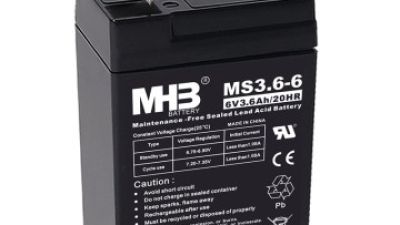
The MS 3.6-6 6V 3.5Ah sealed lead-acid battery is designed to provide dependable emergency backup power for critical systems. Its sealed, maintenance-free construction supports installation in UPS units, alarm panels, access-control equipment, emergency lighting, communication devices, and other low-voltage applications. With a stable 6V output and 3.5Ah capacity, it helps maintain essential operation during short power interruptions while offering flexible installation in compact equipment cabinets.
Power continuity remains a major concern for data centers and commercial facilities. The 2024 Global Data Center Survey reports that more than half of surveyed operators experienced an outage within the previous three years, highlighting the importance of reliable backup components. In addition, international battery safety standards emphasize controlled charging, secure terminals, and protection against leakage—features that make SLA technology suitable for indoor emergency-power systems when correctly specified and maintained.
Supported by advanced production lines with a daily output of 53,000 batteries, the manufacturer can provide consistent quality for both routine replacement programs and large-scale equipment deployment. Each battery is produced for dependable standby performance, predictable service life, and compatibility with common 6V backup configurations, helping system integrators and facility managers build resilient power protection for critical loads.
: Match the battery to the real duty cycle, not only the listed amp-hours. Light work needs fewer deep cycles. Multi-shift use needs stronger recovery after discharge. Record energy use, load weight, ramps, and idle periods.
The battery voltage must match the controller, charger, and motor. Compact equipment may use 12V systems. Larger trucks often use connected 24V, 36V, or 48V systems. A voltage mismatch can stop operation or damage equipment.
C5 measures capacity during a five-hour discharge test. A 500Ah C5 battery delivers 100A for five hours under stated conditions. Temperature, age, and discharge current change actual results. The label is not the whole story.
No. A larger battery may add weight, cost, and charging time. It may also remain partly charged if the shift is too short. Check daily amp-hour use and available charging windows. More is not automatically useful.
LFP usually offers strong cycle potential and lower cost. NMC generally provides higher energy density. A lighter NMC pack may help when equipment has strict weight limits. A heavier LFP pack may suit frequent charging and long service use.
They can reach more than 2,000 cycles under controlled conditions. Suitable temperature, charging, and discharge depth matter. Cold floors, heavy loads, and poor ventilation can reduce performance. That figure is potential, not a promise.
Include purchase price, electricity, labor, downtime, chargers, maintenance, and recycling. Lithium systems may reduce watering labor. Traditional systems may suit predictable shifts and existing repair skills. A cheap battery can become expensive after one long stoppage.
Check thermal management, monitoring, charger compatibility, ventilation, and emergency procedures. Ask about spare parts and technician availability. A missing component can stop an entire fleet. I would also question optimistic brochures. Field evidence matters more.
In 2026, selecting the right Motive Battery requires more than comparing purchase prices. Buyers should evaluate duty cycle, operating voltage, usable capacity, and C5 rating to match the battery with warehouse vehicles, industrial equipment, and other demanding applications. Lead-acid remains a cost-effective and proven option, offering approximately 30–50 Wh/kg, established recycling systems, and broad availability, although it generally requires longer charging and maintenance.
Lithium iron phosphate and nickel-manganese-cobalt batteries can deliver roughly 90–160 Wh/kg, faster charging, and potential service lives exceeding 2,000 cycles, while sodium-ion technology offers another pathway with up to 160 Wh/kg and reduced dependence on certain costly minerals. Charging economics are also important: advanced systems may recharge in about 2–4 hours, compared with approximately 8–10 hours for conventional lead-acid solutions. A practical 2026 buying matrix should balance total cost of ownership, safety, environmental goals, charging infrastructure, and supply-chain risk.