In today's world, having reliable power is pretty much essential, whether it’s for your home or a business. A good Ups Back Up Battery can be a real game-changer—making the difference between everything running smoothly and dealing with annoying outages. Brands like APC and CyberPower offer a bunch of different options, but figuring out which one’s the best for you isn't always straightforward. Every UPS has its own set of features tailored to different needs.
Think of a Ups Back Up Battery as your first line of defense when the power goes out. It keeps your devices running during those unexpected blackouts. But, honestly, picking the right one can feel like a bit of a maze, especially with so many brands out there. Some make big promises about efficiency, while others seem to leave you scratching your head wondering if they’re really worth it. People’s real-life experiences often show just how confusing this can be.
The key is making an informed decision based on what’s reliable and actually performs well. Of course, not every UPS Back Up Battery is perfect for every situation. It’s important to think about your own needs—power demands differ, and so do the features you’ll want. Doing your research helps, but sometimes you gotta learn through trial and error—that’s just part of the process, right?
Best UPS Backup Battery for Reliable Power Solutions: An Overview
When considering a UPS backup battery, reliability is key. A dependable battery ensures that your devices stay powered during outages. Ideal Ups Systems protect valuable electronics, from computers to home theaters. They create a safety net that keeps your work running smoothly. When technology fails, a high-quality battery backup generator steps in, providing essential support.
Selecting the best UPS backup battery involves understanding your specific needs. Evaluate power consumption and the run time required. Features like LCD screens can provide useful insights, but they are not a necessity for everyone. Some users may find them distracting or unnecessary. The selection process can include trial and error, discovering what works for you. Reviews can be helpful, but personal experiences will ultimately guide your choice.
Many people overlook battery maintenance. Keeping connections clean and ensuring vents are unobstructed can enhance performance. However, it's easy to be complacent. Neglecting these small details can lead to significant issues. Assessing your power needs regularly is vital. The landscape of technology is constantly changing. Staying informed will ultimately lead to better decision-making regarding backup systems.
Understanding UPS Technology: How Uninterruptible Power Supplies Work
Uninterruptible Power Supplies (UPS) are essential for maintaining power during outages. They provide a temporary power source, allowing devices to continue operating without interruption. Understanding how UPS technology works can help you make informed choices when selecting one for your needs.
A UPS typically consists of a battery, inverter, and control circuitry. When power goes out, the UPS detects the loss and quickly activates the battery to supply electricity. This process happens in milliseconds. The inverter converts DC power from the battery into AC power to run your devices. This seamless transition is crucial for sensitive equipment, ensuring protection against data loss and hardware damage.
While UPS systems are effective, they require regular maintenance. Batteries deteriorate over time and may need replacement. Users should check status indicators frequently. Maintaining optimal battery health is vital for reliability. Power needs can also change. Overestimating your requirements may lead to inadequate backup time. Consider your devices' power consumption carefully for the best results.
Best UPS Backup Battery for Reliable Power Solutions
| Model | Battery Capacity (VA) | Estimated Runtime | Form Factor | Weight (lbs) | Price Range (USD) |
| Model A | 1500 | 30 min | Tower | 45 | $100 - $150 |
| Model B | 2000 | 45 min | Tower | 65 | $200 - $300 |
| Model C | 1000 | 20 min | Rackmount | 35 | $80 - $120 |
| Model D | 3000 | 1 hour | Tower | 80 | $400 - $500 |
| Model E | 1500 | 25 min | Compact | 30 | $90 - $140 |
Types of UPS Batteries: Lead-Acid vs. Lithium-Ion Options
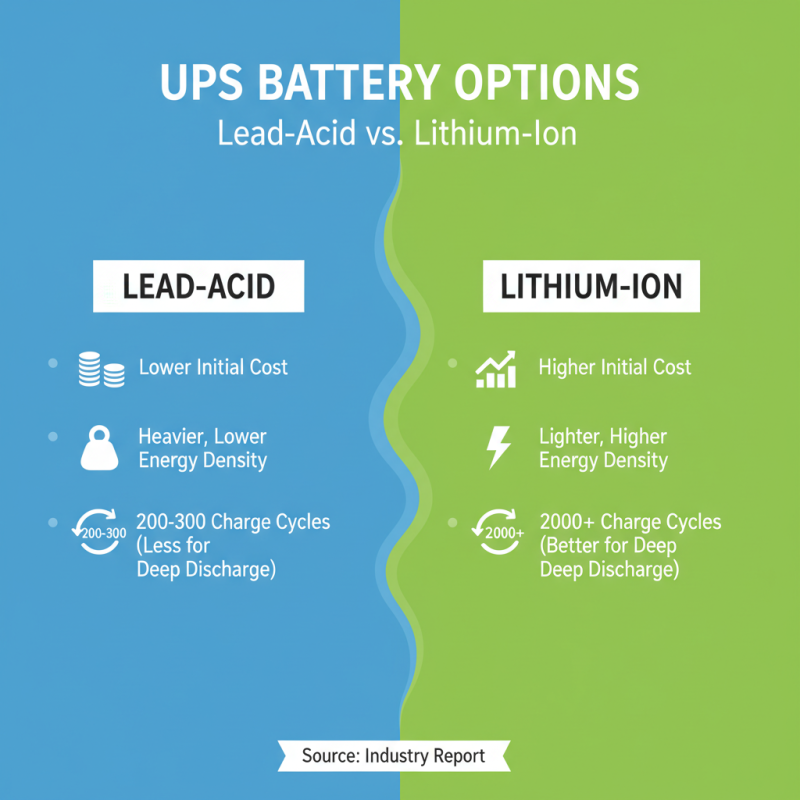
When choosing a UPS battery, the two primary options are lead-acid and lithium-ion. Each type has distinct advantages and trade-offs. Lead-acid batteries are generally more affordable. They are widely used and have a long history in the industry. However, they are heavier and less energy-dense compared to lithium-ion options. According to a recent industry report, lead-acid batteries typically offer around 200-300 charge cycles. This makes them less suitable for situations requiring frequent deep discharges.
On the other hand, lithium-ion batteries are lighter and provide higher energy density. They can last between 500 and 2,000 charge cycles. This makes them a serious contender for those needing reliable power solutions over time. Professionally, many experts argue that lithium-ion batteries justify their higher initial cost through longevity and efficiency. A notable report indicated that residential users increasingly prefer lithium-ion for applications like Battery Back Up For House, given their compact size and performance.
Despite these benefits, lithium-ion batteries face concerns about thermal runaway risks, albeit rarely. Lead-acid batteries may also have environmental impacts, notably in disposal. Users need to weigh these factors carefully. Reliable power backup shouldn't just focus on cost or longevity; safety and environmental impact are also crucial considerations.
Capacity and Runtime: Evaluating Watt-Hour Ratings for Your Needs
When selecting the best UPS backup battery, watt-hour ratings are crucial. These ratings determine how much energy your equipment can draw before needing a recharge. For instance, a typical UPS with a capacity of 1000 watt-hours can power a standard desktop computer for about 5 hours, depending on the load. Understanding your devices' requirements will help you choose a battery that aligns with their power needs.
Tip: Calculate the total wattage of your devices to find the right backup power solution. For example, if your devices draw 200 watts collectively, a 1000 watt-hour battery would provide roughly 5 hours of runtime. Keeping in mind that actual performance may vary based on age and condition, regular maintenance checks on your UPS system are essential for reliability.
In the ever-changing landscape of technology, you must also consider future needs. As devices become more power-hungry, a House Back Up Battery with expandable capacity could be beneficial. Planning for upgrades can save you from running out of power in critical moments. While many users focus solely on lower costs, ensure you prioritize reliability and runtime to withstand outages effectively.
Reliability and Longevity: Assessing Battery Lifespan and Cycle Life
When assessing the reliability and longevity of UPS backup batteries, lifespan and cycle life are key factors. Lifespan refers to how long a battery can function under standard conditions. Many users often overlook this aspect. A reliable battery should last several years, but environmental factors can shorten this period. For example, high temperatures can lead to faster degradation. It’s essential to store batteries in a cool, dry place for optimal performance.
Cycle life is another crucial measure. It indicates how many complete charge and discharge cycles a battery can endure. A battery that offers a high cycle life is ideal for frequent use. Some batteries may perform well initially but decline quickly over time. Users should evaluate the manufacturer’s specifications to understand these metrics better. Real-world performance can differ significantly. Concerns about overcharging or deep discharging should also be kept in mind. These practices can negatively impact battery life.
Cost-Benefit Analysis: Factors Influencing UPS Battery Pricing
When selecting a UPS backup battery, understanding the cost-benefit dynamics is crucial. Several factors significantly influence pricing. The capacity of the battery is paramount. Higher capacity usually equates to a steeper price tag. For instance, a battery that lasts longer during outages tends to be more expensive. Brands often prioritize performance over cost. Therefore, investing in a reliable Back Up Battery For House use can prevent future headaches.
Another element is technology. Advanced features, such as smart management and rapid charging, add to the cost. However, are these features necessary for your setup? Assessing your specific needs is vital. You could face challenges if you choose an overpriced model without utilizing its advanced capabilities. Additionally, some batteries may come with extended warranties. Longer warranties often suggest better quality, but they also increase the upfront cost.
Lastly, installation costs should not be overlooked. Professional setup can boost overall expenses, yet it can enhance reliability and safety. Weighing the initial costs against long-term benefits is essential. Reflecting on your choices and understanding the factors affecting pricing empowers informed decisions. Ultimately, the right UPS back up battery for house applications can lead to significant savings and peace of mind.
Top Brands of UPS Batteries: A Comparison of Industry Leaders
When choosing the best UPS backup battery, understanding the top brands is essential. Each brand offers distinct features and benefits tailored to various needs. Some brands excel in product durability, while others focus on cutting-edge technology. Reliability is key for uninterrupted power, especially during important tasks.
Comparing industry leaders reveals strengths and weaknesses. Some brands emphasize energy efficiency, resulting in longer-lasting power. However, this may compromise charging speed. Others prioritize high output capacity, which can be beneficial for larger devices but may lead to overheating issues. It's worth analyzing user reviews to gather insights on performance in real-world scenarios.
Power solutions often come with trade-offs. While certain batteries may offer advanced features, they might come at a higher price. Conversely, budget-friendly options might lack essential protections. Finding the ideal balance is crucial. Engaging with reputable sources can help navigate the complexities of UPS battery options. Each feature often warrants careful reflection on individual power needs and potential consequences of each choice.
Best UPS Backup Battery Performance Comparison
This chart compares key performance metrics of different UPS backup batteries, including battery life, charge time, power capacity, and weight. It can aid in selecting the best backup power solution.
The Ultimate Guide to Choosing and Maintaining Your 12V 9AH Motorcycle Battery: MHB 12N9-3B
Choosing the right motorcycle battery is crucial for ensuring the longevity and performance of your bike. The 12V 9AH battery, particularly the MHB 12N9-3B model, is an excellent choice for most motorcycle models available today. This battery is engineered to meet stringent specifications, providing reliable power and efficiency for your rides. Its capacity makes it a versatile option that caters to diverse motorcycle needs, whether for daily commuting or long-distance journeys.
One of the standout features of the MHB 12N9-3B is its commitment to safety and sustainability. It incorporates advanced protection mechanisms, including safeguards against overcharging and short circuits, which are essential for preventing potential hazards. Additionally, with a high recycling rate, this battery aligns with environmentally friendly practices, contributing to the sustainable development goals we strive for in today’s world. Riders can thus feel confident choosing a battery that not only supports their motorcycle’s performance but also looks out for the planet.
FAQS
: A UPS backup battery keeps devices powered during outages, ensuring smooth operation.
Evaluate your power consumption, required run time, and consider personal experiences for better choices.
LCD screens provide insights but can be unnecessary or distracting for some users.
Maintenance enhances performance and prevents significant issues, but it's easy to neglect small details.
High temperatures can lead to faster degradation; batteries should be stored in cool, dry places.
Cycle life indicates how many charge and discharge cycles a battery can handle effectively.
Yes, overcharging can negatively impact battery life and performance significantly.
Regular assessments are vital due to the constantly changing landscape of technology.
Some batteries might perform well at first but decline quickly, which users should watch for.
Many overlook battery maintenance, leading to avoidable problems down the road.
Conclusion
When seeking the best UPS backup battery for reliable power solutions, it's essential to understand the technology behind Uninterruptible Power Supplies (UPS) and the types of batteries available, primarily lead-acid and lithium-ion options. Evaluating capacity and runtime through watt-hour ratings helps assess whether a particular UPS backup battery meets your specific needs, ensuring that critical devices remain powered during outages.
Additionally, evaluating the reliability and longevity of UPS batteries involves looking at battery lifespan and cycle life to determine how often they can be used before needing replacement. A cost-benefit analysis can guide decisions, as pricing is influenced by various factors, including battery type, capacity, and brand reputation. Overall, a comparison of top brands in the industry will assist in identifying the most suitable UPS backup battery to provide dependable power solutions for your requirements.