Leave Your Message
0%

Picking the right Vrla battery isn’t just about who has the lowest price. If you’re buying globally, you want evidence, real-world application experience, and a supplier who actually backs you up. A battery sitting in a 35°C telecom cabinet isn’t facing the same risks as one in a clean, cool data center. Capacity, design life, recharge behavior, safety, recycling—all of it matters.

And the market data gives you a good reason to slow down and look closely. Grand View Research put the global lead-acid battery market above USD 45 billion in 2023, with steady demand coming from telecom, UPS, and backup power. Mordor Intelligence also points to stationary applications as a big growth area. That said, estimates don’t always line up from report to report. Worth noticing, right? A flashy forecast still can’t replace a proper product test.

Patrick T. Moseley, a well-known VRLA researcher and author, once put it this way: “VRLA batteries are not maintenance-free; they are maintenance-reduced.” That’s still a pretty practical rule for any buyer. A 6v Vrla Battery might look small and simple, but how it performs depends on float voltage, temperature control, connector quality, and how it’s stored. IEEE 1188 guidance suggests keeping an eye on internal resistance, discharge capacity, temperature, and charging behavior. Those checks can catch weakness before an outage does.

The best pick isn’t always the battery with the biggest advertised capacity. It’s the one that holds up consistently under your actual operating conditions. Suppliers should be able to give you test records, traceable specs, warranty terms, and clear installation guidance. Some claims may sound great but be hard to verify. That’s exactly where professional review, sample testing, and honest technical questions matter.

What Is the Best VRLA Battery for Global Buyers?

What Is a VRLA Battery and How Does It Work?

A VRLA batteryis a sealed lead-acid battery designed to limit electrolyte loss. Its electrolyte stays immobilized in an absorbent glass mat or gel. Inside, positive Plates use lead dioxide, while negative plates use sponge lead. Sulfuric acid carries the chemical reaction. During charging, oxygen moves toward the negative plate and recombines with hydrogen. This reduces water loss. A pressure-relief valve opens only when internal pressure becomes excessive. The process is efficient, but not perfect.

“Best” depends on the duty cycle, temperature, and charging system. Fortune Business Insights estimated the global lead-acid battery market at USD 52.77 billion in 2023. Its 2024 market analysis shows strong demand from backup power, telecommunications, and industrial systems. Those figures explain VRLA’s popularity, not automatic superiority. AGM models suit frequent high-current discharge, while gel designs can perform better in some deep-cycle conditions. IEEE 1188 also recommends capacity testing and regular monitoring for stationary VRLA systems. A low price can hide weak quality control.

In practical installations, heat is the quiet enemy. A commonly used engineering rule says battery life may halve for each 10°C rise above 25°C. Keep terminals clean and charging voltage precise. “Maintenance-free” is an imperfect phrase. The battery still needs inspection. Service records often reveal swollen cases, loose connections, or poor ventilation before failure. A buyer should compare float life, cycle data, safety certification, warranty terms, and local recycling support.

Which VRLA Battery Types Are Available to Global Buyers?

Global buyers can choose several VRLA battery types, depending on load, climate, and installation space. A Vrla Sealed Lead Acid Battery uses a valve-regulated design, so routine water refilling is unnecessary. Its electrolyte remains contained inside the battery.

Agm Batteries use absorbed glass mats to hold the electrolyte. They usually deliver strong starting current and stable performance in UPS systems, alarms, and backup cabinets. Gel batteries use a silica-based electrolyte. They suit deep-cycle applications, including telecommunications, solar storage, and remote monitoring equipment. Gel models often tolerate repeated discharge better, but charging must follow tighter voltage limits.

Front-terminal VRLA batteries are practical in tall racks, where technicians need access from the front. High-rate models support short, powerful loads, while deep-cycle models favor longer discharge periods. These categories can overlap. A front-terminal battery may also use AGM technology.

In field inspections, cabinet temperature often matters more than the label. A battery installed beside a hot inverter can age quickly. Buyers should check capacity at the required discharge time, terminal layout, operating temperature, cycle expectations, and applicable transport standards. Request test reports, safety data, and traceable production records from the supplier. Do not select only by ampere-hours. That shortcut can fail. Even experienced engineers sometimes underestimate cable length, ventilation, or cold-weather charging. A careful comparison leaves room for these practical weaknesses.

How Do You Compare VRLA Battery Performance and Specifications?

What Is the Best VRLA Battery for Global Buyers?

How Do You Compare VRLA Battery Performance and Specifications?

A reliable VRLA comparison starts with test conditions, not marketing claims. Check rated capacity, discharge duration, float voltage, internal resistance, and operating temperature. A 12v7ah Vrla Battery should deliver 7Ah at its stated rate, often 20 hours, or about 0.35A continuously. Test at 25°C when possible. Heat changes the result.

Look closely at cycle life and depth of discharge. A battery rated for 1,200 cycles at 30% depth of discharge may perform poorly at 80%. Sandia National Laboratories’ 2022 Energy Storage Technology and Cost Characterization Report places lead-acid round-trip efficiency near 70–85%. That range matters in backup systems with frequent cycling. It is not a promise for every VRLA model. Real testing can disagree.

Check compliance documents against IEEE 1188 maintenance guidance and published safety data. Compare terminal dimensions, mass, valve design, recharge time, and warranty exclusions. I have seen capacity fall sharply after repeated high-temperature operation, even when voltage looked normal. Voltage can mislead. Measure conductance or internal resistance, then perform a controlled capacity test. EUROBAT’s technical guidance also stresses temperature control and correct charging. Some specifications remain incomplete. Ask for test curves, not only headline numbers.

Which Factors Determine VRLA Battery Quality and Service Life?

VRLA battery quality begins with materials and manufacturing discipline. High-purity lead reduces internal resistance and supports stable current delivery. Strong grids help prevent corrosion during long float operation. Separators must hold electrolyte evenly and resist damage from vibration. AGM and gel designs also need controlled pressure and reliable valve performance.

Service life depends on operating conditions, not only the battery label. Excessive heat accelerates aging, especially above 25°C. Incorrect float voltage can cause drying, swelling, or poor capacity. Deep discharges may shorten life when the battery is designed for standby use. In field inspections, loose terminals and blocked ventilation often appear before serious failure. Testing should include voltage, internal resistance, temperature, and capacity records. A clear production date and traceable quality documents add practical confidence for global buyers. Still, my own selection process is not flawless. Supplier claims need independent verification.

Tips: Ask for cycle-life data and temperature ratings. Check storage limits before shipment. Confirm charger compatibility and recommended torque settings. Keep batteries clean and upright. Review test records at installation and during scheduled maintenance. A short monthly inspection can reveal swelling, heat, or unusual voltage changes early. Do not rely on warranty length alone. Response time, replacement procedures, and technical support can matter more during an outage.

What Is the Best VRLA Battery for Global Buyers?

Which Factors Determine VRLA Battery Quality and Service Life?

Operating temperature is one of the strongest predictors of VRLA battery service life. The chart uses a relative service-life index, with 25°C set as the reference value of 100. A commonly used engineering planning rule estimates that service life may decrease by approximately half for each sustained 10°C rise above 25°C.

In addition to temperature control, global buyers should evaluate float-voltage stability, charging-system compatibility, discharge depth, recharge performance, separator and grid design, manufacturing consistency, safety certification, transport conditions, warranty terms, and local technical support. Actual service life varies by battery design, duty cycle, maintenance, and installation environment.

How Should Buyers Match VRLA Batteries to Their Applications?

Matching a VRLA battery to its application starts with duty, not price. For a server room, buyers should calculate UPS load, autonomy time, discharge rate, and recharge limits. Uptime Institute’s 2024 Annual Outage Analysis reported that 54% of serious outages caused losses exceeding $100,000. That makes battery monitoring and replacement planning operational necessities.

Telecom sites need different priorities. A Sealed Vrla Battery for a remote cabinet should tolerate frequent cycling, limited ventilation, and difficult maintenance access. Check the published 10-hour capacity, but also request 1-hour and high-rate discharge data. A battery rated at 100 Ah may deliver far less during a sudden, heavy load. Temperature matters too. IEEE 1188 guidance identifies 25°C as a key reference point; sustained heat can sharply reduce service life. Small cabinets become hot faster than expected.

Industrial control systems often favor stable float performance and strong terminal connections. Emergency lighting may require short bursts, while solar backup systems demand repeated cycling. Do not treat them as identical duties. A clean datasheet can still mislead. I would also inspect installation records, torque values, float voltage, and room temperature. The 2023 Global Battery Alliance Battery Passport discussion highlights traceability as an emerging reliability practice, although implementation remains uneven. That gap deserves attention. Buyers should compare warranty conditions, test methods, recycling arrangements, and actual site measurements before selecting capacity.

What Global Standards and Certifications Should VRLA Batteries Meet?

Choosing the best 12v Vrla Battery for global buyers requires more than comparing capacity and price. Standards and certifications reveal how a battery performs under controlled conditions. For stationary applications, buyers should check testing against IEC 60896-21 and IEC 60896-22. These standards address valve-regulated lead-acid battery performance, safety, and test methods. Telecommunications systems may require additional regional or industry specifications.

Look for clear evidence of electrical safety and manufacturing control. Depending on the destination, CE or UKCA marking may apply, while UL-related certification can support acceptance in certain markets. ISO 9001 certification shows that the manufacturer operates a quality management system, but it does not certify every battery model. Environmental compliance also matters. RoHS and REACH documentation can help confirm restricted-substance and chemical requirements. Check the certificate number, issuing body, product model, and validity date.

Details matter greatly. Request float-life data, discharge curves, internal resistance records, and high-temperature test results. A credible supplier should provide traceable reports, not only a scanned certificate. Confirm whether the tested model matches the shipment. Small differences in plates, separators, or casing can change performance. Do not ignore transport documentation, recycling instructions, or local installation rules. A certificate alone is not proof. It may be outdated, incomplete, or misunderstood. Independent inspection is sometimes worth the extra cost, although buyers may still overlook real-world heat, poor ventilation, or irregular charging.

What Is the Best VRLA Battery for Global Buyers? — Global Standards and Certifications for VRLA Batteries
Evaluation Dimension What Global Buyers Should Look For Relevant Standard, Regulation or Certification Typical Evidence to Request Why It Matters
Battery Technology Valve-regulated lead-acid construction using AGM or gel electrolyte, with a sealed design and pressure-regulating valves. IEC 60896-21 and IEC 60896-22 for stationary VRLA batteries; IEC 61056-1 and IEC 61056-2 for general-purpose lead-acid batteries. Technical datasheet, construction description, internal resistance data and applicable test reports. Confirms that the product is a suitable VRLA battery rather than an open flooded lead-acid battery.
Application Matching Choose a battery according to its duty cycle: standby power, UPS, emergency lighting, telecommunications, renewable energy or frequent cycling. IEC 60896 series for stationary applications; IEC 61427-1 for renewable-energy storage applications where applicable. Discharge curves, cycle-life test conditions, recommended operating profile and application guide. A battery optimized for standby service may not deliver the same life or cycle performance in daily renewable-energy use.
Rated Capacity Capacity should be stated in ampere-hours together with the discharge rate, end voltage and temperature used for measurement. Common reference rates include 10-hour and 20-hour capacity ratings. IEC 60896-21/22 or IEC 61056-1/2, depending on battery type and application. Capacity test report showing test current, discharge duration, end-of-discharge voltage and temperature. Capacity figures are not directly comparable when the test conditions are different.
Service Life Check whether the product is specified as standby-use or deep-cycle. Calendar life and cycle life should be reported separately. Applicable IEC performance standards and the manufacturer’s documented test method. Design-life statement, cycle-life curve, float-life test conditions and warranty terms. “Long life” claims can be misleading unless the temperature, depth of discharge, charging method and test duration are disclosed.
Safety Requirements Look for controlled gas release, secure terminals, flame-retardant materials where specified, stable casing and protection against leakage during normal use. IEC 62485-2 for safety requirements for stationary batteries and battery installations; IEC 60896-22 for VRLA safety and performance requirements. Safety test report, installation instructions, ventilation guidance and material specifications. Supports safe installation, operation and maintenance in data centers, telecom rooms and industrial facilities.
Electrical and Fire Certification For North American projects, verify that the battery has the certification or listing required by the project specification and local authority. UL 1989 covers standby batteries. UL 1778 may apply to complete uninterruptible power supply systems rather than the battery alone. Current certificate or listing reference, scope of certification, model coverage and factory-location details. Certification scope matters: approval of a complete UPS system does not automatically certify every standalone battery model.
International Transport For shipping, verify the classification of the non-spillable lead-acid battery and the applicable air, sea, road or rail transport rules. UN 2800 for batteries, wet, non-spillable, electric storage; transport provisions may include the applicable requirements of the UN Model Regulations, ICAO Technical Instructions, IATA Dangerous Goods Regulations and IMDG Code. Transport classification statement, packaging instructions, safety data sheet and confirmation that the battery meets the applicable non-spillable criteria. Correct classification helps prevent customs delays, rejected shipments and unsafe handling.
European Market Access For products placed on the European Economic Area market, confirm applicable product legislation and the responsibilities of the economic operator. CE marking may apply depending on the product and incorporated equipment; RoHS and REACH obligations may also apply. Battery-specific obligations are governed by the applicable EU Batteries Regulation requirements. EU Declaration of Conformity where required, technical file summary, RoHS material declaration, REACH statement and producer-responsibility information. CE marking is a declaration of conformity, not a universal quality mark; the applicable legislation must be identified for the specific product.
Environmental Conditions Compare the specified operating temperature, storage temperature, humidity range, altitude and temperature-compensation requirements for charging. Test conditions should be stated in the applicable IEC product standard and the manufacturer’s technical documentation. Operating limits, storage limits, temperature derating data and charging-voltage compensation curve. High temperature accelerates aging, while low temperature reduces available capacity and may affect charging performance.
Charging Compatibility The battery should match the charger’s float voltage, boost voltage, current limit and temperature-compensation function. Battery manufacturer’s charging specification; system-level requirements may also be defined by UPS, rectifier or energy-storage equipment standards. Recommended float voltage per cell, boost-charge limits, maximum charge current and charger compatibility list. Incorrect charging is a major cause of premature drying, sulfation, thermal stress and reduced service life.
Quality Management Prefer suppliers with a documented production-control system, traceability and consistent end-of-line testing. ISO 9001 certification is a quality-management certification for the organization, not a product-performance certification. Valid ISO 9001 certificate, certificate scope, batch traceability procedure and quality inspection records. Provides evidence of controlled processes, while product-specific compliance still requires separate testing and documentation.
Environmental Management For projects with sustainability or supply-chain requirements, evaluate environmental controls and recycling arrangements. ISO 14001 may demonstrate an environmental-management system. Local laws may regulate lead handling, collection and recycling. ISO 14001 certificate where applicable, environmental policy, recycling process and material-compliance declarations. Lead-acid batteries are highly recyclable, but collection, transport and recycling must follow local legal requirements.
Installation and Maintenance Confirm terminal type, dimensions, rack compatibility, torque requirements, ventilation provisions and replacement procedures. IEC 62485-2 and applicable national electrical and fire codes. Installation manual, dimensional drawing, terminal torque data, rack-loading information and maintenance schedule. Correct installation reduces connection failures, overheating, short-circuit risk and avoidable warranty issues.
Best Overall Selection Criteria The best VRLA battery is the one whose technology, capacity, cycle profile, safety documentation, transport classification and market approvals match the intended application and destination country. Use the applicable combination of IEC standards, local regulations, transport rules and project-specific certification requirements. Complete technical datasheet, independent or witnessed test reports, certificates, declarations, SDS, warranty and traceability records. There is no single certification that proves a VRLA battery is best for every global application.

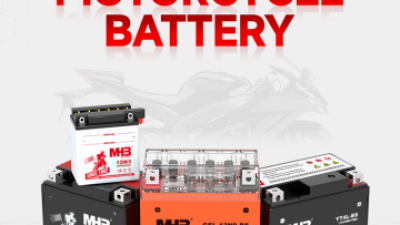
12V 7AH AGM Motorcycle Battery MHB DB7B-BS: Performance, Installation, and Maintenance Guide

The 12V 7Ah AGM motorcycle battery is designed to deliver dependable starting power and stable current output for daily riding. Its sealed Absorbent Glass Mat construction helps contain the electrolyte, reducing the risk of leakage and making the battery suitable for many motorcycle applications. A durable ABS casing provides effective shock absorption and corrosion resistance, helping the battery perform reliably in demanding road conditions. Its compact design also offers a practical fit for motorcycles using compatible battery specifications.

Before installation, switch off the motorcycle and confirm that the battery dimensions, terminal layout, and voltage match the original unit. Connect the positive cable first, followed by the negative cable, and tighten both terminals securely without over-tightening. Keep the battery upright and ensure that the mounting bracket holds it firmly to minimize vibration. Wear suitable eye and hand protection during handling, even though the AGM design is sealed and maintenance-friendly.

For regular care, inspect the terminals for dirt, looseness, or corrosion and clean them with a dry or suitable battery-safe cloth. Check the charging system periodically to ensure the battery receives the correct voltage while the engine is running. If the motorcycle is stored for an extended period, disconnect the battery or use a compatible smart charger to maintain its charge. Avoid deep discharge and recharge the battery promptly after extended use or repeated starting attempts.

FAQS

What is a VRLA battery?

A VRLA battery is a sealed lead-acid battery with immobilized electrolyte. The electrolyte stays in an absorbent glass mat or gel. Positive plates use lead dioxide, while negative plates use sponge lead. A pressure-relief valve releases excess pressure. It is sealed, but not maintenance-free.

How does a VRLA battery reduce water loss?

During charging, oxygen moves toward the negative plate. It recombines with hydrogen and helps preserve water inside the battery. This process reduces electrolyte loss during normal operation. It is efficient, but not perfect. Excessive charging can still cause pressure and damage.

Which VRLA design suits frequent high-current discharge?

AGM designs often suit frequent high-current discharge. Gel designs may perform better during some deep-cycle applications. The correct choice depends on load, cycle pattern, temperature, and charging equipment. Do not choose by capacity alone. Duty cycle matters more.

How should a VRLA battery be matched to its application?

Start with the application’s duty, not the purchase price. For backup systems, calculate load, required autonomy, discharge rate, and recharge limits. For remote communication cabinets, consider cycling, heat, ventilation, and access difficulty. Industrial controls usually need stable float performance and strong terminals. Different duties need different batteries.

Why does the rated capacity sometimes appear misleading?

A battery rated at 100 Ah may deliver less during a heavy, rapid discharge. Ask for capacity at several discharge rates, including one-hour performance. Review discharge curves instead of reading only the headline rating. A clean datasheet can still mislead. Site measurements are better.

How does temperature affect VRLA battery life?

Heat can sharply reduce service life. A common engineering rule suggests life may halve for each 10°C rise above 25°C. Small cabinets can become hot faster than expected. Measure room temperature near the battery, not only near the door. Heat wins quietly.

What inspections does a supposedly maintenance-free VRLA battery need?

Inspect terminals, cases, ventilation, charging voltage, and connection tightness. Look for swelling, loose cables, corrosion, or unusual warmth. Keep terminals clean and record inspection dates. Service records can reveal problems before failure. Maintenance still exists.

Which certifications and documents should buyers request?

Request applicable safety, performance, environmental, and quality documents. Check the certificate number, issuing body, model, and validity date. Ask for discharge curves, float-life data, internal resistance records, and temperature tests. Confirm that the tested model matches the shipment. A certificate alone is not proof.

What should buyers check before final selection?

Compare warranty terms, cycle data, float life, recycling support, and installation requirements. Review transport documents and local disposal instructions. Inspect charging settings, torque records, ventilation, and actual site temperature. Traceability can improve reliability, but implementation remains uneven. The cheapest option may hide weak quality control.

Conclusion

Choosing the best VRLA Battery for global buyers requires more than comparing price and capacity. A VRLA battery is a sealed, low-maintenance energy storage device that uses internal valves to regulate gas and recombine electrolytes, reducing the need for regular water replacement. Buyers can select from common designs such as AGM and gel batteries, each offering different advantages in charging speed, vibration resistance, deep-cycle performance, and operating conditions.

A reliable evaluation should consider voltage, amp-hour capacity, discharge rate, cycle life, standby performance, temperature tolerance, charging requirements, dimensions, and total ownership cost. Application matching is also essential: backup power, telecommunications, renewable energy storage, transportation, and industrial systems may require different battery characteristics. Global buyers should confirm manufacturing consistency, safety testing, transport compliance, recycling provisions, and conformity with relevant international standards and certifications. The ideal choice balances technical performance, service life, installation requirements, environmental conditions, and dependable after-sales support.

Sophia

Sophia

Sophia is a dedicated marketing professional at Fujian Minhua Power Supply Co., Ltd., where she has cultivated a deep expertise in the company’s innovative products and solutions. With a strong background in marketing strategies and product knowledge, Sophia plays a crucial role in enhancing the......
Previous How to Choose the Right Battery Plates for Your Needs?