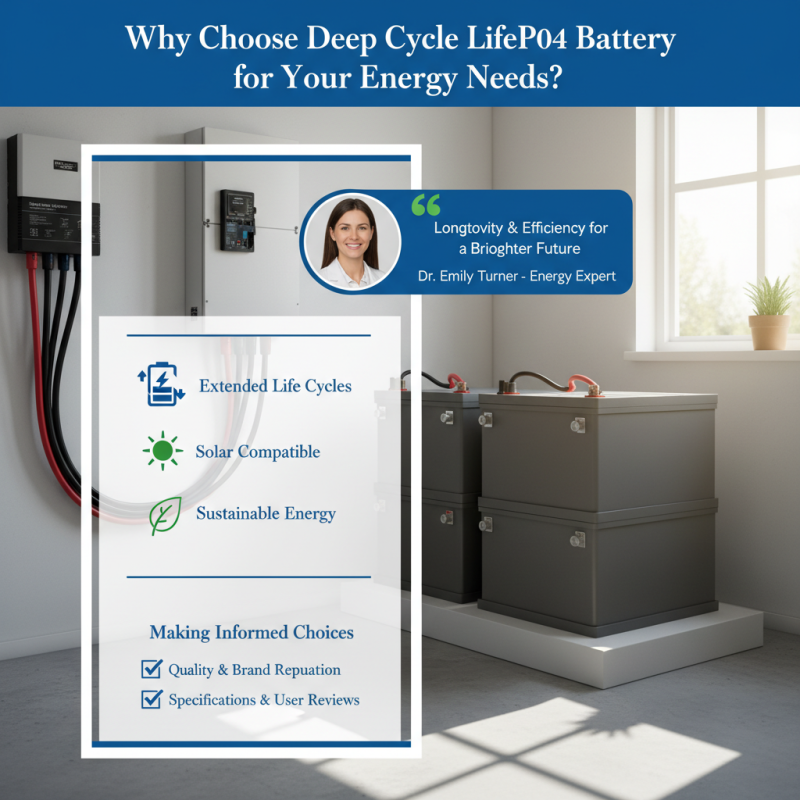
In today’s constantly changing energy scene, more and more folks are on the lookout for reliable solutions. One option that’s been gaining popularity is the Deep Cycle Lifepo4 Battery. As our energy needs keep climbing, having a dependable power source is more important than ever. According to Dr. Emily Turner, a well-known expert in energy storage, “The Deep Cycle Lifepo4 Battery really stands out when it comes to longevity and efficiency.” That just proves how crucial these batteries are, whether you're using them at home or for business purposes.
There are quite a few good reasons to go for a Deep Cycle Lifepo4 Battery. For starters, they last much longer, so you don’t need to replace them all the time. Plus, they work well in different conditions, making them ideal for solar setups and other off-grid solutions. Dr. Turner also points out, “Choosing a Deep Cycle Lifepo4 Battery is a smart move if you're serious about sustainability.”
But, of course, you gotta do your homework. Not all batteries are made the same, and it’s super important to check the quality and the reputation of the brand before buying. Looking at specs and reading reviews can really help you get a good idea of what you’re getting. With so many options out there, finding trustworthy sellers is key. In the end, a Deep Cycle Lifepo4 Battery has tons of potential, but just make sure to pick wisely and stay cautious."
Understanding the Basics of Deep Cycle Lifepo4 Batteries
Deep cycle LiFePO4 batteries are gaining popularity in energy storage solutions. They are designed to provide steady power over extended periods. Unlike traditional batteries, they can be deeply discharged and recharged repeatedly without significant loss of capacity. A study by the U.S. Department of Energy highlights that these batteries can sustain over 3,000 charge cycles. In contrast, lead-acid batteries typically only last around 500 cycles under similar conditions.
One key benefit of LiFePO4 batteries is their thermal stability. They maintain performance across a broad temperature range, which is crucial for various applications. Moreover, they are lighter and more compact than lead-acid equivalents, making installation easier. However, users should know that initial costs can be higher.
Tips: Always check battery management systems when installing. Regular maintenance can help prolong battery life. Understanding your energy needs will guide you in choosing the correct capacity. A poorly matched battery can lead to inefficiency and quicker wear. Take the time to assess your specific energy consumption patterns. Balancing quality with cost is essential for a sustainable investment in energy storage.
Advantages of Deep Cycle Lifepo4 Batteries over Traditional Batteries
Deep cycle LiFePO4 batteries offer significant advantages over traditional lead-acid batteries. Their design allows for deeper discharges and longer cycle life. While traditional batteries are often limited to 50% discharge, deep cycle batteries can be safely discharged up to 80% or more. This is vital for renewable energy systems where full utilization of available power is essential.
Moreover, deep cycle LiFePO4 batteries are exceptionally durable. They can withstand thousands of cycles, unlike traditional batteries that degrade quickly. Users often notice diminished performance in lead-acid batteries after just a few years. In contrast, many report reliable performance from deep cycle batteries for over a decade. The weight and space efficiency also stand out. Deep cycle batteries are typically lighter, saving on shipping and installation costs.
Though the initial investment might seem high, the long-term savings are significant. Maintenance is minimal compared to traditional options. Some may find it hard to let go of past technologies, as they are comfortable with the familiar. However, embracing advanced battery technology can lead to better efficiency and sustainability in energy usage.
Applications of Deep Cycle Lifepo4 Batteries in Renewable Energy Systems
Deep cycle Lifepo4 batteries are increasingly popular in renewable energy systems. They provide reliable energy storage for solar and wind applications. Many homeowners are turning to these batteries for off-grid systems. The energy drawn from solar panels can be stored effectively, allowing for energy use at night or during cloudy days.
In solar setups, these batteries can handle deep discharges without significant damage. This durability extends battery life, making them cost-effective. A 12v Deep Cycle Battery can be used in various applications, from powering garden lights to large home systems. Users appreciate their fast charging capabilities, gaining energy independence in a matter of hours.
However, there are challenges too. Implementing a deep cycle Lifepo4 battery system requires proper design and knowledge. Installation can be complex. Many users underestimate the need for a robust inverter and charge controller. These components are crucial for efficiency and safety. A poorly designed system can lead to unsatisfactory performance, prompting users to reconsider their choices. Understanding these nuances adds to the reliability of Lifepo4 batteries in renewable energy setups.
Why Choose Deep Cycle Lifepo4 Battery for Your Energy Needs? - Applications of Deep Cycle Lifepo4 Batteries in Renewable Energy Systems
| Application | Battery Capacity (Ah) | Voltage (V) | Cycle Life | Efficiency (%) |
| Solar Energy Storage | 200 | 12 | 3000 | 95 |
| Wind Energy Storage | 150 | 24 | 3500 | 93 |
| Electric Vehicles | 300 | 48 | 2000 | 90 |
| Backup Power Systems | 100 | 12 | 4000 | 92 |
| Marine Applications | 250 | 12 | 3500 | 94 |
Longevity and Maintenance Benefits of Lifepo4 Battery Technology
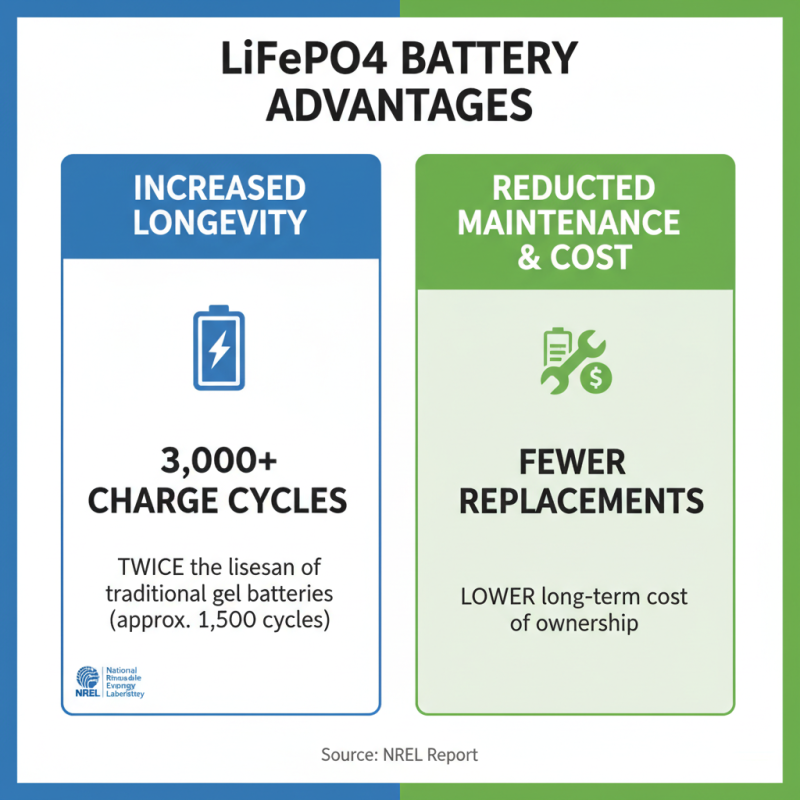
The longevity of lithium iron phosphate (LiFePO4) batteries sets them apart in energy storage solutions. A recent report by the National Renewable Energy Laboratory highlighted that these batteries can typically endure over 3,000 charge cycles. This durability means less frequent replacements compared to conventional batteries. Deep Cycle Gel Batteries often provide only about 1,500 cycles under similar conditions.
Maintenance is another critical aspect. LiFePO4 batteries require minimal upkeep, thanks to their stable chemical composition. They operate efficiently in various temperatures, reducing the need for climate control systems. This reliability comes at a cost; their initial price may be higher. However, the long-term savings in replacement and maintenance offset this.
Interestingly, not all users fully understand the advantages of these batteries. The lack of awareness could stem from limited educational resources in the industry. Engaging with this technology effectively requires a commitment to learning. The potential benefits are significant, but investment in proper education is essential to maximize their value.
Safety Features and Environmental Impact of Lifepo4 Batteries
When considering energy storage solutions, the safety features of Lifepo4 batteries stand out. These batteries have a robust design that minimizes risks associated with traditional batteries. Unlike lead-acid batteries, Lifepo4 batteries are less prone to overheating or leaking. This quality makes them particularly suitable for off-grid applications. They can operate effectively in various temperatures, providing reliable energy.
The environmental impact of Lifepo4 batteries is also noteworthy. They contain fewer toxic materials compared to conventional batteries, reducing pollution risks. Lifepo4 batteries are recyclable, which contributes to sustainability. Using a 12v Deep Cycle Battery gel battery can significantly decrease our ecological footprint. However, it is essential to implement proper recycling methods. Some users may overlook this aspect and inadvertently harm the environment.
Despite their advantages, not all Lifepo4 batteries are created equal. Some cheaper models may not meet safety standards. This inconsistency raises concerns about reliability. Investing in a reputable battery can mitigate potential hazards. Users should carefully assess options before purchase. Understanding the technology and its implications shows responsibility and awareness.
Comparison of Battery Types: Deep Cycle LiFePO4 vs Lead Acid
Cost Considerations: Investing in Deep Cycle Lifepo4 Batteries
When considering energy storage solutions, deep cycle Lifepo4 batteries are a smart choice. They offer longevity and efficiency that makes them suitable for various applications. Nevertheless, upfront costs can be significant. While these batteries may be more expensive than traditional batteries, their lifespan can lead to long-term savings.
Investing in Lifepo4 batteries can be daunting. The initial price might turn away some buyers. However, understanding their value over time is essential. They can last up to 10 years, significantly reducing replacement costs. It's vital to weigh the upfront investment against potential savings. These batteries are designed for deep discharge, making them reliable for solar systems and electric vehicles.
Tips for making the right choice include assessing your power needs carefully before purchase. Consider how often you will use the batteries and for what purpose. This analysis can help determine the capacity you require. Another tip is to look for warranties. A good warranty can provide peace of mind regarding your investment. Keep in mind, the better the battery, the less often you’ll need to purchase replacements.
Choosing the Right Deep Cycle Lifepo4 Battery for Your Energy Needs
When selecting a deep cycle LiFePO4 battery, several factors come into play. Energy capacity and discharge rates are crucial. The typical capacity ranges from 100Ah to over 300Ah, suitable for various energy applications. Research suggests these batteries have a cycle life of 2,000 to 5,000 cycles. This durability sets them apart from traditional lead-acid batteries, which often last only 500 to 1,200 cycles.
Understanding your energy demands is vital. For instance, RV or solar applications can have varying energy consumption patterns. A small solar setup might only need a 100Ah battery, while larger systems could require several hundred amp-hours. Considerations include the peak discharge rates the battery can handle, which significantly impact performance during high-demand periods. Some users may find that a higher capacity battery offers more flexibility.
While LiFePO4 batteries are becoming more popular, they are not perfect. Their upfront cost can be higher than lead-acid options. However, the long-term savings due to reduced replacements and lower maintenance can offset this. Reflect on how often your energy demands change and whether this technology fits your lifestyle. This proactive approach can lead to better energy management.
FAQS
: LiFePO4 batteries can endure over 3,000 charge cycles, lasting longer than conventional batteries.
They require minimal upkeep due to their stable chemical composition and perform well in various temperatures.
Their initial price may be higher, but long-term savings in replacements and maintenance generally offset this.
They have a robust design, reducing risks of overheating and leaking compared to traditional batteries.
They contain fewer toxic materials and are recyclable, helping to reduce ecological footprints.
Proper education helps users maximize benefits and understand potential risks associated with battery use.
Some may not meet safety standards, risking reliability and safety due to varying quality.
Yes, proper recycling methods should be implemented to ensure their environmental benefits are realized.
They can operate effectively across a range of temperatures, simplifying usage without climate controls.
Many users do not fully understand their advantages, often due to limited educational resources in the field.
Conclusion
The article titled "Why Choose Deep Cycle Lifepo4 Battery for Your Energy Needs?" explores the fundamental aspects and benefits of Deep Cycle Lifepo4 Batteries. It highlights how these batteries differ from traditional batteries, emphasizing their superior performance in renewable energy systems. With a focus on longevity and low maintenance requirements, Deep Cycle Lifepo4 Batteries are presented as a reliable choice for various applications. Additionally, the article discusses the robust safety features and the environmentally friendly nature of these batteries, making them an attractive option for energy storage.
Furthermore, the cost considerations of investing in Deep Cycle Lifepo4 Batteries are analyzed, revealing their long-term value despite a higher initial investment. Consumers are guided on how to select the right battery to meet their specific energy needs, ensuring they make a well-informed decision. Overall, the article advocates for the transition to Deep Cycle Lifepo4 Battery technology as a sustainable and efficient energy solution.