With the way electric vehicles (EVs) are just taking off lately, choosing the right Motive Battery is more important than ever. I’ll bet you’ve noticed how the numbers are booming — according to the International Energy Agency, global EV sales hit around 6.6 million in 2021, which is a crazy 108% jump from the year before. That kind of growth really shows just how crucial it is to pick a dependable, high-quality battery that can maximize performance, range, and lifespan—whether you're talking about a daily driver or a whole fleet of commercial vehicles.
Picking the perfect Motive Battery isn’t just about what’s new or popular. You’ve gotta understand the specs and tech that are out there — especially since things are changing so fast. For example, research from the U.S. Department of Energy points out that lithium-ion batteries now dominate, making up over 90% of the batteries in today’s EVs. But with so many chemistries, capacities, and charging speeds available, it’s really important to figure out what works best for your specific needs — whether you're a manufacturer, a fleet manager, or just an eager EV enthusiast.
And hey, as we move toward greener, more sustainable energy solutions, the environmental impact of these batteries matters big time. Studies show that how batteries are made and disposed of can really influence the EV’s total carbon footprint. So, making a smart choice here isn’t just about performance — it’s about being responsible and keeping sustainability in mind. By staying informed and picking wisely, we can help push the EV industry forward while also making sure we’re doing our part for the planet. At the end of the day, it’s all about balancing performance with that bigger picture of sustainability—and that’s what really counts.

Understanding Electric Vehicle Motive Batteries
Electric vehicle (EV) motive batteries are critical components that determine the performance, range, and efficiency of electric vehicles. Understanding the different types of motive batteries is essential for choosing the right option to meet specific EV needs. Currently, lithium-ion batteries dominate the market, accounting for over 80% of all EV battery sales in 2022, according to the International Energy Agency (IEA). This prevalence is due to their high energy density, longer lifespan, and declining costs, which have dropped by about 89% since 2010. The rapid advancements in battery technology continue to enhance energy capacity, allowing for improved driving range and performance in newer models.
When selecting an appropriate battery for an electric vehicle, factors such as capacity, charging speed, and temperature tolerance should be carefully considered. Different battery chemistries, including lithium iron phosphate (LiFePO4) and nickel manganese cobalt (NMC), offer varying trade-offs between energy density and thermal stability. Research indicates that an increase in battery capacity by just 10% can significantly increase the driving range by approximately 20 to 30 miles, which is crucial for both daily commuting and long-distance travel. Additionally, evaluating the charging infrastructure available is vital since the convenience of quickly charging batteries can greatly influence the user experience. By understanding these key factors, EV owners can make informed decisions tailored to their unique driving habits and energy needs.
Types of Motive Batteries for Electric Vehicles
When selecting the appropriate motive battery for electric vehicles (EVs), it's crucial to understand the various types available and their specific applications. The primary types of motive batteries include Lead-acid, Nickel-Metal Hydride (NiMH), and Lithium-ion (Li-ion) batteries. According to a recent report by the Battery International Group, Lithium-ion batteries dominate the market due to their high energy density, longer life spans, and reduced weight, making them ideal for electric cars and commercial vehicles. They can typically provide 150-250 Wh/kg of energy density, allowing for greater range and efficiency compared to their counterparts.
Lead-acid batteries, while being the oldest technology, still hold a significant share of the market due to their low cost and recyclability. However, their heavy weight and lower energy density—ranging from 30-50 Wh/kg—limit their use primarily to smaller applications like golf carts and forklifts. On the other hand, NiMH batteries, which offer an energy density of approximately 60-120 Wh/kg, have found a niche in hybrid vehicles, benefiting from their better performance in extreme temperatures compared to Lead-acid batteries. As the industry evolves, understanding these distinctions will aid consumers in making informed decisions that align with their electric vehicle needs.
How to Choose the Right Motive Battery for Your Electric Vehicle Needs - Types of Motive Batteries for Electric Vehicles
| Battery Type | Voltage (V) | Capacity (Ah) | Chemistry | Typical Applications |
| Lead Acid | 12V | 100Ah | Lead-Acid | Golf Carts, Forklifts |
| Lithium-Ion | 48V | 150Ah | Lithium-Ion | Electric Cars, E-Bikes |
| Nickel-Cadmium | 24V | 120Ah | Nickel-Cadmium | Electric Forklifts, Rail Vehicles |
| Nickel-Metal Hydride | 36V | 80Ah | Nickel-Metal Hydride | Hybrid Vehicles, Electric Scooters |
Key Factors to Consider When Choosing a Battery
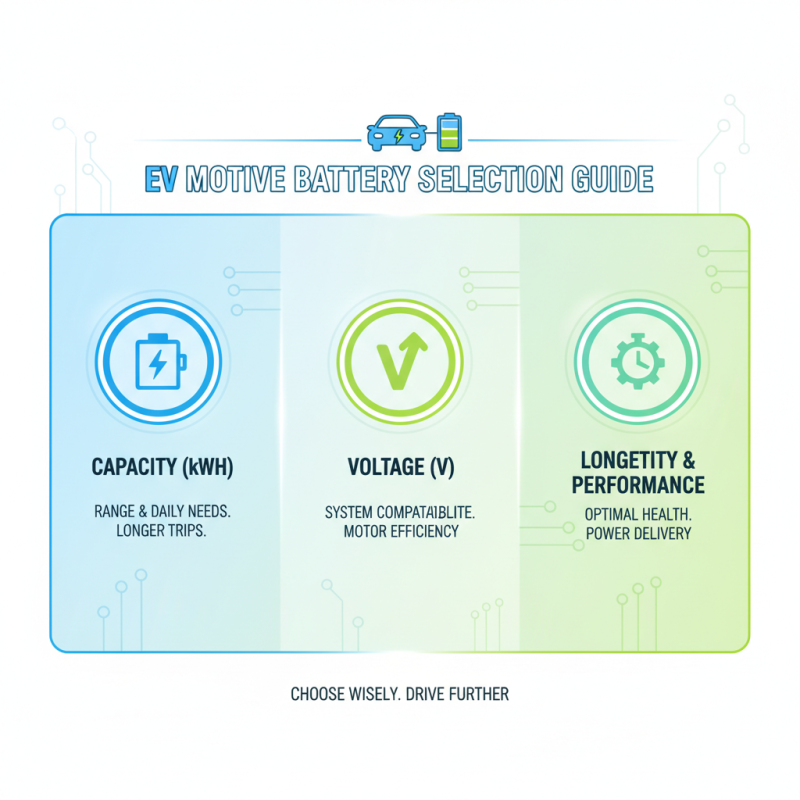
When selecting the right motive battery for your electric vehicle (EV), several key factors must be considered to ensure optimal performance and longevity. First and foremost, battery capacity is crucial; it determines how far your vehicle can travel on a single charge. Look for batteries with a capacity that meets your daily driving needs and can accommodate any unexpected long trips. Additionally, consider the voltage compatibility with your electric vehicle's system, as this can affect the efficiency and performance of the motor.
Another significant aspect to evaluate is the battery's cycle life and charge time. Cycle life refers to the number of complete charge and discharge cycles the battery can undergo before its capacity significantly diminishes. A longer cycle life indicates a more durable battery, making it a worthwhile investment. Furthermore, fast charging capabilities can greatly enhance your convenience, allowing you to recharge the battery quickly during short stops. Lastly, factor in the weight and dimensions of the battery, especially if your vehicle has specific space or weight limitations, as this can impact handling and overall efficiency.
Battery Capacity and Its Impact on Range
When selecting a motive battery for your electric vehicle, understanding battery capacity is crucial as it plays a significant role in determining the vehicle's range. Battery capacity, measured in kilowatt-hours (kWh), indicates how much energy the battery can store and, consequently, how far the vehicle can travel on a single charge. A higher capacity battery can typically provide a longer range, making it essential to assess how far you need to drive between charges. This consideration is particularly important for those who frequently undertake longer trips or have a daily commute that necessitates a robust energy supply.
Furthermore, it is essential to consider the trade-offs between battery capacity and weight, cost, and charging time. While larger capacity batteries offer extended range, they can also increase the overall weight of the vehicle, potentially affecting efficiency and handling. Additionally, larger batteries may take longer to charge, which could be a drawback for users who prioritize quick turnaround between trips. Therefore, evaluating your driving patterns and needs will help guide your decision, ensuring that you choose a battery that balances capacity with performance and practicality.
Charging Options and Their Importance
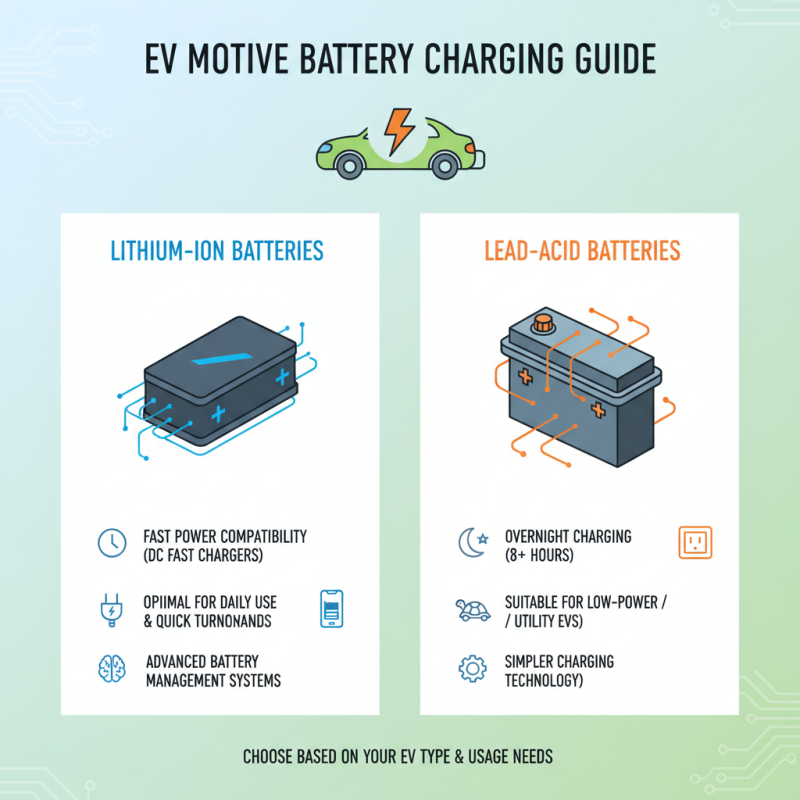
When selecting a motive battery for your electric vehicle (EV), understanding the available charging options is crucial to optimizing performance and convenience. Different battery types, such as lithium-ion or lead-acid, come with varying charging requirements and speeds. For instance, lithium-ion batteries typically support fast charging, allowing drivers to recharge within a matter of hours, while older technologies such as lead-acid may require overnight charging to achieve optimal capacity. Evaluating how each battery type interacts with charging systems helps ensure that users can manage their energy needs effectively.
The charging infrastructure should also match your typical driving habits and lifestyle. Home charging setups, public charging stations, and rapid chargers each serve distinct purposes. For urban commuters, having access to a reliable home charging station can eliminate the range anxiety often associated with EVs. Conversely, long-distance travelers may prioritize fast charging stations that can recharge their vehicles in under 30 minutes. Different charging options not only influence how quickly and efficiently a battery can be replenished but also affect the overall cost-effectiveness of maintaining an electric vehicle. Thus, assessing both battery type and charging capabilities is essential for making an informed choice that aligns with personal needs.
Cost Considerations for Motive Batteries
When selecting a motive battery for electric vehicles (EVs), cost is a critical factor that can significantly impact both initial investments and long-term operational expenses. According to a report by BloombergNEF, the average price of lithium-ion batteries has decreased dramatically, dropping to around $137 per kilowatt-hour in 2020, down 89% since 2010. This trend is expected to continue, yet the overall costs can still vary widely based on battery chemistry, capacity, and technology type. Potential buyers should evaluate not just the upfront cost but also the total cost of ownership, which includes factors like maintenance, lifecycle longevity, and return on investment.
Another important consideration is the battery's expected lifespan and performance. The International Energy Agency reports that high-quality motive batteries can last anywhere from 10 to 20 years when properly maintained. However, the initial purchase price may be higher for batteries with extended lifespan capabilities. Prospective EV operators should analyze their specific application needs, usage patterns, and future energy cost forecasts to assess the best value over time. This deeper financial analysis will allow for informed decision-making that can lead to significant cost savings and enhanced operational efficiency in the long run.
Maintenance and Lifespan of Electric Vehicle Batteries
When it comes to electric vehicles (EVs), battery maintenance and lifespan are crucial aspects that every owner should consider. According to a report by the International Energy Agency (IEA), the average lifespan of an Electric Vehicle Battery is between 10 to 15 years, contingent upon factors like usage patterns, charging habits, and environmental conditions. Regular maintenance plays a pivotal role in extending the battery's life, with studies indicating that proper care can enhance capacity retention significantly, helping to prevent the rapid degradation commonly seen in poorly maintained batteries.
One key tip for maintaining your EV battery is to avoid full discharges. Keeping your battery charge between 20% and 80% not only promotes longevity but also ensures optimal performance. Furthermore, charging at moderate rates rather than opting for fast-charging options can mitigate heat build-up, which is a prominent factor in battery wear. According to Battery University, maintaining a cool temperature environment can prolong battery life significantly, as heat is one of the largest contributors to capacity loss.
Additionally, mindful driving habits can positively impact battery longevity. Aggressive acceleration and frequent braking can stress the battery, leading to premature wear. Adopting a more gradual driving style, along with routine checks to monitor battery health, can enhance the overall lifespan and performance of your electric vehicle. Keeping an eye on software updates for your EV can also ensure you benefit from the latest efficiency improvements, thus reducing wear on your battery.
FAQS
: Electric vehicle motive batteries are essential components that impact the performance, range, and efficiency of electric vehicles.
Lithium-ion batteries dominate the market due to their high energy density, longer lifespan, and decreasing costs, which have dropped by about 89% since 2010.
When selecting an EV battery, one should consider capacity, charging speed, and temperature tolerance, as these factors influence the vehicle's performance and user experience.
An increase in battery capacity by just 10% can significantly enhance the driving range by approximately 20 to 30 miles.
The primary types of motive batteries for EVs include Lead-acid, Nickel-Metal Hydride (NiMH), and Lithium-ion (Li-ion) batteries.
Lithium-ion batteries provide a high energy density (150-250 Wh/kg), longer life spans, and reduced weight, making them more suitable for electric cars and commercial vehicles.
Lead-acid batteries, while cost-effective and recyclable, have a lower energy density (30-50 Wh/kg) and are primarily used in smaller applications due to their heavy weight.
NiMH batteries are mainly used in hybrid vehicles, as they perform better in extreme temperatures compared to Lead-acid batteries.
The availability of charging infrastructure is crucial, as the convenience of quickly charging batteries can significantly influence the overall user experience.
Rapid advancements in battery technology are enhancing energy capacity, leading to improved driving range and performance in newer EV models.
Conclusion
Choosing the right motive battery for your electric vehicle is crucial for optimizing performance and efficiency. Understanding the various types of motive batteries available, such as lead-acid, lithium-ion, and nickel-metal hydride, is the first step in making an informed decision. Key factors to consider include battery capacity, which affects range, as well as charging options that can influence convenience and usability.
Additionally, cost considerations play a significant role in the overall value of the battery, while understanding maintenance needs and lifespan can help ensure you get the most out of your investment. By carefully evaluating these aspects, you can select a motive battery that aligns with your electric vehicle requirements, enhancing your driving experience and ensuring sustainability.