Leave Your Message
When you're picking a Deep Cycle Battery, the real starting point is what you're going to do with it—not whatever the label shouts at you. An RV battery has a different job than one running a fishing boat, a solar cabin, or a mobility setup. So think about daily energy use, peak loads, how much charging time you'll realistically have, where it's going to fit, and the temps it'll face. A 200Ah battery can look really impressive on paper, but Ah alone won't tell you how it performs in the real world.
Battery educator Isidor Buchmann put it well: 'The best battery is the one that meets the application.' That still holds up. Dig into the manufacturer's cycle-life test conditions, usable capacity, discharge limit, charging profile, and warranty terms. A battery rated for 3,000 cycles might only hit that under moderate temps and very controlled discharge—real life is often messier.
Look beyond marketing language.
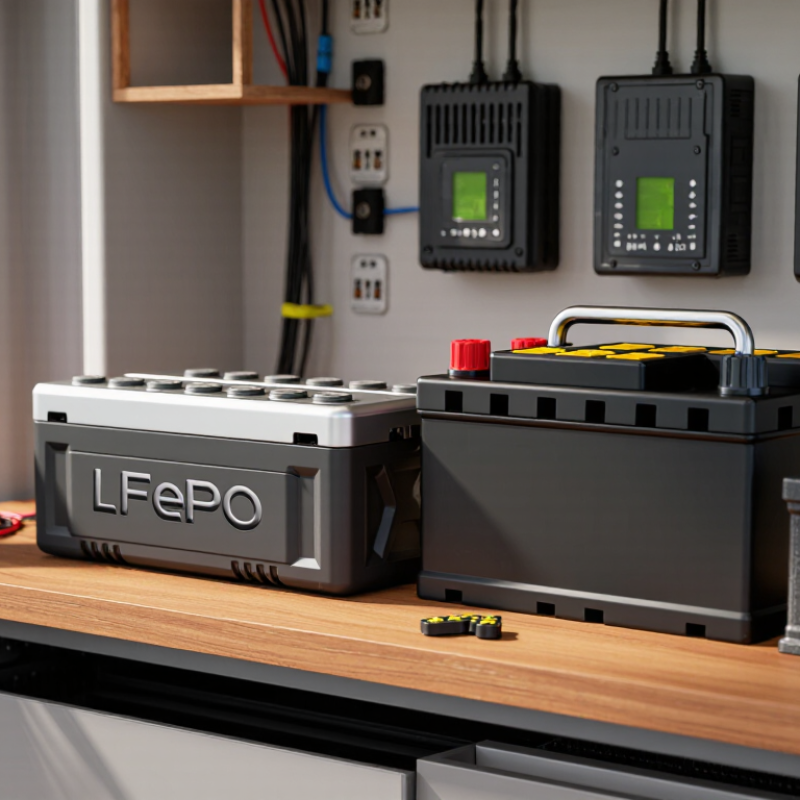
With lead-acid, don't ignore weight, ventilation, maintenance, and slow charging. For a Deep Cycle Lifepo4 Battery, check the BMS, low-temperature charging protection, continuous current rating, and cell-balancing design. Those details really matter when the battery is running a fridge overnight or backing up an inverter through cloudy weather. And installation quality counts, too—loose terminals, undersized cables, or bad charge settings can cut service life fast.
There's no perfect checklist. My early comparisons were way too focused on amp-hours, and I completely missed charging compatibility. Turns out that mistake is pretty common. Picking something reliable means matching chemistry, load, climate, and budget. Compare independent test data when you can, read the whole datasheet, and ask the supplier pointed questions. A trustworthy Deep Cycle Battery should fit the system quietly, safely, and consistently—not just look powerful in an online listing.
How to Choose the Best Deep Cycle Battery?
Understanding What Makes a Deep Cycle Battery Different
A Deep Cycle Battery is designed to deliver steady power over extended periods. It can discharge deeply and recharge repeatedly without rapid damage. Starting batteries work differently. They provide a short, powerful burst for engine ignition. Their thin Plates are not suited to regular deep discharge.
Deep cycle models usually use thicker plates and stronger internal structures. This design supports slower energy release, such as running lights, pumps, mobility equipment, or small solar systems. Capacity matters, but it is not the only factor. Check amp-hour ratings, expected discharge depth, charging time, and operating temperature. A higher rating may add weight and cost. It may also be unnecessary for a small system.
Tips: Measure your daily energy use before choosing capacity. Leave some reserve for cloudy days or unexpected demand. Follow the correct charging profile for the battery chemistry. Keep terminals clean and inspect cables for heat or corrosion. Never judge performance from one short test. I once assumed the largest battery would be the safest choice, but poor charging reduced its service life. That mistake showed me that system matching matters more than size. Read the technical sheet carefully. Verify ventilation, mounting space, and the recommended discharge limit. Small details can decide whether reliable power lasts for months or years.
| Battery Type | Typical Cycle Life* | Recommended Depth of Discharge | Usable Capacity from a 100 Ah Battery | Typical Round-Trip Efficiency | Maintenance and Installation | Best Suited For |
|---|---|---|---|---|---|---|
| Flooded Lead-Acid | Approximately 300–800 cycles | About 50% | Approximately 50 Ah | Approximately 75–85% | Lowest purchase cost; requires ventilation, upright mounting, and periodic electrolyte checks where applicable. | Budget-conscious off-grid systems, recreational vehicles, boats, and backup applications. |
| AGM Lead-Acid | Approximately 500–1,000 cycles | About 50% | Approximately 50 Ah | Approximately 75–85% | Sealed and generally maintenance-free; requires a suitable charger and protection from excessive heat. | Mobile power systems, marine equipment, solar storage, and installations where reduced maintenance is important. |
| Gel Lead-Acid | Approximately 500–1,200 cycles | About 50% | Approximately 50 Ah | Approximately 75–85% | Sealed and low-maintenance; must be charged with a charger configured for gel batteries to prevent damage. | Low-rate solar storage, mobility equipment, and applications requiring good resistance to vibration and leakage. |
| Lithium Iron Phosphate (LiFePO₄) | Approximately 2,000–5,000 cycles | Typically 80–90% | Approximately 80–90 Ah | Approximately 90–98% | Low maintenance and lightweight; requires an integrated battery-management system and suitable charging equipment. | Frequent cycling, solar energy storage, electric mobility, marine systems, and applications where weight and service life matter. |
What makes a deep cycle battery different? A deep cycle battery is designed to deliver a steady amount of power over a longer period and to withstand repeated discharge and recharge cycles. Unlike a starting battery, which is optimized for short bursts of high current, a deep cycle battery generally uses thicker, more durable plates and is intended for sustained energy delivery.
Selection reminder: Cycle-life figures vary with temperature, charging method, discharge rate, storage conditions, and the specified end-of-life capacity. Always compare batteries using the same depth of discharge and testing conditions.
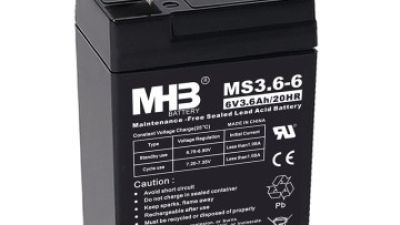
As demand for dependable uninterruptible power systems continues to grow, compact sealed lead-acid batteries remain an important choice for emergency backup applications. The MS 3.6-6 6V 3.5Ah SLA battery is designed for small UPS units, security systems, emergency lighting, communication equipment, and other devices that require stable short-term power. Its sealed, maintenance-free construction supports convenient installation, while rechargeable performance helps provide reliable energy during outages, voltage fluctuations, and unexpected interruptions.
Current UPS market trends emphasize dependable availability, compact design, consistent quality, and adaptable battery solutions. With advanced production lines and a daily output of 53,000 batteries, including UPS and motorcycle starting batteries, large-volume supply can be maintained without overlooking production consistency. The battery’s practical capacity and compact format make it suitable for equipment where space is limited, while its sealed design helps reduce routine maintenance requirements. For integrators, distributors, and equipment manufacturers, this type of SLA battery offers a balanced solution for backup power systems that need dependable performance, straightforward handling, and stable availability across diverse applications.
List each device, wattage, operating hours, and daily frequency. A 60-watt fridge running eight hours uses about 480 watt-hours. Allow extra energy for inverter losses, wiring resistance, and unexpected use.
Usually, no. A 12V, 100Ah battery stores about 1.2kWh nominally. Usable energy depends on battery chemistry, discharge limits, temperature, and age. The label is not the whole story.
A 12V system suits small lights, pumps, and compact equipment. Higher-voltage systems reduce cable current, heat, and voltage loss. Match the battery voltage with the charger and connected equipment.
Measure the compartment, terminal clearance, ventilation space, and battery weight. Leave room for airflow and inspection. A battery that fits on paper may still block a cable.
Cold weather can reduce available capacity and runtime. Heat can accelerate aging and shorten service life. Record winter conditions, not only comfortable summer usage.
Repeatedly discharging near empty can reduce service life. A 50% discharge level often supports longer operation than full depletion. Check the tested discharge limits for the specific battery type.
Use a charger with the correct voltage and charging profile. Gel batteries commonly need controlled charging around 14.1–14.4 volts at 25°C. The technical specification must take priority. Small errors matter.
Inspect terminals, cable connections, case swelling, and resting voltage every few months. Keep the battery dry and firmly secured. “Maintenance-free” does not mean “ignore it.” My earlier checks were too casual.
Choosing the right Deep Cycle Battery begins with understanding how it differs from a starting battery. Designed to deliver steady power over extended periods, it is suitable for systems such as renewable energy storage, recreational vehicles, boats, and backup equipment. Before selecting one, assess your daily energy consumption, operating environment, available charging sources, and expected usage frequency. These factors will help determine whether a lead-acid, gel, AGM, or lithium-based battery is most appropriate.
Next, compare capacity, voltage, physical dimensions, discharge performance, and charging requirements to ensure compatibility with your equipment. Consider how deeply and often the battery will be discharged, since these habits strongly affect service life. Maintenance needs, temperature tolerance, built-in safety features, warranty coverage, and replacement costs should also be evaluated. Looking beyond the purchase price and considering total ownership cost can help you choose a reliable battery that delivers consistent performance and long-term value.