Leave Your Message
0%

Picking the right Emergency Battery isn't just about the label on the box — it really depends on what you're actually using it for. Think about it: a hospital monitor, your home Wi-Fi router, or a roadside warning system all have very different power needs. Each device has its own load, startup surge, desired runtime, and ideal charging environment. Overlooking even one tiny detail can turn what should be a reliable backup into something that gives out when you need it most.

Dr. Jeff Dahn, a well-known battery researcher from Dalhousie University and someone who’s worked with Tesla, once said, “Battery choice is always a bit of a balancing act between energy, power, lifespan, and cost.” And honestly, that’s a point worth paying attention to. Lithium iron phosphate batteries tend to last longer and handle heat pretty well, but if you’re on a budget or just want something straightforward, lead-acid batteries still get the job done. Still, remember—your choice isn’t just about the chemistry. You’ve got to look at other factors too.

Start by figuring out how many watts your device needs. Then think about how long you want the backup to last. Don’t forget to check temperature limits, how fast it recharges, storage conditions, and what maintenance might be involved. For example, a battery that works great in your cool office might not do so well inside a hot car. And certifications matter — look for reputable testing labels from organizations like UL Solutions or TÜV Rheinland to be sure you're getting something safe and reliable.

Be wary of capacity numbers that sound super impressive; often those are based on perfect conditions. Real-world performance usually drops off over time, especially in cold weather or after many deep discharges. No checklist is perfect — I’ve seen people get caught up in the price only to end up paying more in the long run for replacements. A good Emergency Battery should match your equipment, fit the environment, meet safety standards, and align with your actual usage habits. And don’t forget about availability. Even the best battery isn't worth much if you can’t get support, compatible chargers, or replacements when you need them.

Basically, take your time to consider all these factors — a solid backup power option is about more than just specs or price; it’s about finding what really works for your situation.
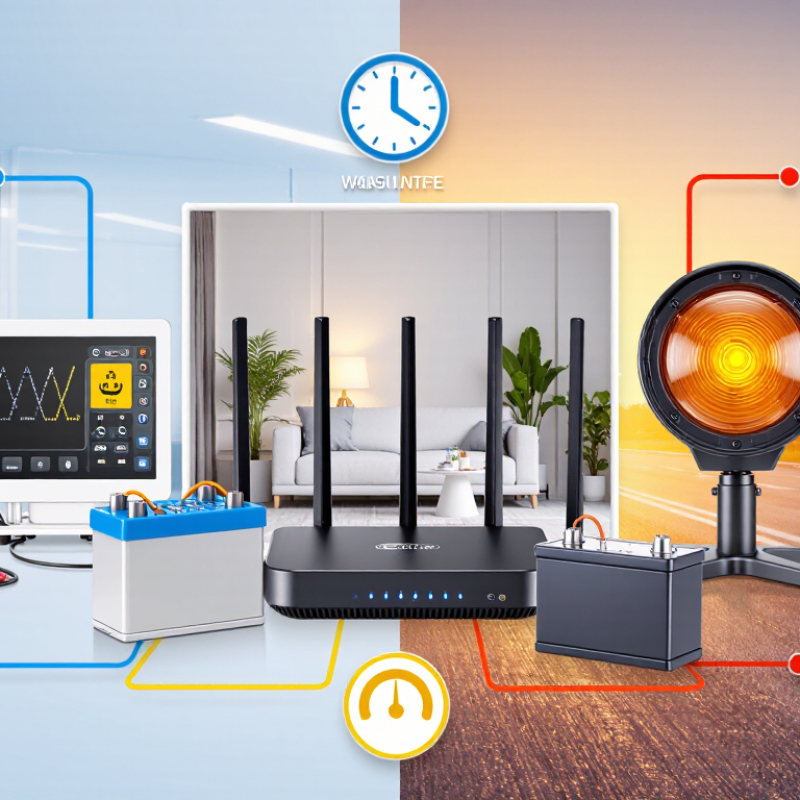
How to Choose the Right Emergency Battery?

Understanding What an Emergency Battery Is

An emergency battery stores electrical energy for critical loads when the main supply fails. It may support alarms, medical equipment, emergency lighting, communication systems, or controlled shutdowns. Unlike an ordinary portable battery, it must deliver predictable power under stress. A Battery For Emergency System also needs suitable autonomy, recharge performance, temperature tolerance, and monitoring.

The International Energy Agency reported that global battery storage additions reached about 42 GW in 2023, rising sharply from the previous year. The U.S. Energy Information Administration recorded approximately 15.5 GW of utility-scale battery capacity at the end of 2023. These figures show growing reliance on stored energy, but capacity alone can mislead. A battery rated for ten hours may last much less with aging, cold temperatures, or sudden load increases. I once underestimated startup power for a motor-driven ventilation system. The battery passed a basic test, yet failed the real demand. That mistake still deserves attention.

Tips: List every critical device and its starting wattage. Calculate runtime using usable capacity, not the label’s maximum capacity. Check replacement intervals, alarm records, ventilation needs, and test procedures. Standards such as NFPA 110 and IEC 62933 can guide system design, but local requirements still matter. Ask for documented test results, temperature limits, and battery degradation assumptions. Cheap capacity is not always dependable capacity.

How to Choose the Right Emergency Battery?

Understanding Typical Energy Density by Battery Chemistry

Energy density indicates how much energy a battery can store per kilogram. Lithium-ion batteries generally provide the highest energy density for compact emergency equipment, while lead-acid batteries are heavier but widely used for stationary backup systems. The final choice should also consider runtime, operating temperature, safety, maintenance, recharge time, and required discharge power.

Typical gravimetric energy-density ranges shown in watt-hours per kilogram (Wh/kg). Actual performance varies by cell design, operating conditions, age, and discharge rate.

Identifying Your Equipment’s Backup Power Requirements

Choosing backup power starts with the equipment, not the battery label. List every device that must remain active during an outage. Record its operating voltage, current draw, and required runtime. Measure normal current, then allow extra capacity for aging and temperature changes.

For emergency lighting, a 6v Ups Battery For Emergency Lights may fit the system. Yet voltage alone misleads. Check connector polarity, physical dimensions, charging method, and battery chemistry. Confirm the emergency circuit’s total load, especially when several lights start together. A three-hour requirement needs more than a quick capacity estimate. Use the equipment manual and verified electrical measurements whenever possible.

In field inspections, I have found that real conditions often differ from design notes. Dust, heat, loose terminals, and infrequent testing can reduce available runtime. Test under load. Do not rely only on a green indicator. Time the lights during a controlled power-failure simulation, and record the result. A qualified technician should inspect wiring and charging performance where necessary. Keep records. They reveal gradual capacity loss better than memory.

It is also worth checking the installation environment. A battery placed near heat-producing equipment may age faster than expected. Ventilation, secure mounting, and accessible isolation points support safer maintenance. I once treated a calculated runtime as reliable, but the actual load had increased after later equipment changes. That assumption needed correction. Recheck the system whenever lighting, controls, or operating schedules change.

Comparing Battery Types, Capacities, and Runtime

Choosing an emergency battery starts with the equipment’s load, not the battery’s advertised size.Emergency batteries commonly use lithium-ion, AGM lead-acid, or nickel-metal hydride chemistry. Lithium-ion usually offers lower weight and higher usable capacity. Agm Batteries are heavier, but they can provide dependable short-term backup. Nickel-metal hydride may suit moderate loads where operating conditions are carefully controlled.Weight matters.

Capacity is measured in watt-hours, calculated as voltage multiplied by amp-hours. A 12-volt, 20-amp-hour battery stores about 240 watt-hours before conversion losses. Runtime depends on the actual load, inverter efficiency, temperature, and battery age. A practical estimate is usable watt-hours divided by load watts. A 100-watt device may run for roughly two hours from 240 usable watt-hours, but real results will be shorter. The calculation is useful, not perfect.

Technicians should compare continuous load with starting or surge demand. Motors, pumps, and medical equipment may briefly require much more power. Leave a safety margin of at least 20 percent when conditions are uncertain. Cold storage areas can reduce available capacity, especially in older batteries. Check charging time, replacement intervals, ventilation requirements, and certified safety documentation. Test the system under a realistic load, such as lights and communication equipment running together. A small battery may appear adequate during a desk test, then fail during a longer outage. That mistake is easy to make.

Checking Compatibility, Safety, and Installation Needs

Choosing the right emergency battery starts with compatibility, not price. Check the fixture’s voltage, connector, dimensions, chemistry, and charging method. A 6v Backup Battery For Emergency Lights must match the original system voltage exactly. A mismatch can cause weak illumination, overheating, or charging failure. Measure the battery compartment before ordering. Small errors matter.

NFPA 101, 2024 edition, identifies 90 minutes as the common minimum duration for emergency illumination. Test the replacement under a full load, not only by checking its voltage with a meter. A battery may show six volts and still collapse quickly during discharge. I have seen this mistake during maintenance checks. The reading looked correct. The runtime was not.

Safety also depends on installation conditions. Follow the fixture manufacturer’s wiring diagram, isolate mains power, and inspect terminals for corrosion or loose crimps. Use insulated tools and avoid forcing a connector into place. UL 924 covers emergency lighting and power equipment performance, while IEC 60598-2-22 addresses emergency luminaire requirements. These standards emphasize controlled charging, reliable changeover, and safe enclosure design. Sealed lead-acid batteries suit many basic systems, while nickel-metal hydride options may tolerate frequent cycling better. Neither choice is automatically superior. Temperature, test frequency, and available space can change the result. Keep a dated test record. Recheck it after installation.

Evaluating Battery Lifespan, Maintenance, and Reliability

Choosing an emergency battery requires more than checking its advertised capacity. Lifespan depends on temperature, charging quality, discharge depth, and storage conditions. IEEE 1188 recommends scheduled inspections, capacity testing, and trend analysis for stationary valve-regulated lead-acid batteries. A battery can look clean while its internal resistance quietly increases.

Maintenance must be practical. During inspections, technicians should record terminal voltage, cabinet temperature, corrosion, swelling, and charger alarms. A warm battery room is a warning. The U.S. Department of Energy notes that higher operating temperatures accelerate battery aging, making ventilation and temperature control essential.

NFPA 110 also emphasizes testing emergency power systems under realistic operating conditions, not only during installation. Monthly checks can reveal loose connections or failed chargers. They cannot predict everything.

Reliability improves when battery age is tracked by date, cycle count, and test results. The Uptime Institute’s 2024 Annual Outage Analysis reported that 54% of respondents experienced an outage costing more than $100,000. That figure shows why preventive testing deserves a real budget. Still, field records are often incomplete. That is a weakness worth admitting. Replace batteries based on measured condition, risk, and service history, rather than a fixed calendar alone. Keep spare parts available. Test the complete emergency system, including transfer equipment, alarms, cables, and the final load. A healthy battery is useless if the connection fails.

Balancing Purchase Cost with Long-Term Value

Choosing an emergency battery requires more than comparing purchase prices. A low-cost unit may save money today, yet fail sooner under heat, frequent charging, or poor maintenance. Uptime Institute’s 2024 Annual Outage Analysis reported that 54% of respondents said their latest outage cost more than $100,000. That figure makes battery reliability a financial decision, not only a technical one. Review expected service life, recharge time, usable capacity, warranty terms, and replacement labor. A 6 Volt 7ah Battery.110 Volt Battery Pack may fit a listed application, but voltage and capacity must match the equipment precisely.

Lifecycle cost deserves closer attention. Include inspections, testing, ventilation, disposal, and the cost of unexpected downtime. BloombergNEF reported an average lithium-ion pack price of $139 per kWh in 2023, down 14% from 2022. However, that market figure does not represent a complete emergency power system. Installation, controls, safety features, and standby requirements can change the final price. I have seen buyers focus too heavily on the first invoice. That choice can look reasonable, but it may ignore aging under real operating conditions.

Tips: Ask for documented cycle-life data and temperature limits. Compare five-year ownership costs, not just purchase costs. Request test records before installation. Check charging compatibility. Leave a margin for future load growth, because today’s “perfect” capacity may become inadequate. Recheck the calculation annually. Procurement assumptions are not permanent.

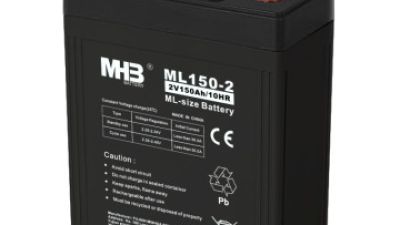
UPS Battery Market Trends: Grand View Research Insights on ML150-2 GFM150 2V 150Ah for Long-Life Backup Power

ups battery market trends increasingly emphasize dependable, long-life backup power for data centers, telecommunications systems, security equipment, and industrial facilities. Within this landscape, the ML150-2/GFM150 2V 150Ah battery represents a practical solution for applications that require stable energy storage and reliable emergency power. Its 2V configuration supports flexible battery-bank design, while the 150Ah capacity provides consistent power delivery during outages and critical operating conditions.

Built with advanced lead-acid technology, this battery is engineered for durability, dependable performance, and extended service life. Its robust construction helps maintain steady operation under demanding environments, making it suitable for standby UPS systems and other essential power applications. The design also supports predictable maintenance planning and dependable backup availability, helping facilities reduce interruptions and protect sensitive equipment. For organizations seeking a reliable 2V 150Ah battery for long-term backup power, this model offers a balanced combination of capacity, resilience, and operational consistency.

FAQS

What should I check before choosing an emergency battery?

Check voltage, connector type, dimensions, chemistry, and charging method. Compatibility matters more than price. Measure the compartment carefully.

Why must the replacement battery match the fixture voltage?

An incorrect voltage can cause weak light, overheating, or charging failure. The voltage must match exactly. Small errors matter.

How can I confirm the battery will provide enough emergency lighting?

Test it under the fixture’s full load. A meter may show six volts, yet the battery can fail quickly. Voltage alone proves little.

How long should emergency lighting commonly operate?

Ninety minutes is a common minimum target for emergency illumination. Confirm the required duration for your specific building and system.

What safety steps are needed during installation?

Isolate mains power and follow the wiring diagram. Inspect terminals for corrosion or loose crimps. Use insulated tools. Never force a connector.

Which battery chemistry is better for emergency lighting?

Sealed lead-acid batteries suit many basic systems. Nickel-metal hydride batteries may handle frequent cycling better. Neither option is always superior.

What conditions shorten an emergency battery’s lifespan?

High temperature, poor charging, deep discharge, and unsuitable storage can accelerate aging. A warm battery room is a warning.

What should technicians record during battery inspections?

Record voltage, temperature, corrosion, swelling, charger alarms, test dates, and cycle counts. Keep the notes together. Missing records weaken decisions.

When should an emergency battery be replaced?

Use measured condition, risk, and service history rather than age alone. Replace it when capacity, connections, or test results become unreliable.

Can a healthy battery still fail the emergency system?

Yes. Failed cables, alarms, transfer equipment, or final-load connections can stop the system. The battery is only one part.

Conclusion

Choosing the right Emergency Battery begins with understanding its purpose: providing dependable backup power when a primary supply fails. Start by identifying the equipment that needs protection, its power consumption, required backup duration, and the consequences of interruption. These details will help determine the appropriate battery capacity, expected runtime, and charging requirements. Comparing battery types is also important, as each option may differ in energy density, operating life, recharge speed, and performance under different conditions.

Before making a purchase, confirm that the battery is compatible with your equipment and installation environment. Consider voltage, connectors, available space, ventilation, safety features, and whether professional installation is needed. It is equally important to evaluate lifespan, maintenance requirements, discharge performance, and reliability over time. Although a lower purchase price may seem attractive, a durable Emergency Battery with stable performance, fewer replacements, and minimal maintenance may provide better long-term value. A careful comparison of technical needs, safety, reliability, and total ownership cost will lead to a more confident decision.

Ethan

Ethan

Ethan is a dedicated marketing professional at Fujian Minhua Power Co., Ltd., where he leverages his extensive expertise in the power supply industry to drive brand awareness and customer engagement. With a strong focus on the company's revolutionary energy solutions, including advanced battery......
Previous China Top 10 Motive Battery Manufacturers?