Leave Your Message
0%

Picking the right Solar Panel Batterycan feel pretty overwhelming, right? I mean, with so many options out there, how do you really know what’s best for your home? Emily Harris, who's a renewable energy pro at GreenTech Innovations, puts it simply: "Knowing what your energy needs are is the most important thing when choosing a Solar Panel Battery." It’s all about taking a moment to understand yourself and your energy habits.

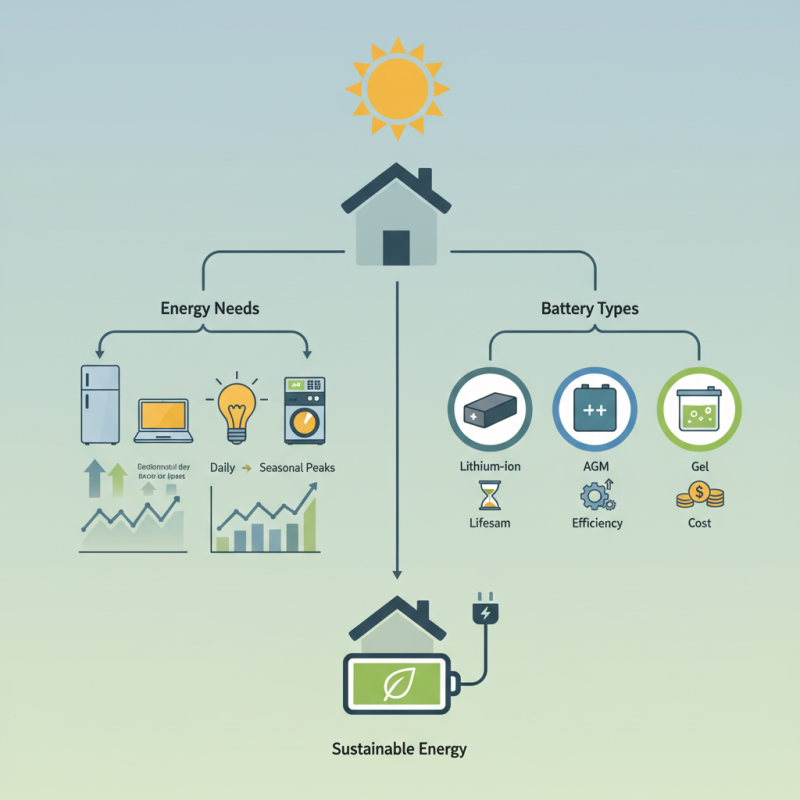
So, where do you start? First off, get a good grip on your energy consumption. Take a look at your daily usage—what gadgets you're running and how your needs might change with the seasons. This info is super helpful because it shows how much storage capacity you'll actually need. And honestly, a lot of folks forget to think about these details, which can lead to ending up with a battery that doesn’t quite cut it.

Then, it’s important to realize that not all batteries are created equal. You’ve got lithium-ion, AGM, gel—all with their own perks and quirks. Think about things like how long they'll last, how efficient they are, and what they’re going to cost you in the long run. This is where mistakes can happen if you're not careful. Picking the wrong one might leave you short on backup power when you really need it. So, take your time, weigh your options, and choose wisely—because having the right Solar Panel Battery is a game changer for making your energy setup sustainable and reliable.
How to Choose the Right Solar Panel Battery for Your Needs?

Understanding Solar Battery Types: Lithium-Ion vs. Lead-Acid

How to Choose the Right Solar Panel Battery for Your Needs?

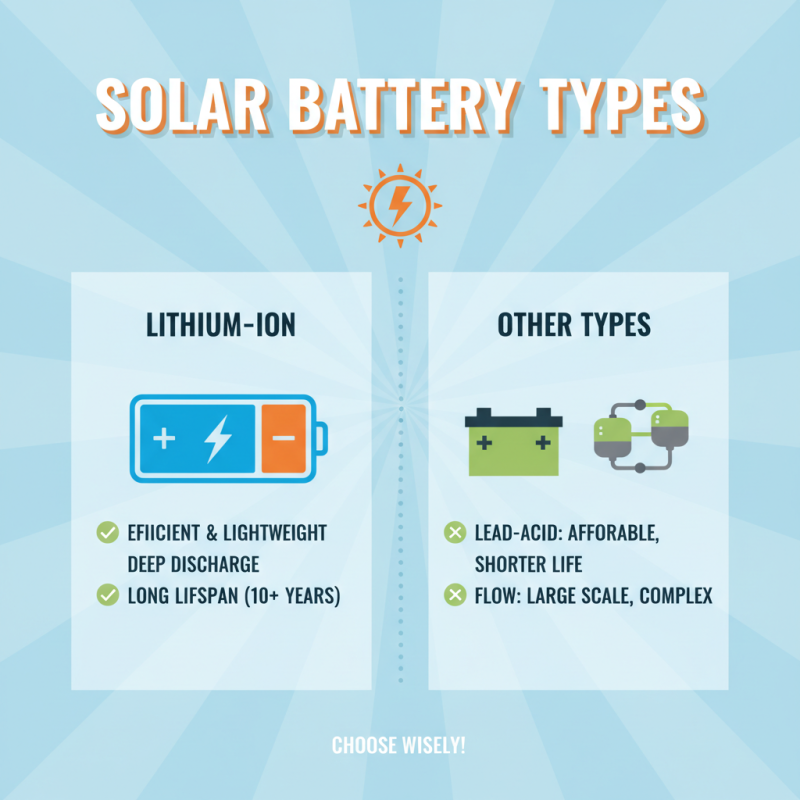
When it comes to choosing a solar panel battery, understanding the types is essential. Lithium-ion batteries are known for their efficiency. They are lightweight and durable, making them an attractive option. These batteries can handle deep discharges easily, allowing you to utilize more of their capacity. They also have a longer lifespan, often exceeding ten years with proper care.

On the other hand, lead-acid batteries have been around for a long time. They are generally less expensive upfront, which can be appealing if you're on a tight budget. However, they require regular maintenance and have a shorter lifespan compared to lithium-ion. Their weight and size can also be challenging if space is limited.

Choosing between these options involves trade-offs. You may prioritize cost or efficiency based on your energy needs. Consider your installation space and how often you will charge the battery. Explore your choices carefully. Understanding the specifics will help you make a more informed decision. Your needs will dictate the best option.

Key Factors in Assessing Your Energy Storage Needs

When considering energy storage, assessing your needs is crucial. Many homeowners overlook this. They might buy a solar panel battery without evaluating their actual power requirements. According to a report by the Solar Energy Industries Association, a significant number of users underestimate the energy needed for day-to-day functions.

Evaluate your typical energy consumption first. An 80 Watt Solar Panel Charge 12v Battery can support various devices, but is it enough for your lifestyle? Many households use more power than they realize. For instance, running appliances during peak hours can drain your battery faster. A well-calculated approach is vital for efficiency.

Next, think about battery capacity and lifespan. The best options are designed to last long but may come at a higher upfront cost. Is the investment worth it for your usage patterns? Balancing price and performance can be tricky. Many users find themselves dissatisfied later. They regret not anticipating future energy needs correctly. Seeking professional advice might help clarify these factors before making a purchase.

Evaluating Battery Capacity: Amp-Hours and Watt-Hours Explained

Choosing the right solar panel battery requires understanding battery capacity. Two key terms to know are amp-hours (Ah) and watt-hours (Wh). Amp-hours measure the total charge a battery can deliver over time. For example, a 100 Ah battery can deliver 100 amps for one hour or 50 amps for two hours. This helps you gauge how long your battery will last based on your energy needs.

Watt-hours, on the other hand, take voltage into account. To find watt-hours, multiply amp-hours by voltage. For instance, a 12V battery with 100 Ah offers 1200 Wh. This is crucial for determining how much energy you can use. Yet, it's vital to reflect on efficiency losses. Batteries don’t discharge at 100% efficiency.

When selecting a battery, consider your daily energy consumption. Assess how much energy your devices require versus what the battery can store. This reflection helps prevent overloading. Moreover, think about future needs. You may need more capacity later. That’s a common mistake many make. Balancing capacity with potential growth is key to making a wise choice.

Battery Capacity Comparison: Amp-Hours vs Watt-Hours

This chart illustrates the comparison between Amp-Hours and Watt-Hours of different battery types commonly used in solar energy systems. Understanding these metrics is crucial for selecting the right battery according to your energy needs.

The Importance of Cycle Life in Solar Batteries

When selecting a solar panel battery, cycle life is crucial. This metric indicates how many complete charge and discharge cycles a battery can undergo before its capacity significantly declines. According to a study from the National Renewable Energy Laboratory, a battery with a longer cycle life may last 5-15 years. This lifespan can affect your overall investment in solar energy.

Short cycle life can be a costly mistake. Using a 24v Solar Panel To 12v Battery needs careful consideration. Batteries with lower cycle life can diminish efficiency. Choosing wisely here can save money and hassle in the long run.

Tips: Look for batteries rated for at least 2,000 cycles. This usually translates to a longer lifespan. Pay attention to warranty periods; a 10-year warranty often signals quality. Research user reviews but remember they might not represent every experience. Getting the right battery is as important as choosing the solar panel itself. Each decision shapes your energy future.

How to Determine Optimal Depth of Discharge for Longevity

Determining the optimal depth of discharge (DoD) for your solar panel battery is crucial for longevity. A higher DoD can provide more usable energy. However, using too much capacity can reduce the battery's lifespan. Most experts recommend keeping the DoD around 50% for lead-acid batteries. For lithium-ion batteries, you might go up to 80%. Understanding these limits helps balance efficiency and longevity.

Many people overlook the significance of regular monitoring. It’s easy to assume everything is working fine. Yet, neglecting your battery's health may lead to premature failure. Visual inspections can reveal wear and damage. Listening for unusual sounds can also be helpful. People often think they know their battery's condition, but this can lead to overconfidence.

Using a Solar Panel For 150ah Battery may suit medium-sized setups. It allows ample storage while maintaining a manageable depth of discharge. Yet, you may need to adapt your energy consumption habits. Assess your usage regularly and adjust accordingly. Finding the ideal DoD isn’t just about numbers; it's about understanding your energy needs.

Analyzing Costs: Upfront vs. Long-Term Savings in Solar Batteries

How to Choose the Right Solar Panel Battery for Your Needs?

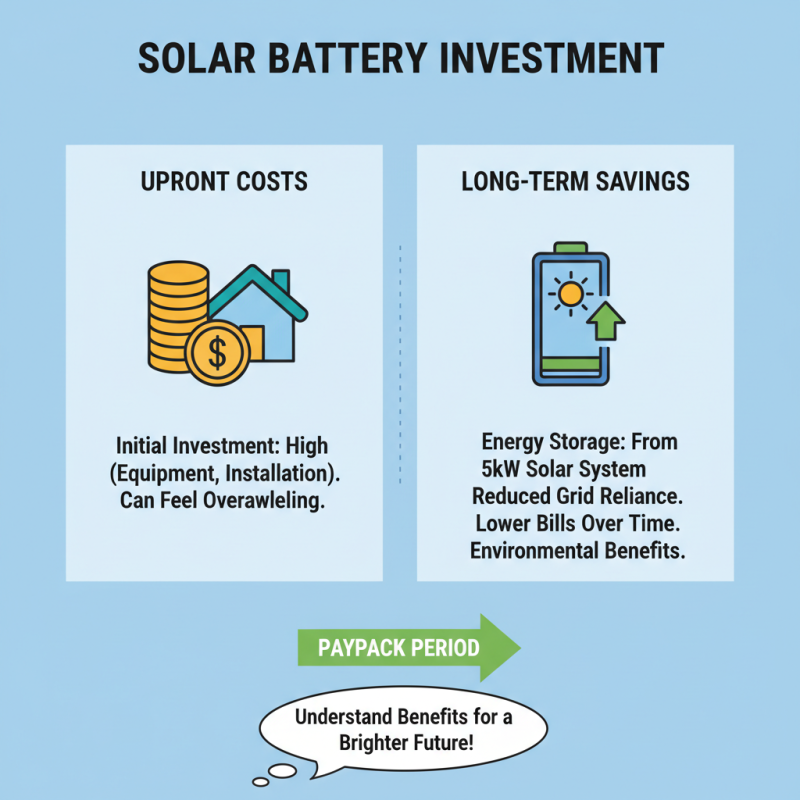
When analyzing costs for solar batteries, consider both upfront expenses and long-term savings. The initial investment can be substantial. Many homeowners feel overwhelmed by these numbers. However, understanding the long-term benefits can make a difference. A Solar Battery can store energy generated from a5kw Solar System With Battery Backup, reducing reliance on the grid.

Calculating savings is not straightforward. Factors like energy prices and usage patterns matter. Some consumers may save significantly on their electricity bills. Others might not see immediate returns. It’s essential to evaluate your specific situation. Look into your energy consumption. Assess how a battery can supplement your needs over time.

Consider potential maintenance costs too. Batteries may require occasional upkeep, which can add to overall expenses. Assessing warranty options is advisable. Some batteries may need replacement sooner than expected. This can impact your long-term calculations. Always reflect on how these elements affect your decision. The aim is to make an informed choice tailored to your unique energy requirements.

Understanding Warranty and Performance Guarantees for Solar Batteries

When choosing a solar battery, understanding warranty and performance guarantees is vital. Warranties can vary significantly among options. A good warranty typically ranges from five to ten years. However, just because a battery has a longer warranty doesn't always mean it's the best choice. It's essential to consider what the warranty covers. Does it include capacity retention? Or only defects? Knowing this can impact long-term decisions.

Performance guarantees are equally important. They outline how a battery will perform over time. A battery may promise a certain level of efficiency, but what happens after a few years? Some batteries lose output faster than expected. This slow decline can affect energy savings. Reading the fine print helps uncover these hidden details. Battery performance is subjective. User experiences can vary widely.

It's also wise to reflect on your actual energy needs. Are you planning to use the battery for daily energy storage or emergency backup? Each scenario affects the warranty you should choose. Many overlook this crucial aspect. Evaluating both short- and long-term needs is key. Rushing this decision could lead to future regrets. Taking time to research and understand these guarantees pays off in the long run.

FAQS

: What is the main purpose of this service?

: The service aims to provide users with helpful and accessible information. It focuses on user engagement and interaction.

Who can use this service?

Anyone can use the service as long as they have internet access. It is designed for a wide range of users.

How do I get started?

Start by signing up on the platform. Follow the instructions for creating an account to begin exploring.

Is there a cost associated with using this service?

Some features might require payment. Basic access is often free, but premium options may involve fees.

Can I access the service on my mobile device?

Yes, the service is optimized for mobile use. Users can access it easily from smartphones or tablets.

What should I do if I encounter issues?

Reach out to customer support for assistance. They can help troubleshoot and resolve any problems you face.

Is my personal information safe?

User privacy is a priority. Measures are in place to protect personal data, but risks can still exist.

How often is the content updated?

Content updates typically occur regularly. However, not all sections are updated simultaneously, which could lead to inconsistencies.

Can I provide feedback?

Yes, user feedback is welcomed. It helps improve the service, but not all suggestions may be acted upon.

What if I change my mind after signing up?

You can cancel your account anytime. However, once canceled, access to certain features may be lost immediately.

Conclusion

Choosing the right solar panel battery involves understanding the key differences between battery types, primarily lithium-ion and lead-acid. Each type has its own advantages and disadvantages, which should align with your energy storage needs. Key factors to consider include evaluating battery capacity in terms of amp-hours and watt-hours, as well as understanding cycle life, which refers to how many charge-discharge cycles a battery can undergo before its capacity diminishes.

Additionally, it’s crucial to determine the optimal depth of discharge for battery longevity and performance. Analyzing upfront costs versus long-term savings will guide your financial decision, while warranty and performance guarantees offer insights into the durability and reliability of your solar panel battery choice. By weighing these aspects, you can make an informed decision that meets your energy requirements effectively.


Liam

Liam

Liam is a dedicated marketing professional at Fujian Minhua Power Supply Co., Ltd., where he leverages his extensive knowledge of the company’s products to connect effectively with clients and partners. With a keen eye for market trends and a passion for innovation, Liam plays a pivotal role in......
Previous How to Choose the Right Lithium Battery for Your Energy Storage Needs