An Emergency Battery is one of those handy gadgets you really don’t want to be caught without, especially in today’s world where we rely so much on power. It’s that little backup you can turn to when the power suddenly decides to go on vacation. Whether you’re chilling at home or out and about, knowing what it does and how it works is pretty important, don’t you think?
Basically, these batteries kick in when the lights go out. They’re usually small enough to carry around easily and can be charged up quickly. Brands like Anker and Goal Zero have become pretty popular in this scene—they’ve shown that you really can have a portable device that still packs a punch when it comes to power.
That said, not all emergency batteries are built the same. Some might not be dependable enough when it really counts, and that’s a risk you definitely don’t want to take. It’s worth doing a bit of digging and picking one carefully. Thinking about what could go wrong helps you avoid disappointment. The right emergency battery could actually be a real lifesaver if shit hits the fan.

What is an Emergency Battery?
An emergency battery is a crucial device designed to provide power during unexpected outages. It serves various applications, such as keeping essential equipment running, aiding in disaster preparedness, and ensuring safety in critical situations. According to industry reports, the global emergency battery market is expected to reach USD 12 billion by 2026, reflecting increasing reliance on backup power solutions.
These batteries typically use lithium-ion or lead-acid technologies to store energy. They can be charged via traditional power sources and activated during emergencies. When a power failure occurs, an emergency battery automatically switches on, supplying energy to vital systems. However, not all emergency batteries perform equally well. Some models may not hold a charge effectively or could have issues with longevity. Users should consider factors like capacity, discharge rate, and temperature tolerance when selecting a battery.
The importance of regular maintenance cannot be overstated. Neglecting to check battery health can lead to unexpected failures when needed most. A recent survey revealed that 30% of users had experienced battery failures due to improper care. This highlights the need for an ongoing commitment to monitoring and managing these devices. Awareness and proactive action can significantly enhance the reliability of emergency battery systems.
Types of Emergency Batteries Available
Emergency batteries play a crucial role in ensuring uninterrupted power during outages or emergencies. Various types are available on the market, catering to different needs and applications.
Lithium-ion batteries have become the gold standard for emergency power due to their high energy density and longevity. Reports indicate they can retain up to 80% capacity after 500 charge cycles. Lead-acid batteries are also common. They are less expensive but heavier and typically have a shorter lifespan. As noted in a recent market analysis, the global emergency battery market is projected to reach $12 billion by 2026, underlining their growing importance.
Tip: When selecting an emergency battery, consider factors like capacity, weight, and recharge time. A heavy battery might not be ideal for portable use. Additionally, regularly testing your battery’s functionality can prevent unexpected failures. Also, remember that a battery’s lifespan is influenced by environmental factors, so store it in a cool, dry place.
What is an Emergency Battery and How Does It Work? - Types of Emergency Batteries Available
| Battery Type | Common Use Cases | Advantages | Disadvantages | Typical Capacity |
| Lead-Acid Battery | Uninterruptible Power Supply (UPS), Emergency Lighting | Cost-effective, high surge current capability | Heavy, shorter lifespan compared to others | 12V to 48V |
| Lithium-Ion Battery | Portable Electronics, Electric Vehicles | Lightweight, long cycle life | More expensive, requires protection circuitry | 3.7V to 12V |
| Nickel-Cadmium (NiCd) Battery | Power Tools, Aviation | Long shelf life, can withstand deep discharges | Memory effect, toxic materials | 1.2V |
| Nickel-Metal Hydride (NiMH) Battery | Hybrid Vehicles, Consumer Electronics | Higher capacity than NiCd, less toxic | More expensive than NiCd, self-discharge | 1.2V |
| Solid State Battery | Future Applications, Wearable Technology | Higher energy density, safer | Currently expensive, still in development | Varies widely |
How Emergency Batteries Function
Emergency batteries play a critical role in empowering various devices during unexpected power outages. Their operation hinges on the principles of electrochemical reactions. These batteries typically store energy using lithium-ion or lead-acid chemistries. According to industry reports, the global market for emergency batteries is expected to reach $5 billion by 2026.
When an emergency occurs, these batteries activate automatically, supplying power to essential devices such as lights and communication systems. They work by converting stored chemical energy into electrical energy. For instance, the discharge process involves ions moving through an electrolyte, creating a flow of electricity. Reports indicate that effective emergency battery systems can operate in extreme temperatures, maintaining functionality where standard batteries fail.
However, the performance of emergency batteries can be inconsistent under prolonged stress. Factors like temperature regulation and proper maintenance impact their effectiveness. Some devices may not perform optimally if the battery isn’t adequately monitored. Understanding these aspects is crucial for maximizing performance during emergencies. Insight into these limitations can drive improvements in battery technology, ensuring that they deliver reliable power when needed most.
Applications of Emergency Batteries in Daily Life
Emergency batteries play a critical role in daily life. They provide reliable power when primary sources fail. According to a 2021 report by the International Energy Agency, global demand for backup power systems, including emergency batteries, has risen by 25% during natural disasters. These batteries are essential for maintaining operations in hospitals, data centers, and emergency response systems.
In residential settings, emergency batteries support household needs during outages. They power essential devices such as refrigerators, lights, and medical equipment. A study from the U.S. Department of Energy found that homes with emergency batteries experienced 30% fewer disruptions during blackouts. This can significantly reduce stress for families relying on electricity for basic needs.
However, the reliance on emergency batteries can have its downsides. Some users report that batteries lose effectiveness over time. Regular maintenance and checks are necessary to ensure reliability. According to maintenance experts, nearly 20% of batteries go untested before a critical event. This gap highlights the necessity for proper knowledge and preparedness in using emergency power solutions.
Installation and Maintenance of Emergency Batteries
Installing an emergency battery is crucial for ensuring continuous power during outages. The first step is selecting an appropriate location. The area should be dry and well-ventilated. Even a small amount of moisture can lead to battery damage. Users often overlook this detail, which can shorten battery life.
Next, the installation should follow the manufacturer's guidelines. Secure connections prevent power loss and ensure efficiency. Neglecting proper wiring can cause serious safety hazards. Regular checks for corrosion or loose connections are vital. Many people forget this essential maintenance step, which can lead to unexpected failures.
Maintenance is an ongoing process. Checking battery levels should be done periodically, ideally every month. Depending on usage, batteries may need replacement every few years. Infrequent inspections can result in dead batteries when you need them most. Always keep a log of maintenance activities to track performance over time. This reflection promotes a proactive approach to power reliability.
Emergency Battery Capacity Comparison
This chart displays the capacity (in Ah) of various types of emergency batteries. Lead Acid batteries generally provide a lower capacity compared to Lithium Ion batteries, while Nickel Cadmium and Gel batteries fall in between. Understanding these capacities helps in selecting the right emergency battery for specific needs.
Benefits of Using Emergency Batteries
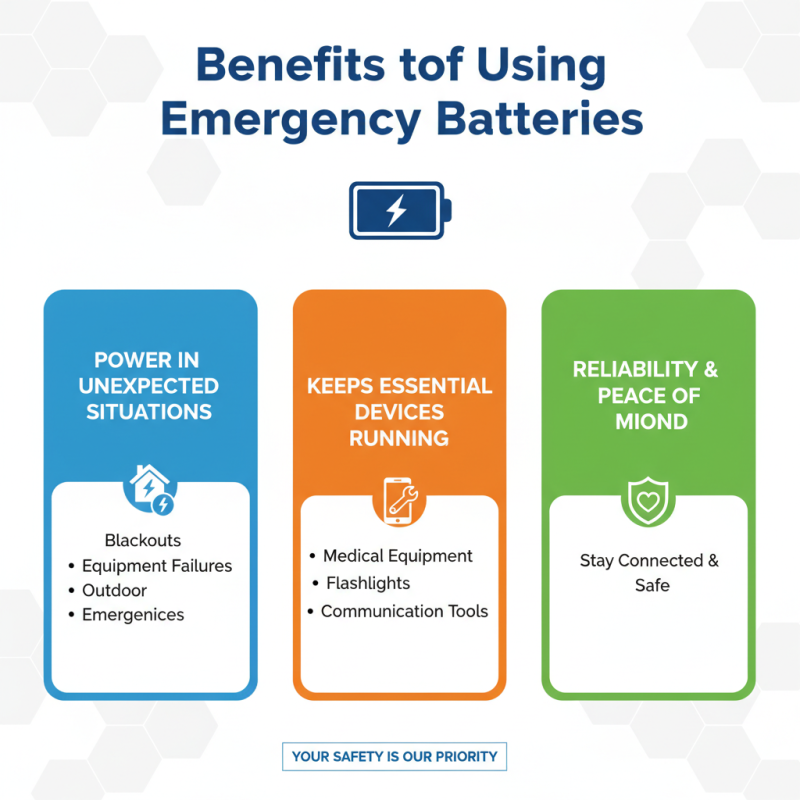
Emergency batteries serve a critical function in our daily lives. They are designed to provide power in unexpected situations. These batteries come in handy during blackouts, equipment failures, or even emergencies outdoors. With a reliable emergency battery, you can keep essential devices running. This includes medical equipment, flashlights, and communication tools.
One of the key benefits of using emergency batteries is peace of mind. Knowing you have backup power can reduce anxiety during crises. They are often compact and portable, making them easy to store in your car or home. However, it’s important to choose the right type. Not all batteries are designed for every device. Regular maintenance and checks are necessary to ensure they work when needed.
While the advantages are clear, some challenges exist. Battery lifespan can vary, and not all batteries hold a charge well. It’s crucial to evaluate your needs carefully. Are you prepared to replace old batteries? Understanding these factors leads to better preparedness. Emergency batteries are invaluable, but they require responsibility and thoughtfulness in use and maintenance.
Safety Considerations When Using Emergency Batteries
When using emergency batteries, safety is paramount. These batteries can provide essential power during outages or emergencies. However, improper usage can lead to serious risks. Always check the battery's condition before use. A damaged battery may leak or burst. Even minor dents should raise concerns.
Charging practices also matter. Overcharging can escalate risks. Avoid using damaged chargers or cables. Keep batteries away from heat sources. Store them in cool, dry places. Regular inspections can help you catch potential hazards early. It is wise to know the life span of your emergency battery. An expired battery may fail when you need it most.
Keeping children safe is crucial. Educate them about battery safety. Never allow them to handle batteries without supervision. Clear labeling can help remind everyone about the risks involved. Being proactive ensures a safer environment. Emergencies are unpredictable, but safety should always be a priority.
FAQS
: Emergency batteries provide power during unexpected situations, like blackouts or device failures.
They convert stored chemical energy into electrical energy through electrochemical reactions.
Common chemistries include lithium-ion and lead-acid for energy storage.
Yes, effective emergency batteries can operate in extreme temperatures where regular batteries might fail.
Temperature regulation, maintenance, and monitoring affect their effectiveness during emergencies.
Proper checks ensure batteries function well when needed and extend battery lifespan.
No, not all batteries are suitable for every device, so careful selection is essential.
Having backup power can reduce anxiety and provide peace of mind during crises.
Battery lifespan varies, and some may not hold a charge well, necessitating evaluation.
Understanding the limitations and needs helps improve preparedness and ensures proper use.
Conclusion
An Emergency Battery is a portable power source designed to provide backup energy during power outages or equipment failures. There are various types of Emergency Batteries, including lithium-ion, lead-acid, and alkaline batteries, each serving different applications. These batteries function by converting stored chemical energy into electrical energy, making them crucial for powering essential devices in emergencies, such as medical equipment, lighting, and communication devices.
The installation and maintenance of Emergency Batteries require attention to ensure reliability and safety. Regular checks and proper care can significantly extend their lifespan. The benefits of using Emergency Batteries include peace of mind, enhanced safety, and uninterrupted access to important power sources during critical situations. However, it's vital to consider safety precautions, as improper use can lead to risks such as overheating or leaks. Overall, Emergency Batteries play a vital role in daily life by ensuring preparedness in the face of unexpected power disruptions.