Motivating batteries are pretty important in all sorts of applications. They’re what power machines, electric cars, and a bunch of other equipment. Knowing the different types of batteries out there is super helpful so you can make smarter choices.
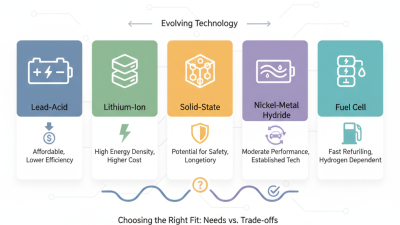
In this guide, we’ll take a look at the top 10 Motive Battery types you really should get familiar with. From lead-acid to lithium-ion, each kind comes with its own set of features. Some batteries are more efficient, while others are easier on your wallet. So, it’s worth thinking about which one might be the best fit for your needs.
And with electric vehicles gaining more momentum, innovation in battery tech is moving fast. Lots of companies are working on new, advanced solutions. The key is to really evaluate what you need—performance, cost, longevity—and then choose accordingly. Take a little time to weigh your options — your decision can make a big difference in how well your device works and how long it lasts.

Motive batteries play a crucial role in various sectors, powering everything from forklifts to electric vehicles. According to data from the International Energy Agency, the demand for these batteries has surged by over 15% annually since 2020. This growth reflects the ongoing transition to more sustainable energy solutions in industrial operations. As industries look to improve efficiency, the role of motive batteries becomes increasingly vital.
Different types of motive batteries cater to specific needs. Lead-acid batteries are common for lighter applications due to their low cost. Meanwhile, lithium-ion batteries gain popularity for their longer life and lighter weight. Research indicates that lithium-ion technology can offer up to 30% more cycle life than traditional batteries. However, the initial investment can be a deterrent for small businesses. As companies aim to balance cost and performance, the selection of the right battery type requires careful consideration. The challenge lies in adapting to rapid technological changes and maintaining operational efficiency.
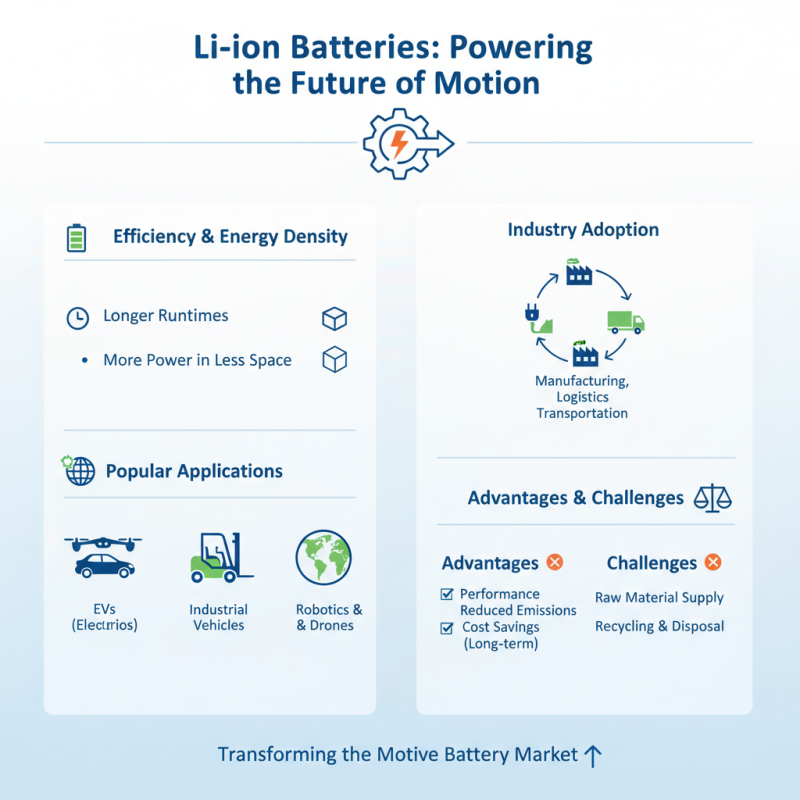
Lithium-ion batteries are transforming the motive battery market. Their efficiency and energy density make them popular choices for various applications. Many industries now rely on these batteries for their operations. This adoption highlights both advantages and challenges.
For example, lithium-ion batteries are lightweight and compact. They provide higher energy output compared to traditional batteries. Yet, the technology comes with its own set of issues. The environmental impact and resource extraction for production raise questions. Additionally, safety concerns have emerged, particularly with overheating. Users must reflect on these aspects to ensure responsible usage.
The 12v Motive Battery is prevalent in electric vehicles and industrial equipment. Its versatility supports diverse applications and scenarios. However, proper management and disposal of these batteries are crucial. One should consider the entire lifecycle of the product. Ignoring this may lead to long-term consequences for the environment.
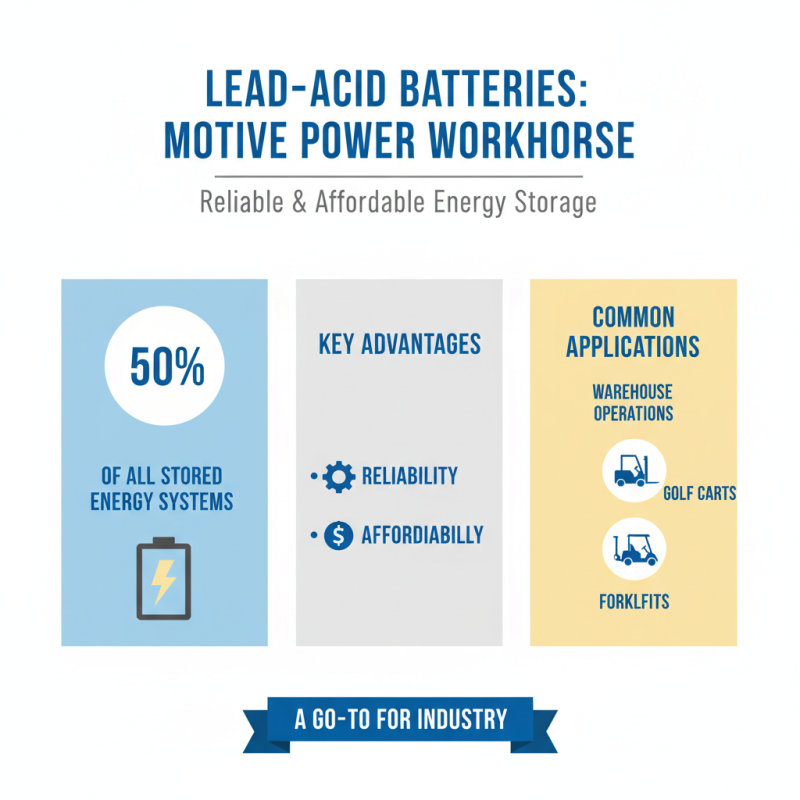
Lead-acid batteries remain a staple in motive power applications. Their reliability and affordability make them a go-to option for many industries. Approximately 50% of all stored energy systems still utilize lead-acid technology. These batteries are often preferred in warehouse operations, fork-lifts, and golf carts.
One common variant is the 12v Ev Sealed Maintenance-Free Motive Battery. This model offers convenience with its sealed design, eliminating the need for regular maintenance. However, it may not match the energy density of newer technologies. Data suggests that lead-acid batteries have a cycle life of around 500 to 1,000 cycles. While this is respectable, it falls short compared to advanced lithium-ion batteries, which can achieve over 2,000 cycles.
Nevertheless, the simplicity of lead-acid batteries is both a strength and a weakness. Their robust nature allows them to function in various operating conditions. Still, issues like sulfation can lead to reduced efficiency over time. Many users have reported the need for careful monitoring to maximize longevity. As industries look to transition to cleaner technologies, the role of lead-acid batteries will continue to evolve.
Nickel-cadmium (NiCd) batteries are well-known for their robustness. They work well in various industrial applications. Their design allows them to handle deep discharges. However, they can be heavy, which may limit their usage. This weight factor is something to consider, especially in portable devices.
One significant advantage of NiCd batteries is their longevity. They can last for years with proper care. They also perform well in extreme temperatures. The ability to recharge quickly is another perk. However, their memory effect can be a drawback. This can lead to reduced capacity over time. Users must remain vigilant about how they recharge these batteries.
The environmental impact is also a concern. Cadmium is toxic. Disposal must be handled carefully to avoid contamination. This raises questions about sustainability. While NiCd batteries provide specific benefits, the limitations are notable. They require careful management and awareness to make the most of their advantages.
Fuel cells are gaining traction as a promising alternative for sustainable motive power. They convert chemical energy into electricity, producing only water and heat as byproducts. This makes them an eco-friendly option for various applications, including vehicles and industrial equipment.
One significant advantage of fuel cells is their efficiency. They can operate longer on a single charge compared to traditional batteries. However, fuel cell technology is still evolving, and some challenges remain. For instance, the infrastructure needed for their widespread use is limited. In many areas, refueling stations are few and far between.
Tips: Always stay informed about advancements in fuel cell technology. Consider participating in local discussions or workshops. Understanding the potential and limitations helps in making better choices.
Another point of consideration is the cost. Fuel cells can be expensive to produce and maintain. This may make them less accessible for smaller companies or individual users. As the market grows, prices may drop, but it is essential to research options thoroughly.
Gel and Agm Batteries are becoming increasingly popular for motive applications. Their designs enhance both safety and performance. Gel batteries use a silica-based electrolyte, making them non-spillable. This feature allows for flexible installation options. AGM batteries, on the other hand, utilize absorbed glass mat technology. This serves to improve vibration resistance and longevity.
In electric vehicles, especially for golf carts, the choice of battery is critical. A **12v Ev Motive Battery For Golf Car** can influence range and efficiency. Both gel and AGM batteries offer maintenance-free solutions. However, one must consider their specific needs. Gel batteries may require specific charging protocols. AGM batteries might sometimes fail to perform in extreme temperatures, leading to potential issues.
While these batteries have advantages, they also come with challenges. The initial cost can be higher compared to traditional lead-acid batteries. Users should reflect on their usage patterns and charging habits. Choosing the right type requires careful thought. Balancing performance with safety is paramount in making a wise decision.
| Battery Type | Voltage (V) | Capacity (Ah) | Weight (kg) | Cycle Life | Safety Features |
|---|---|---|---|---|---|
| gel battery | 6 | 200 | 60 | 500 | Overcharge Protection |
| AGM Battery | 12 | 150 | 50 | 700 | Shock Resistant |
| Lead Acid Battery | 12 | 100 | 35 | 300 | Ventilation Required |
| Lithium-ion Battery | 12 | 250 | 30 | 2000 | Battery Management System |
| Nickel Metal Hydride (NiMH) | 12 | 180 | 45 | 500 | Leakage Protection |
| Flooded Lead Acid | 12 | 120 | 40 | 250 | Requires Maintenance |
| SLA Battery | 6 | 50 | 15 | 300 | Sealed Construction |
| Carbon Lead Battery | 12 | 160 | 38 | 600 | Enhanced Performance |
| LFP Battery | 12 | 200 | 42 | 2000 | Thermal Stability |
| Supercapacitor | 2.7 | 100 | 25 | 100000 | High Charge Rate |
When comparing battery types, lifespan, cost, and efficiency are crucial factors. Different technologies have unique characteristics. Lead-acid batteries are common but have a shorter lifespan. They offer the lowest cost initially but may require more frequent replacements. Their efficiency can drop significantly as they age.
In contrast, Lithium-ion batteries show promise. They are lighter and more efficient. However, the initial investment is higher. Their lifespan is longer, making them a better long-term choice for many applications. The 12v Ev Smf Motive Battery is a specific example that highlights this efficiency trend. Still, the cost can be a barrier for some users.
It's crucial to assess your needs carefully. If budget constraints are tight, lead-acid batteries may seem appealing. But, their longevity issues could lead to higher costs over time. Weighing these factors requires thoughtful consideration. Each battery type has strengths and weaknesses worth exploring.
When selecting the ideal 12V 5AH AGM motorcycle battery, understanding the specifications and performance metrics is crucial. The MHB 12N5-3B model stands out as a reliable choice for small to medium-sized motorcycles. Designed with advanced Absorbent Glass Mat (AGM) technology, this battery showcases optimal performance attributes, including enhanced vibration resistance and superior charging capability, which are essential for the demanding conditions faced by motorcycle riders.
AGM batteries have gained popularity in the motorcycle industry due to their maintenance-free operation and leak-proof design, catering to the needs of modern bikers. Reports indicate that AGM batteries consistently deliver up to 30% more cycle life compared to traditional lead-acid batteries, making them a cost-effective long-term investment. With its 5AH capacity, the 12N5-3B ensures reliable starting power and supports electrical accessories without compromising performance, thus proving essential for everyday use in various weather conditions.
Moreover, choosing the right battery impacts not only vehicle performance but also safety and reliability on the road. With rigorous testing and development, the MHB 12N5-3B embodies the quality expected in the motorcycle battery market. Its longevity and capacity make it a staple in the industry, reinforcing the importance of selecting a battery that guarantees both efficiency and durability for your motorcycle adventures.
: The article aims to provide insights and information on a specific topic.
Information is structured in a clear, concise manner, focusing on key points.
Yes, the article includes examples to illustrate concepts and provide context.
The style is mostly informal, making it easy to read and understand.
Some ideas may require deeper thinking. They can be complex and provoke questions.
You can use the insights to enhance your understanding of the topic in real-life situations.
Disagreement is valid and can lead to deeper discussions and reflections on the topic.
Solutions are sometimes suggested, but not all issues may have clear resolutions.
Certain perspectives may be overlooked, leading to incomplete understanding.
Regular reflection can deepen your understanding and help identify areas for growth.
Motive batteries play a crucial role in powering various modern applications, from electric vehicles to industrial equipment. Understanding the distinct types of motive batteries, such as lithium-ion, lead-acid, nickel-cadmium, and fuel cells, is essential for selecting the right solution for specific needs. Lithium-ion batteries are currently leading the market with their efficiency and longevity, while traditional lead-acid batteries remain a reliable option for cost-sensitive applications.
Additionally, nickel-cadmium batteries offer certain advantages but come with limitations, particularly in terms of environmental impact. Emerging technologies like fuel cells present a promising alternative for sustainable energy solutions. Furthermore, gel and AGM batteries enhance safety and performance, making them viable choices for various uses. A comparative analysis of these battery types based on lifespan, cost, and efficiency factors helps users make informed decisions when choosing the best motive battery for their requirements.