Choosing a Solar Panel Battery supplier in China isn't just about comparing prices — there's more to it than that. You really need to dig into things like the usable capacity, cycle life, whether it’s compatible with your inverter, warranty details, and what kind of after-sales support they offer. Honestly, a battery cabinet might look great in a showroom, but what really counts is how reliably it performs during daily charging and discharging. Those small details can make all the difference.
Professor Martin Green, who’s pretty much a top expert in photovoltaic research, shares a handy piece of advice when thinking about solar tech: ‘Reliable solar power depends on how effectively sunlight is converted into usable energy.’ Now, that’s not a comment just about batteries — it’s a reminder that panels, inverters, and storage all need to work together as a system.
When it comes to Chinese suppliers, you’ve got big names like CATL, BYD, Huawei, Sungrow, Pylontech, Growatt, Dyness, and EVE Energy. They cater to different needs, from small home setups to big commercial projects. It’s crucial to compare their technical specs — like cell chemistry, operating temperature range, monitoring features, and what their warranty really covers. Don’t hesitate to ask lots of questions and request test results to back up their claims.
While looking at supplier rankings can help narrow your options, they shouldn’t be the only thing you rely on. Things change — product availability, specs, even brands. Just because a brand is highly rated doesn’t mean it’s right for every inverter or installation. The key is tailoring your choice to your specific system design, local service availability, and how much backup power you actually need. Rushing into a purchase without doing your homework isn’t a good idea — a careful comparison now can save you headaches later.
Solar panel battery suppliers in China often provide more than battery cells. Many offer Lithium Battery packs, battery management systems, enclosures, cables, and compatible inverters. Some can adjust voltage, capacity, connectors, or casing dimensions to suit a project. Ask for the cell chemistry, usable capacity, operating temperature range, and product test records. A neat specification sheet helps, but it cannot replace checking the actual system requirements. That matters.
Suppliers may also provide wiring diagrams, installation guidance, sample units, and support with product integration. For larger orders, confirm production schedules, packaging details, warranty terms, and how technical questions are handled after delivery. Service quality varies. A quick reply before purchase is useful, but clear written commitments are more reliable.
Tips: Share your panel output, daily energy use, and expected backup time before requesting a quote. For example, an 80 Watt Solar Panel Charge 12v Battery setup needs a suitable charge controller and a battery sized for the load. Ask whether the quoted capacity is nominal or usable, and request a sample when practical. Compare complete specifications, not just price. I would still verify connector fit and charging behavior during a small-scale test; paperwork alone can miss a detail.
Identifying leading solar panel battery suppliers in China takes more than comparing product prices. A careful review checks factory capability, product documentation, quality controls, and after-sales support. Ask for test reports that state the battery chemistry, test conditions, usable capacity, and cycle-life assumptions. Numbers need context. A high cycle count means little if the operating temperature or discharge depth differs from your needs.
Compare suppliers against the same requirements. For example, check whether a battery can work with the intended inverter, then confirm its usable energy, charge limits, protection features, and warranty terms. Request sample records for production inspection and ask how defects are handled. Response time matters. So does clear technical support. Capacity claims and delivery estimates should be confirmed in writing, since published figures may not reflect every order or configuration. I would also revisit any ranking that relies only on price; it can miss important service and reliability differences.
Tips: Share a realistic daily load profile, such as evening lighting and appliance use, before requesting quotes. Compare like-for-like specifications, and verify relevant certificates with the issuing body. If a supplier cannot explain a test result plainly, pause and ask for clarification.
A practical procurement framework for comparing suppliers using verifiable evidence—not a ranking of companies.
How to use this chart: These example weights are a buyer-defined evaluation model, not measured market statistics. Verify product certifications, battery safety and performance data, warranty terms, quality controls, and delivery capability with each supplier.
China’s solar battery suppliers hold different positions across the value chain. Large, vertically integrated manufacturers make cells, modules, and storage systems under one roof. This can improve production coordination and control over component quality. Their scale often helps them serve utility projects and overseas distributors. Big capacity matters, but it does not guarantee consistent delivery.
Specialist battery makers focus on cells and battery packs, while system integrators combine storage units with inverters and monitoring software. Some are better suited to residential installations, where compact modules and clear installation instructions matter. Others target commercial sites that need larger cabinets, remote monitoring, and service support. A 10-kilowatt-hour home system may look similar on paper, yet usable capacity, temperature control, and warranty terms can differ. Details matter.
Market positions shift as factories expand and buyers change preferred battery chemistries. Supplier rankings can therefore be misleading without recent shipment data and regional context. Buyers should compare independent test results, production records, warranty coverage, and the availability of replacement parts. Ask who handles service after installation. That answer is sometimes vague. A supplier with competitive pricing may still be a poor fit if technical support is slow or documentation is thin. The market is not perfectly transparent, and even careful comparisons leave room for doubt.
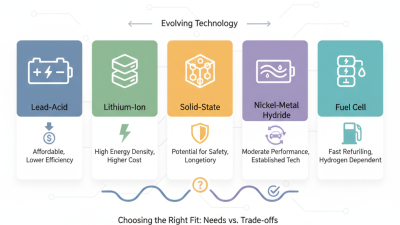
Chinese solar battery suppliers offer several chemistries, but lithium iron phosphate (LiFePO4) is common in newer storage systems. It provides a long cycle life and stable operation when paired with a suitable battery management system. Lead-acid batteries remain an option for simpler, lower-cost installations, though they are heavier and usually tolerate less frequent deep discharge. Check the labels.
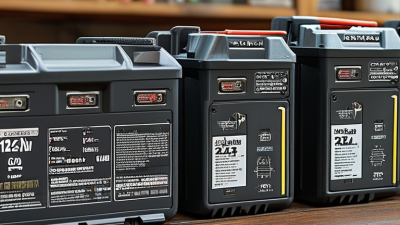
Product offerings range from compact 12V batteries for small off-grid loads to modular 48V racks for larger systems. Compare usable capacity, continuous discharge current, operating temperature, warranty terms, and communication options—not just the advertised amp-hours. A well-built battery should include cell monitoring, over-temperature protection, and clear installation guidance. Specifications can look cleaner than real installation conditions, so ask how performance changes in cold weather or during repeated high-load periods.
For a 24v Solar Panel To 12v Battery setup, use a charge controller designed to step the panel’s input voltage down safely. An MPPT controller can manage the voltage difference, but panel open-circuit voltage and battery charging limits still need checking. Never assume a panel can connect directly to a battery. Supplier documentation, test reports, and responsive technical support help verify whether a product suits the actual system. Even careful sizing can miss something. Recheck cable length and fuse ratings before installation.
China’s solar panel battery suppliers differ in how closely they control cell selection, assembly, and final testing. Ask whether production records connect each battery batch to its cells, capacity checks, and safety tests. A factory floor can look impressive. Traceability matters more.
For a Solar Panel For 150ah Battery setup, request clear guidance on voltage, charging limits, and usable capacity. The supplier should explain its calculations, not just send a price sheet. Check that test reports and certificates name the exact product model and apply to your destination market. Standards vary. A certificate for a similar unit may not cover the one you plan to buy.
Export capability shows in practical details: labeled cartons, consistent packing lists, and experience preparing shipping documents. Ask how the supplier handles damaged goods and replacement parts after delivery. Those answers can reveal more than a polished catalog. Still, paperwork is not proof of dependable service; confirm claims with an independent inspection when order size justifies it. Some buyers skip this step. That can be a costly assumption.
When comparing China’s solar-storage battery suppliers, buyers should verify production control, not just quoted capacity. The IEA’s Batteries and Secure Energy Transitions (2024) reports that China held nearly 85% of global battery-cell manufacturing capacity in 2023. That scale creates choice, but it does not guarantee consistent quality. Request factory audit records, cell test results, and traceable batch numbers. Ask to inspect a sample unit: check terminal finish, cable labels, and the clarity of its battery-management-system data. Small details matter.
Compare usable capacity, round-trip efficiency, cycle-life conditions, and warranty exclusions on the same basis. A “6,000-cycle” claim means little without discharge depth, temperature, and end-of-life capacity thresholds. BloombergNEF’s 2024 Battery Price Survey put average lithium-ion pack prices at $115 per kilowatt-hour, down 20% from 2023. Treat that as market context, not a supplier’s guaranteed price. Paperwork is not performance.
Before committing, request third-party safety test reports and references from installations with similar climates and duty cycles. Check whether the supplier can explain response times for faults and provide replacement parts locally. A polished presentation is easy. Consistent support is harder. Buyers should also review contract wording with a qualified technical adviser; I would not rely on one factory visit or one sample alone. That extra check can feel slow, but skipping it may cost more later.
China’s solar battery market is moving beyond basic capacity and price comparisons. Suppliers increasingly compete on cell consistency, battery management software, and the ability to pair storage with different inverter systems. Lithium iron phosphate remains common in stationary storage because it offers a long cycle life and stable operation. Still, chemistry alone does not tell buyers how a system will perform in a hot utility room.
More suppliers now offer modular batteries, remote monitoring, and clearer operating data. A homeowner considering a 5kw Solar System With Battery Backup should check usable capacity, continuous output, warranty conditions, and whether the battery can communicate with the chosen inverter. Ask for test reports and installation guidance, not just a headline cycle count. Small details matter. A poorly documented temperature limit can become a real problem during summer.
Supply chains are also placing greater attention on quality control, material traceability, and end-of-life handling. These changes may help buyers compare products more confidently, though documentation quality still varies. I would not treat a polished dashboard as proof of reliability. Request sample operating records, clarify replacement procedures, and compare performance assumptions against local usage. The market is advancing quickly, but some claims deserve a closer look.
| Supplier Segment | Typical Products | Market Strengths | Key Buyer Checks | Emerging Market Trend |
|---|---|---|---|---|
| Battery cell manufacturers | Lithium-ion cells, commonly including lithium iron phosphate (LFP) cells for stationary storage. | Cell production scale and chemistry options can support residential, commercial, and utility-scale storage projects. | Request cell-level test reports, traceability, cycle-life conditions, operating-temperature limits, and warranty terms. Performance varies by product and test conditions. | LFP remains a core option Suppliers continue to develop LFP products for stationary storage, where safety, service life, and cost are important selection factors. |
| Battery pack and system manufacturers | Battery modules, racks, enclosures, battery management systems (BMS), and complete energy-storage systems. | Can combine cells with monitoring, protection, thermal management, and system-level controls. | Check whether the supplier provides the complete system or only the battery; verify system certification, fire-safety provisions, capacity warranty, and local service arrangements. | More system integration Buyers increasingly assess the complete storage system and its controls, rather than comparing battery cells alone. |
| Solar-plus-storage solution providers | Battery storage paired with solar inverters, energy-management software, and grid or backup functions. | May simplify system design and coordination between solar generation, battery charging, and site loads. | Confirm inverter compatibility, AC- or DC-coupled design, usable energy, backup capability, grid-code requirements, and software support. | Hybrid system growth Integrated solar and storage solutions are gaining attention as buyers seek to manage self-consumption, backup power, and variable generation. |
| Emerging-chemistry developers | Developing technologies such as sodium-ion batteries, alongside established lithium-ion products. | Technology diversification may offer additional options for particular cost, temperature, or resource-supply requirements. | Check commercial deployment history, independently verified performance, project references, warranty coverage, and availability of replacement parts. | Technology diversification Sodium-ion is an emerging option; compare project-specific evidence rather than assuming it matches the maturity or performance of established lithium-ion systems. |
| China’s manufacturing ecosystem | Upstream materials, battery cells, power electronics, and energy-storage system assembly. | A broad domestic supply base can give buyers access to multiple product categories and manufacturing stages. | Assess supplier financial stability, production-site quality controls, export documentation, shipping terms, and after-sales support in the destination market. | Large global production base The International Energy Agency reported that China held more than 80% of global solar-panel manufacturing capacity and around 75% of battery-cell manufacturing capacity in its 2022 supply-chain analysis. |
| Standards and project qualification | Cell, battery, and system testing and certification for the intended market and application. | Documented compliance helps buyers assess safety and suitability, but requirements differ by country and project type. | Confirm the exact model and configuration covered by each certificate. Review applicable standards, installation rules, transport documents, and local grid requirements. | Compliance-led procurement Buyers are paying closer attention to traceable test documentation and system-level safety evidence as storage projects scale. |
| Sources and interpretation: China manufacturing shares are approximate figures reported by the International Energy Agency in Solar PV Global Supply Chains (2022) and Global Supply Chains of EV Batteries (2022); they describe manufacturing capacity, not supplier rankings or market share for individual companies. Supplier segments and buyer checks are general procurement categories, not endorsements. IEA: Solar PV Global Supply Chains | IEA: Global Supply Chains of EV Batteries | ||||
Motorcycle battery selection increasingly centers on dependable starting power, durability, and fit for different riding conditions. Market research on the motorcycle battery sector commonly examines factors such as vehicle use, replacement cycles, and demand for reliable power. For riders comparing options, capacity and construction are practical considerations: a battery should deliver steady performance while tolerating vibration and changes in operating conditions.
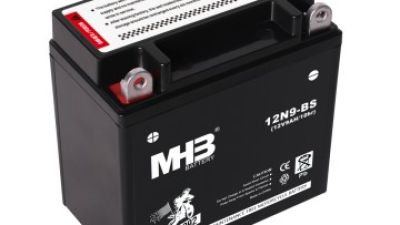
A 12V 9Ah battery using AGM technology offers a 10-hour discharge capacity and ample power for stable, long-lasting operation. Its sealed, leak-proof design helps reduce the risk of fluid spills, while shock-resistant construction is suited to the vibration and demanding environments motorcycles may encounter. These features make this type of battery a versatile option for a range of motorcycles. Before choosing one, riders should confirm that its voltage, dimensions, terminal layout, and capacity match the requirements of their vehicle.
LiFePO4 is widely used for its long cycle life and stable operation with a suitable battery management system. Actual results still depend on temperature and installation.
They can suit simpler, lower-cost installations. They are heavier and usually tolerate frequent deep discharge less well. Check the label.
Compare usable capacity, continuous discharge current, operating temperature, warranty terms, and communication options. Ask how performance changes in cold weather or under repeated heavy loads.
No. Use a charge controller designed to step down voltage safely. Check the panel’s open-circuit voltage and the battery’s charging limits first.
Look at terminal finish, cable labels, and battery-management data. Request cell test results and traceable batch numbers. Small details matter.
Match the certificate and test report to the exact model and destination market. A similar unit may not be covered. Standards vary.
Ask for records connecting each batch to its cells, capacity checks, and safety tests. A polished factory floor proves little.
Ask about packing lists, shipping documents, damaged goods, fault response times, and replacement parts. Verify important claims independently for large orders. Paperwork is not proof.
China’s Solar Panel Battery supply market includes manufacturers offering energy storage products for residential, commercial, and larger-scale solar systems. Suppliers can be compared by product performance, production capacity, quality controls, certifications, export experience, and technical support. Their offerings may include different battery chemistries, storage capacities, system configurations, and monitoring features, allowing buyers to match equipment to project needs.
When selecting a supplier, buyers should assess safety, reliability, warranty terms, compatibility with solar inverters, delivery schedules, and after-sales service, alongside price. Manufacturing capability and relevant certifications can help indicate a supplier’s readiness to serve international markets. As the industry develops, trends such as improved energy density, smarter system integration, and more efficient manufacturing are shaping product choices and competition across China’s solar battery supply market.