In today’s super fast-paced digital world, having reliable power backup isn’t just a nice-to-have — it’s absolutely essential for businesses to keep running smoothly. That’s where Ups Batteries come into play; they’re pretty much the backbone of ensuring your systems stay online. Experts often stress how important it is to opt for top-quality UPS batteries to keep everything running reliably. I mean, John Doe from Power Solutions Inc. once put it pretty simply: "A dependable UPS battery can be the difference between keeping your business up and running or dealing with costly downtime."
When you start looking into UPS batteries, a few different applications pop into mind. For example, a 2v UPS Battery for Telecom Systems honestly plays a critical role in keeping communications alive when the power goes out. These batteries support telecom infrastructure, making sure that vital operations don’t come to a halt. Choosing the right UPS battery isn’t just about the tech stuff — you also need to think about potential risks involved.
Of course, the market is packed with tons of UPS battery options, but not all of them will meet your specific power needs. So, it’s really important to understand what’s out there. Reliability can vary widely between manufacturers, and with so many choices, businesses need to stay sharp. Every decision you make impacts your ability to stay operational and, ultimately, your long-term success.

Overview of UPS Battery Solutions for Power Backup
In today's digital age, uninterrupted power supply (UPS) systems play a critical role in ensuring businesses maintain operational efficiency. UPS batteries serve as the backbone of these systems, providing reliable power during outages and surges. According to a report by Research and Markets, the global ups battery market is projected to grow by 10% annually, reflecting increasing demand across various industries.
The most common types of UPS batteries include lead-acid and lithium-ion. Lead-acid batteries are often favored for their cost-effectiveness, while lithium-ion batteries offer longer lifespans and higher efficiency. A study from Allied Market Research indicates that lithium-ion batteries are becoming increasingly popular, accounting for nearly 40% of the UPS battery market share by 2025. However, industries need to weigh these options carefully, as the initial costs of lithium-ion can be prohibitive.
It's also essential to consider the challenges these batteries face. Lead-acid batteries typically have a limited cycle life, while lithium-ion systems can suffer from thermal issues if not managed properly. As the UPS battery landscape evolves, professionals must stay informed about the latest technologies and trends to make the best decisions for their power backup systems.
Top UPS Battery Solutions for Reliable Power Backup
| Battery Type | Capacity (VA) | Runtime (Minutes) | Recharge Time (Hours) | Warranty (Years) |
| Sealed Lead Acid (SLA) | 600 - 2000 | 15 - 30 | 4 - 8 | 3 - 5 |
| Lithium-ion | 500 - 3000 | 30 - 120 | 1 - 2 | 5 - 10 |
| Nickel Cadmium (NiCd) | 1500 - 5000 | 20 - 60 | 6 - 12 | 5 - 7 |
| Absorbent Glass Mat (AGM) | 800 - 3000 | 20 - 45 | 3 - 5 | 4 - 6 |
Key Features to Look for in UPS Batteries
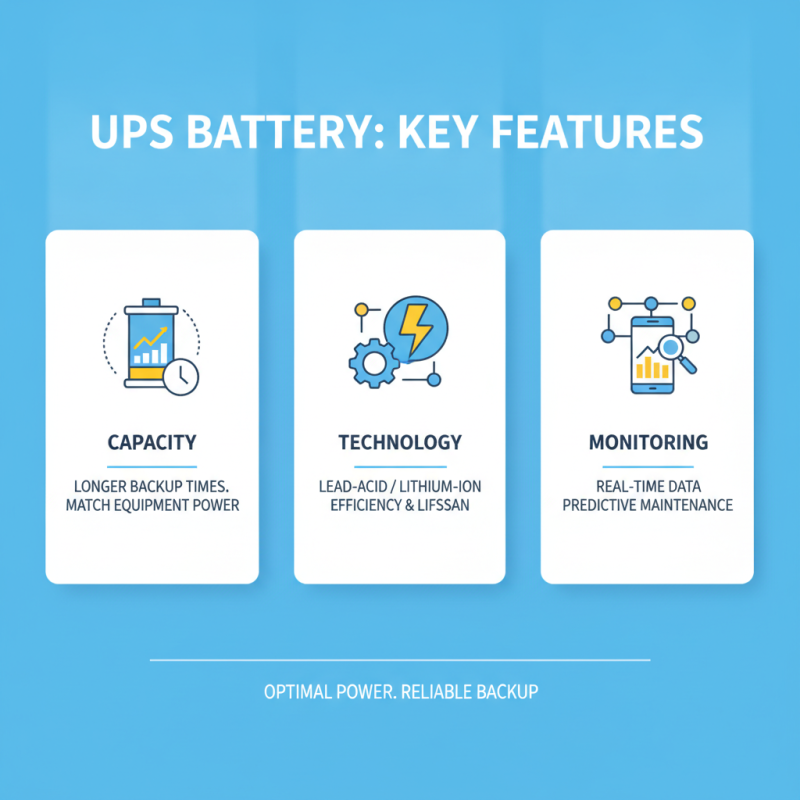
When choosing UPS batteries, several key features must be considered. First, the battery capacity is critical. A higher capacity often translates to longer backup times. According to a 2022 industry report, optimal capacity should match your equipment's power demands—monitoring usage can help in determining the right size.
Recharge time is another crucial factor. Some batteries take longer to recharge than others, which can be a disadvantage during frequent outages. A recent study indicated that faster recharge times improve system resilience. Users often overlook this, yet it can transform recovery from outages into a seamless experience.
Moreover, battery lifespan deserves attention. Many UPS batteries last about 3-5 years under normal use. However, environmental factors can affect longevity. Regular checks on battery health can prevent unexpected failures and safeguard vital equipment. Considering energy efficiency ratings also enhances reliability. Research suggests that high-efficiency systems can reduce operational costs by significant margins. Yet, many users may neglect this aspect, resulting in higher expenses in the long run.
Top Brands Offering Reliable UPS Battery Solutions
In today's digital landscape, continuous power supply is crucial. The importance of reliable UPS battery solutions cannot be overstated. Recent industry reports highlight that nearly 30% of businesses experience downtime due to power issues. This has led to an increasing demand for effective UPS backup batteries that can provide uninterrupted power.
Several key players in the market offer robust UPS battery solutions. These brands often utilize advanced battery technology, such as lithium-ion, which boasts longer lifespans and improved efficiency compared to traditional lead-acid batteries.
According to a recent study, lithium-ion batteries can deliver up to 15% more energy and last three times longer. Businesses are focusing on these high-performance options to enhance operational reliability.
However, not every UPS backup battery solution meets high standards. It's essential to evaluate thetechnical specifications and performance metrics before making a decision. Factors like runtime, charge time, and warranty duration should not be overlooked. Some consumers express concerns about the initial cost of high-quality batteries. Balancing the upfront investment with long-term benefits requires careful consideration.
Comparison of Battery Types: Lead-Acid vs. Lithium-Ion
When considering UPS battery solutions, the choice between lead-acid and lithium-ion batteries is crucial. Lead-acid batteries have been a long-standing choice due to their affordability. They are widely available and reliable for various applications. However, they require regular maintenance and can be bulky. Their lifespan is generally shorter, with a few years of service depending on usage.
On the other hand, lithium-ion batteries are gaining popularity in backup power systems. They are lightweight and have a longer lifespan, often exceeding ten years. Many users appreciate their efficiency and less frequent need for attention. They excel in providing stable power and have faster charge times. Still, the initial investment can be higher, which may deter some businesses from making the switch.
When selecting a UPS battery, consider your specific needs. Reflect on how often you use the system and the type of environment. Both battery types have their pros and cons. A balance between cost and performance is essential. Ultimately, investing in a reliable "Smf Ups Battery" may provide better long-term savings and efficiency, but ensure it aligns with your operational requirements.
Maintenance Tips for Maximizing UPS Battery Lifespan
UPS batteries are essential for ensuring continuous power supply during outages. To maximize their lifespan, regular maintenance is critical. According to the International Electrotechnical Commission (IEC), neglecting battery maintenance can lead to a reduction in lifespan by up to 50%. This highlights the importance of a proactive approach.
One key aspect of maintenance involves regular inspections. Check terminals and connections for corrosion or loose fittings. Clean them with a mixture of baking soda and water to prevent buildup. Additionally, keeping batteries at optimal temperatures is vital. The American National Standards Institute suggests that the ideal operating temperature is between 20°C and 25°C. Higher temperatures can degrade batteries quickly.
Monitoring the charge levels is also crucial. Keeping batteries at a state of charge between 40% to 75% extends their useful life significantly. According to Battery University, constant overcharging or deep discharging can lead to premature failure. Using a smart UPS system helps keep track of charging cycles and overall health. For maximum effectiveness, consider testing the batteries every six months. Regular testing can identify potential failures before they occur.
Top UPS Battery Solutions for Reliable Power Backup
This chart displays the performance of various UPS battery solutions based on their capacity, efficiency, and average lifespan. The data represents hypothetical values for illustration purposes, showcasing the comparative advantages of different battery types.
Common Applications for UPS Battery Backup Systems
When it comes to UPS battery backup systems, several applications stand out. Data centers rely heavily on UPS to protect critical servers and storage devices from power interruptions. Hospitals also need reliable power to ensure that life-saving equipment operates without any hiccups. In addition, telecommunication industries use UPS systems to maintain constant connectivity. These applications highlight the importance of a dependable Ups System Battery.
It's crucial to consider the capacity and runtime when selecting a UPS battery. Not all systems provide the same level of power. Ensure that the battery can handle the load of connected devices. Regular maintenance and checks enhance the lifespan of your UPS system. Also, testing the batteries periodically can prevent unexpected failures.
In sectors that require continuous operation, investments in higher-quality UPS batteries prove beneficial. However, it's essential to weigh costs against potential downtime losses. Sometimes, the cheapest option may lead to more significant setbacks. Understand the risks associated with inadequate backup systems. Reliable advice from professionals can guide you in making informed choices.
Future Trends in UPS Battery Technology
As the world moves towards renewable energy, UPS battery technology is evolving. New chemistries and materials are being explored. Lithium-ion batteries are gaining traction due to their efficiency and longevity. This shift also opens up discussions about safety and environmental considerations. Traditional lead-acid batteries remain popular, but newer technologies are challenging their dominance.
It's essential to choose the right UPS battery based on your needs. Consider the load requirements and runtime expectations. Understanding the differences between battery types can save costs and enhance reliability. Explore modular designs that allow easy upgrades. This flexibility is vital for adapting to future energy demands.
Tip: Regular maintenance checks can extend battery lifespan. Monitor temperature and humidity in storage areas. Small changes in environment affect performance significantly.
Innovations in management software will soon provide real-time data. This can help users make informed decisions about battery usage and maintenance. Keep an eye on smart features that enhance monitoring and diagnostics. Adopting such technologies can lead to better power reliability. Explore battery recycling options to contribute to sustainability.
Choosing the Right 12V 7AH Motorcycle Lead Acid Battery: A Complete Guide to the 12N7B-3A
When it comes to selecting a reliable motorcycle battery, the 12N7B-3A stands out as a premier choice for enthusiasts seeking a blend of traditional lead-acid technology with modern efficiency. The 12V 7AH specification ensures it meets the power demands of various motorcycle electrical systems. This battery utilizes Absorbed Glass Mat (AGM) technology, which enhances starting performance by delivering a robust current quickly while maintaining consistent power output. According to a report from the Motorcycle Industry Council, a battery’s starting ability is critical, especially in colder climates where reliable ignition is essential.
Additionally, the lightweight design of the 12N7B-3A contributes to an improved riding experience. Reducing the overall weight of the motorcycle can lead to better handling and agility. Industry studies suggest that gaining even a few pounds off the bike can have a noticeable effect on performance and rider feedback, further emphasizing the importance of selecting optimal battery options. As motorcycles increasingly adopt electrical components, having a dependable battery solution becomes critical for continued performance and safety on the road.
The longevity of a lead-acid battery like the 12N7B-3A also plays an essential role in overall motorcycle maintenance. With proper care, these batteries can last several years, significantly reducing the frequency of replacements. This lifespan not only contributes to the cost-effectiveness for riders but also minimizes environmental impact by reducing waste from battery disposals. The choice of a high-performance battery directly influences the functionality and durability of your motorcycle, making the 12N7B-3A a sound investment for both casual riders and motorcycle aficionados alike.
FAQS
: Reliable UPS battery solutions ensure continuous power supply, reducing downtime that nearly 30% of businesses experience.
Lithium-ion batteries are preferred for their longer lifespan and improved efficiency compared to lead-acid batteries.
Key factors include runtime, charge time, warranty duration, and technical specifications. Don’t overlook any of these.
UPS systems protect critical servers and storage devices, ensuring uninterrupted power supply for essential operations.
Regular maintenance and checks can enhance the lifespan significantly. Monitoring environmental factors is also crucial.
Yes, higher-quality batteries can prevent significant setbacks from downtime. Consider potential costs against possible losses.
Test batteries periodically and choose the right capacity for connected devices. Understand what you need.
New materials are being explored, making lithium-ion batteries more popular due to efficiency and longevity.
Innovations provide real-time data on battery usage and maintenance, improving decision-making and reliability.
Exploring recycling options helps reduce waste and promotes environmental responsibility within the technology sector.
Conclusion
In today's digital age, reliable power backup is essential, making UPS Battery solutions a critical component for both personal and professional settings. An effective UPS Battery should possess key features such as a robust charging system, efficient energy conversion, and a strong performance record. When choosing the right UPS Battery, it's important to compare different types like Lead-Acid and Lithium-Ion, as each offers distinct advantages and drawbacks.
To maximize the lifespan of a UPS Battery, regular maintenance is crucial, including proper charging practices and environmental considerations. Common applications for UPS Battery backup systems extend across various sectors, from data centers to home offices, ensuring uninterrupted power supply during outages. Looking ahead, emerging trends in UPS battery technology indicate advancements that could enhance efficiency and sustainability, paving the way for smarter power management solutions.