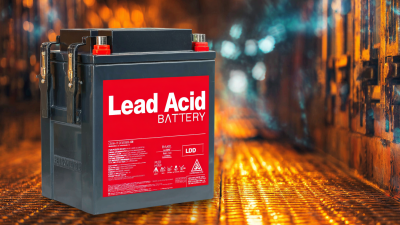
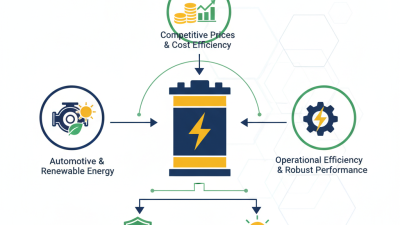
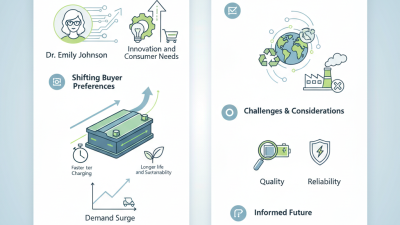
So, why do global buyers keep choosing Lead Battery? Well, it comes down to dependable starting power, backup storage, and the way it keeps industrial equipment moving. Battery Council International says lead batteries hit a 99% recycling rate in the U.S. And the Consortium for Battery Innovation calls them the most widely used rechargeable battery tech in the world. Those numbers aren't just nice to look at—they show up in real life. A delivery truck has to start every morning. A telecom tower needs backup when the grid goes down. A warehouse forklift has to keep performing shift after shift.
Cost still matters, of course. Lead Battery systems often need less upfront money than many newer chemistries. The supply chains are mature across North America, Europe, and Asia. Technicians already know the charging, inspection, and replacement routines. That kind of familiarity cuts down on operational guesswork. Still, let's be honest: it's not perfect. Lead batteries are heavier than lithium-based options and usually offer lower energy density. So buyers have to weigh weight, temperature, cycle depth, charging time, and maintenance conditions.
Dr. Alistair Davidson of the International Lead Association once said, "Lead batteries are the most recycled consumer product in the world." That's a strong statement, and it reflects the industry's infrastructure—but it needs context. Recycling results can vary by country, collection system, and how carefully batteries are handled. EUROBAT and other groups keep pushing for closed-loop recycling and better battery design. For global procurement teams, the best choice isn't just about the lowest price. It's about application fit, verified supplier data, safety controls, and a solid end-of-life plan. Lead Battery still makes practical sense when reliability, affordability, and established recycling channels are what matter most.
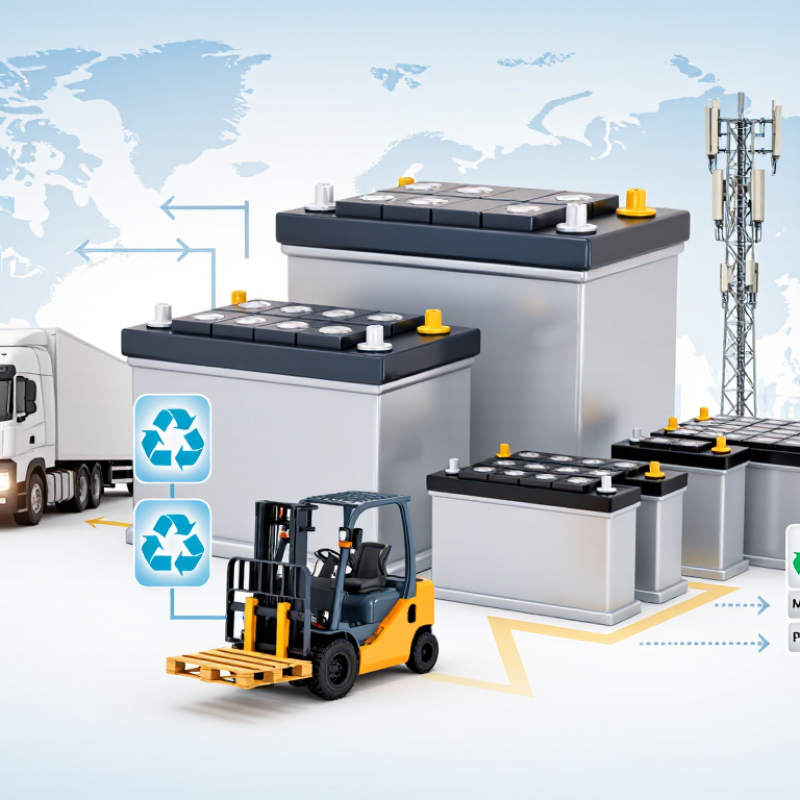
Lead batteries have supported practical energy storage for more than 150 years. The foundation is simple: lead dioxide, sponge lead, and sulfuric acid create a dependable electrochemical reaction. This proven design tolerates vibration, cold starts, and repeated charging. It also uses familiar manufacturing processes worldwide. For global buyers, that maturity can reduce training needs and simplify service planning.
The chemistry is not perfect. It is heavy, and deep cycling can shorten service life when charging is poorly controlled. Still, measurable infrastructure matters. The U.S. Environmental Protection Agency reports that lead-acid batteries achieve recycling rates of about 99% in the United States. The International Lead Association also identifies lead batteries as the dominant rechargeable battery technology by installed base. These figures support a practical advantage: used units can enter established collection and recycling systems instead of becoming unmanaged waste.
A Golf Cart Lead Acid Battery illustrates this balance clearly. In a workshop, technicians can inspect electrolyte levels, terminals, and charging voltage with common tools. A 48-volt cart may use several 8-volt batteries, each weighing roughly 25 kilograms. That weight is inconvenient during replacement. Yet standardized dimensions, broad distributor coverage, and familiar diagnostics remain valuable for fleet operators. Buyers should still question cycle-life claims, temperature conditions, warranty testing, and recycling arrangements. Data sheets alone do not reveal every real-world weakness.
Lead batteries remain a practical choice for many energy storage projects. Market data indicates that lead batteries supply about 70% of rechargeable storage worldwide. This figure can vary by region, application, and reporting method. It is not a perfect number, but it shows the technology’s broad reach.
Their main advantages are familiar: competitive cost, stable performance, and established recycling systems. Warehouses, backup rooms, and small power systems can often source compatible units without complex redesigns. Procurement teams also benefit from mature manufacturing standards and widely available service knowledge. However, lead batteries are heavy and need careful handling. Weight matters.
Sealed Lead Acid Battery Maintenance usually involves checking terminals, temperature, charging conditions, and installation space. Simple checks prevent avoidable failures. Even sealed designs are not maintenance-free in every operating environment. High heat can shorten service life, while repeated deep discharge may reduce capacity faster than expected. Real conditions matter.
Global buyers should compare total ownership costs, not only the purchase price. Transport weight, replacement frequency, ventilation needs, and recycling arrangements can change the final calculation. Some projects may need lithium technology instead. That is the uncomfortable part. Lead batteries are widely proven, but they are not automatically the best fit for every site. Careful specifications and honest load data remain essential.
Lead batteries remain a practical choice for global buyers because starting an engine demands power immediately, not gradually. In many vehicles, the battery must deliver a strong current pulse within two to five seconds. That short burst turns the starter motor, overcomes oil resistance, and supports ignition during cold mornings. The result is not glamorous. It is dependable.
SAE J537 testing evaluates starting batteries with a 30-second discharge at -18°C, while maintaining a minimum terminal voltage. This demanding benchmark helps buyers compare cold-cranking performance across suppliers. In real workshops, technicians also check terminal condition, cable resistance, temperature, and state of charge. A high rated current cannot repair poor connections. Small details matter.
Battery Council International reports that lead batteries achieve a collection and recycling rate above 99% in the United States. That established recovery system supports responsible sourcing and long service planning. However, laboratory ratings do not tell the whole story. Real engines are less tidy. An aging starter, thick lubricant, or repeated short trips can reduce starting performance. Buyers should therefore review cold-cranking ratings, reserve capacity, operating temperature, and warranty evidence together. The best specification is the one that matches the engine’s actual starting load, not simply the largest number on a label.
For global buyers, lead batteries remain practical because purchase price matters before technical comparison begins. Their manufacturing methods are widely established, and suppliers often stock common formats for immediate shipment. A Battery 12v 7ah Sealed Lead Acid unit can serve alarms, emergency lighting, access systems, and small backup equipment. Buyers can compare quotations using familiar specifications, including voltage, capacity, terminals, dimensions, and cycle expectations. This clarity reduces errors when teams purchase across borders.
Mature supply chains also support predictable sourcing. Regional distributors, battery assemblers, freight agents, and recycling networks understand these products well. Replacement units are easier to find when a project expands or a technician needs one quickly. Standard packaging and established transport practices can simplify export planning, although shipping rules still require careful checking. Low upfront cost helps, especially for large installations with strict procurement limits. It does not guarantee the lowest lifetime cost.
Lead batteries need more space and weigh more than many newer alternatives. Their usable capacity can fall after repeated deep discharge or storage in heat. In my experience, overlooked temperature records and weak charging settings cause avoidable failures. A buyer should request test data, production dates, warranty terms, and safe handling instructions. Some quotations look attractive until freight, replacements, and maintenance are included. That uncomfortable comparison is worth making before approval.
| Evaluation Dimension | Lead Battery |
Lithium-Ion Battery (LFP reference) | Global Buyer Value |
|---|---|---|---|
| Indicative upfront pack cost | Approximately US$80–200/kWh, depending on design, region, and order volume | Approximately US$100–180/kWh for many LFP pack configurations | Lead batteries can reduce initial procurement expenditure, especially in price-sensitive projects. |
| Typical usable depth of discharge | About 50% for many conventional deep-cycle applications | About 80–100%, subject to battery-management settings | Lead systems may require a larger nominal capacity to deliver the same usable energy. |
| Expected cycle life | Approximately 300–1,000 cycles, depending on chemistry, discharge depth, temperature, and maintenance | Approximately 2,000–6,000 cycles for many LFP products under controlled conditions | Lead is well suited to standby, backup, and moderate-cycle applications rather than intensive daily cycling. |
| Round-trip efficiency | Typically about 70–85% | Typically about 90–95% | Lead may have higher operating energy losses, but its lower purchase price can remain attractive for infrequent-use systems. |
| Energy density by weight | Approximately 30–50 Wh/kg | Approximately 90–160 Wh/kg, depending on pack design | Lead batteries are heavier and may increase transport, structural, and installation requirements. |
| Supply-chain maturity | Long-established global manufacturing, distribution, servicing, and replacement channels | Rapidly expanding supply chain with greater dependence on specialized cells, modules, and battery-management systems | Lead batteries are generally easier to source across multiple regions and supplier tiers. |
| Material availability | Uses lead, sulfuric acid, plastics, and established battery-grade processing routes | Uses lithium, iron, phosphate, copper, aluminum, graphite, and other battery materials | Lead battery production benefits from mature raw-material processing and established regional logistics. |
| Recycling infrastructure | Highly developed collection and recycling systems in many regulated markets; lead and polypropylene are recoverable | Recycling capacity is expanding, but collection and recovery systems remain less uniform across regions | Established end-of-life channels can simplify compliance, reverse logistics, and replacement planning. |
| Temperature tolerance | Operates across a broad temperature range, although capacity and service life decline in extreme heat or cold | Requires thermal controls and charging protection, especially at low temperatures | Lead can be practical for simpler installations in regions with limited climate-control infrastructure. |
| Maintenance requirements | Flooded types may require ventilation, electrolyte checks, and periodic maintenance; sealed types require less routine service | Generally low routine maintenance but requires battery-management electronics and protection systems | Maintenance needs depend strongly on the lead-battery design and the application environment. |
| Best-fit applications | Vehicle starting, emergency backup, telecommunications backup, Ups Systems, alarms, and moderate-cycle storage | Daily energy storage, electric mobility, portable equipment, and weight-sensitive applications | Lead batteries offer strong value where low initial cost, availability, and proven service support are priorities. |
Why Choose Lead Battery for Global Buyers?
For global buyers, lead batteries offer a mature and measurable recycling system. In established collection networks, more than 99% of lead batteries are recycled. This performance comes from valuable lead, standardized designs, and long-standing recovery infrastructure. It does not mean every discarded battery is recovered.
A Sealed Lead Acid Battery 12v 7ah can move through a practical closed-loop process. Collection centers separate the battery from general waste. Specialized facilities recover lead, neutralize the electrolyte, and process plastic cases for further use. Small details matter. Clear labeling, secure packaging, and documented collection partners reduce handling errors during transport. Buyers should request recycling records, not rely only on marketing claims.
The environmental advantage is real, but it needs careful management. Collection gaps still exist in remote markets. Informal handling may also create avoidable risks. A responsible purchasing review should examine product life, warranty terms, recovery routes, and local compliance requirements. The strongest evidence includes recovery percentages, audit dates, and clear explanations of where materials go. The 99% figure is encouraging, yet it deserves regular verification. Sustainability should be measured after use, not only at the time of purchase.
Lead batteries remain a practical choice for global buyers because they support common 12V, 24V, and 48V systems. Their broad availability simplifies replacement and local servicing. A 12V battery can power alarms, small solar units, medical carts, and backup equipment. Two 12V units can form a 24V system for telecom devices, mobility equipment, or compact off-grid installations. Larger 48V systems often serve data cabinets, renewable-energy storage, and industrial backup loads.
Application conditions matter more than voltage alone. Buyers should check capacity, discharge depth, charging voltage, operating temperature, and installation space. In hot regions, ventilation and temperature management protect battery life. In colder markets, available capacity may decline. Transportation planning also requires careful packaging and handling. Local technicians often prefer lead batteries because testing tools and replacement parts are widely available. That practical advantage reduces downtime, though it does not remove maintenance needs.
Tips: Match the battery to the inverter and charger. Keep terminals clean and connections tight. Record voltage during routine inspections. Do not select capacity by price alone. A cheaper unit may require earlier replacement. Specifications can also vary between suppliers, so independent testing is worthwhile. Perfect performance is unrealistic; even a well-designed system can lose efficiency through heat, aging, or poor charging habits.
Why Choose Lead Battery for Global Buyers?
Lead batteries are widely used in global applications because standardized 12V blocks can be connected in series to create 24V and 48V systems. The chart shows common nominal voltage configurations and representative applications, rather than market-share data.
Lead batteries remain attractive to global buyers because they are familiar, widely serviceable, and often cost-effective. However, purchase price alone cannot define value. Cycle life should match the duty profile, not a brochure claim. Ask whether testing used deep discharges, partial cycling, controlled temperatures, and a clear end-of-life capacity.
Real sites are messier. Temperature, charging quality, discharge depth, and maintenance can shorten service life. Safety evaluation should include ventilation, acid containment, terminal protection, and charging controls. Request verified test reports and confirm applicable standards, such as IEC 60896, UL 1973, or relevant national requirements. Standards differ by application and destination. Check current editions.
Tips: Compare lifetime cost, not only the quotation. Include replacement frequency, transport weight, installation labor, maintenance, downtime, and compliant recycling. A simple cost-per-delivered-cycle calculation can reveal surprising differences. One weakness deserves honesty: lead batteries are heavy, and freight or structural support may increase project costs. I have also seen buyers overestimate cycle life by using laboratory data for irregular field conditions. That comparison needs caution. Assess local service capability, spare parts access, and emergency procedures before approval. Reliable documentation matters more than impressive promises.
The 12V 7AH Motorcycle Lead Acid Battery 12N7B-3A delivers reliable power for everyday riding. Built on proven lead-acid technology, its six-cell, 12-volt configuration provides stable energy for starting, lighting, instrumentation, and other motorcycle electrical systems. With a 7Ah capacity, it is designed to support consistent discharge performance while maintaining a practical balance between power and size. Its AGM starting capability also helps provide dependable ignition performance in demanding riding conditions.
Industry data highlights why lead-acid batteries remain widely used in transportation. The International Lead Association reports that lead-acid batteries achieve recycling rates above 95% in many mature markets, supporting a well-established materials cycle. Technical guidance aligned with SAE battery standards also emphasizes standardized voltage and capacity testing, helping riders compare replacement batteries more confidently. For motorcycles, the 12N7B-3A’s compact and lightweight construction can reduce unnecessary load, while its steady output supports essential onboard devices without compromising handling. Its durable design makes it a practical power source for commuting, touring, and regular recreational rides.
Their chemistry uses lead dioxide, sponge lead, and sulfuric acid. This design has supported energy storage for over 150 years. It tolerates vibration, cold starts, and repeated charging. Service methods are familiar worldwide. Not perfect.
Lead batteries commonly support 12V, 24V, and 48V systems. A 12V unit may power alarms, small solar equipment, or backup devices. Two 12V units can create a 24V system. Larger 48V systems can support industrial backup loads. Voltage alone is not enough.
Check discharge depth, charging voltage, operating temperature, and installation space. Match the battery with the inverter and charger. Do not choose capacity by price alone. A cheaper battery may need earlier replacement. Check twice.
Hot environments can shorten battery life and increase maintenance demands. Ventilation and temperature management become important. Cold conditions may reduce available capacity. Record site temperatures during planning and inspections. Weather changes things.
Technicians can inspect terminals, connections, electrolyte levels, and charging voltage. Clean terminals and tighten loose connections. Routine voltage records can reveal developing problems. Maintenance cannot reverse every aging issue. Some losses remain.
Ask how testing measured deep discharges and partial cycling. Check the test temperature and end-of-life capacity. Field conditions are usually less controlled. Irregular use can reduce actual service life. I would stay cautious.
The installation should provide suitable ventilation and acid containment. Protect terminals from accidental contact. Use proper charging controls and secure electrical connections. Follow applicable safety requirements for the destination. Small mistakes matter.
Include purchase price, transport, installation labor, maintenance, and replacement frequency. Heavy batteries may require stronger structures and higher freight costs. Also consider downtime and compliant recycling arrangements. Cost per delivered cycle can expose unexpected differences. The cheapest quote may not win.
Lead batteries can enter established collection and recycling systems in many markets. Reported recycling rates are very high in some regions. Buyers should confirm the supplier’s collection arrangements. Recycling plans should be clear before approval. Do not assume.
Lead Battery technology remains a dependable choice for global buyers because it combines more than 150 years of proven energy-storage experience with practical performance and broad market availability. It supplies about 70% of rechargeable storage demand and can deliver high current within 2–5 seconds, making it well suited for engine starting and other applications requiring rapid power. Its lower upfront cost, established manufacturing base, and mature international supply chains also support reliable sourcing and long-term service.
Available in common 12V, 24V, and 48V configurations, Lead Battery systems serve vehicles, backup power equipment, renewable-energy support, and industrial applications across many markets. Sustainability is another important advantage, as more than 99% of lead batteries are recycled through established recovery systems. Buyers should evaluate cycle life, safety features, applicable standards, operating conditions, and total cost of ownership rather than focusing only on purchase price.