


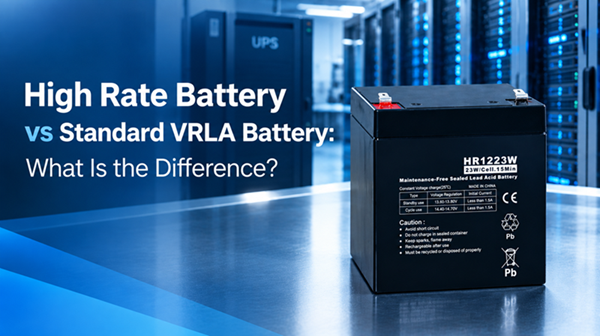
High Rate Battery vs Standard VRLA Battery: What Is the Difference?
When selecting batteries for Ups Systems, data centers, telecommunications equipment, and other critical power applications, battery performance needs to match the actual load requirements. High Rate Batteries and standard VRLA batteries are both widely used for backup power, but their design priorities are different.
High Rate Batteries are developed to deliver high power during relatively short discharge periods. Standard VRLA batteries are generally designed for reliable standby power across a wider range of applications.
Understanding these differences can help UPS manufacturers, system integrators, distributors, and industrial users choose the right battery for their power systems.
What Is a High Rate Battery?
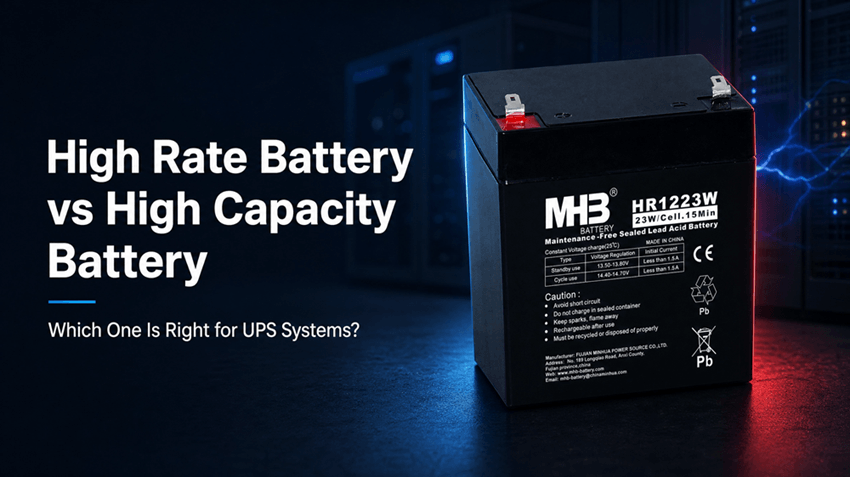
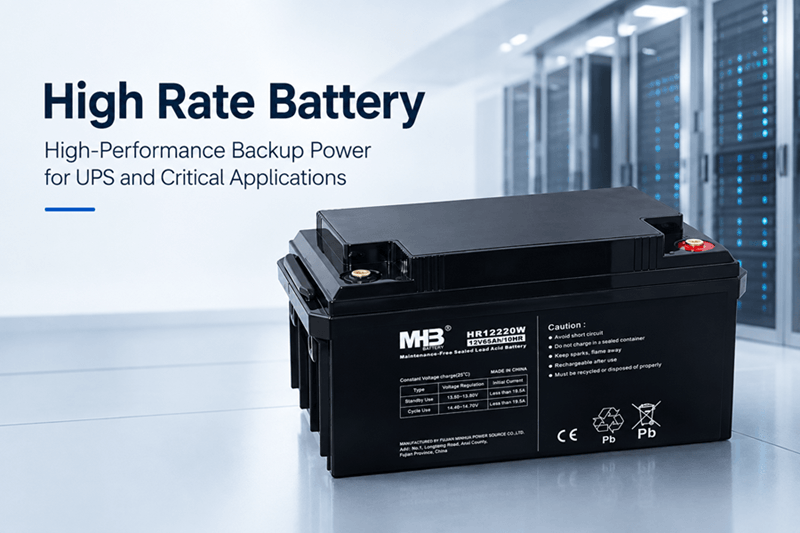
high rate battery, also known as an HR Battery or High Rate VRLA Battery, is designed for applications that require high power output and high-current discharge performance.
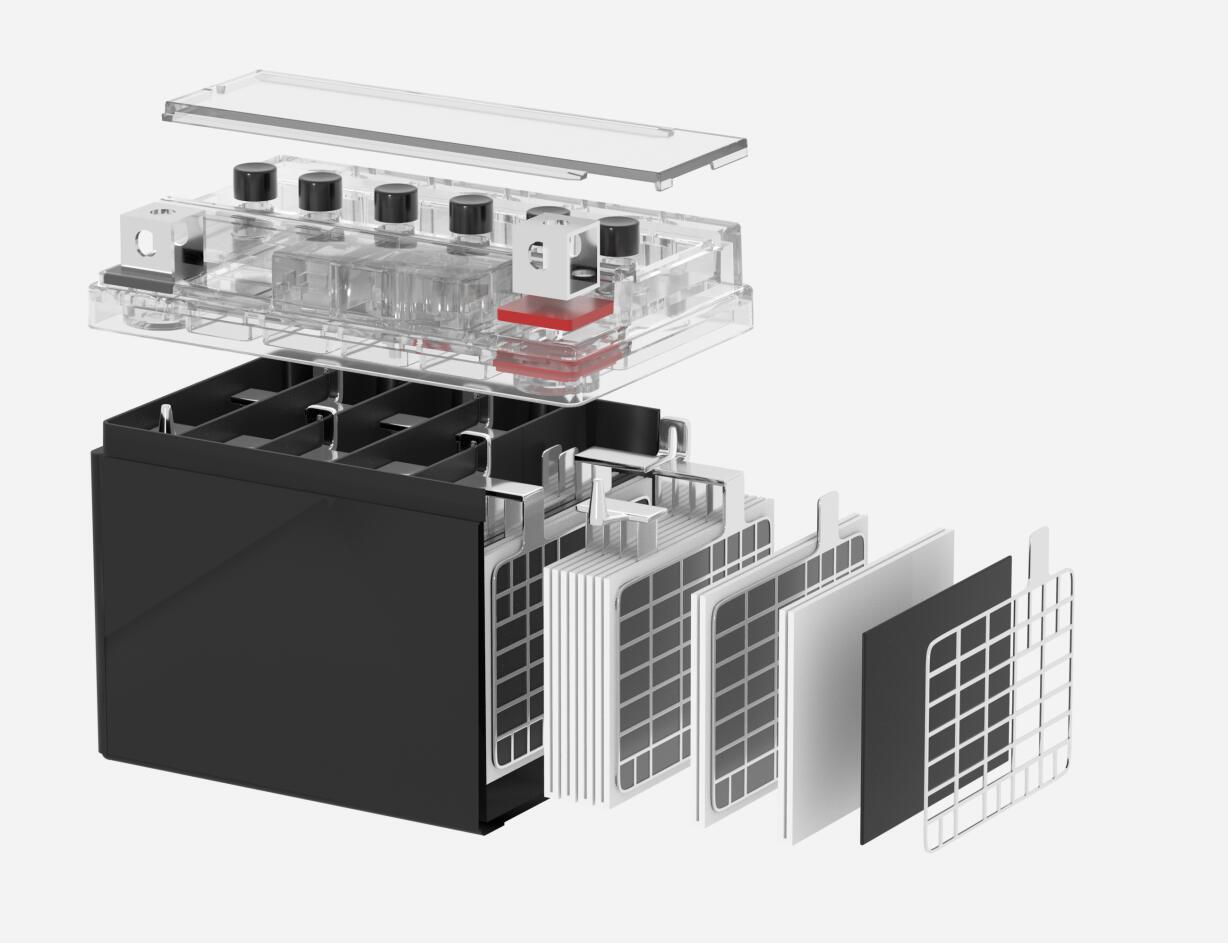
Compared with standard VRLA batteries, High Rate Batteries typically use optimized plate designs, internal structures, and active materials to achieve lower internal resistance and stronger high-rate discharge capability.
This type of battery is commonly used when a backup power system needs to provide substantial power immediately after a power interruption.
Typical applications include:
-
UPS systems
-
Data centers
-
Telecommunications
-
Emergency backup power
-
Security systems
-
Industrial control systems
-
Critical power infrastructure
UPS systems are one of the most common applications because batteries may need to provide high power within a short period after utility power is interrupted.
What Is a Standard VRLA Battery?
VRLA stands for Valve-Regulated Lead-Acid. VRLA batteries are sealed lead-acid batteries designed for low-maintenance operation and reliable standby power.
Standard VRLA batteries are widely used in:
-
UPS systems
-
Alarm systems
-
Telecommunications
-
Emergency lighting
-
Security equipment
-
Access control systems
-
Industrial backup power
Their advantages include sealed construction, reliable standby performance, low maintenance requirements, and flexible installation.
Not every VRLA battery, however, is optimized for high-rate discharge. Applications with demanding short-duration power requirements may require a dedicated High Rate Battery.
High Rate Battery vs Standard VRLA Battery
The main difference between High Rate Battery and standard VRLA battery technology is the discharge performance and design focus.
| Feature | High Rate Battery | Standard VRLA Battery |
|---|---|---|
| Main design purpose | High-power discharge | General standby power |
| Short-duration power output | High | Standard |
| High-current discharge | Excellent | Good |
| Internal resistance | Typically lower | Standard |
| UPS applications | Highly suitable | Suitable |
| Data center applications | Highly suitable | Application dependent |
| High-power backup | Excellent | Moderate to good |
| Typical application | Critical and high-power loads | General backup applications |
| Initial cost | Generally higher | Generally lower |
Actual battery performance depends on battery design, capacity, discharge rate, temperature, and operating conditions. Battery selection should therefore be based on the required discharge profile rather than battery type alone.
Why Does High Rate Battery Provide Higher Power?
Battery power performance is affected by internal resistance, plate design, active material utilization, electrode structure, and overall battery construction.
Internal resistance becomes particularly important during high-current discharge.
Lower internal resistance generally allows a battery to deliver high current with less voltage drop under heavy loads. This characteristic is important for UPS systems that need to support significant loads immediately after a power failure.
High Rate Batteries are designed with this requirement in mind. Their internal construction and electrode design are optimized to support stronger high-rate discharge performance.
High Rate Battery for UPS Systems
UPS systems require batteries that can respond immediately when utility power is interrupted.
Backup periods may range from several minutes to longer periods depending on the system design. During this time, the battery must provide enough power to maintain the connected load.
Battery selection for UPS applications should consider:
-
UPS rated power
-
Actual load power
-
Required backup time
-
Battery discharge current
-
DC system voltage
-
End-of-discharge voltage
-
Operating temperature
-
Number of battery strings
-
Safety margin
-
Available installation space
Nominal Ah capacity alone does not determine whether a battery is suitable for a particular UPS.
High Rate UPS Batteries can be particularly useful when the UPS requires substantial power during a relatively short backup period.
High Rate Battery for Data Centers
Data centers depend on stable power systems to protect servers, networking equipment, storage systems, and other critical infrastructure.
UPS systems provide immediate backup power when the utility supply fails. Battery performance therefore plays an important role in overall power system reliability.
High Rate Batteries can be suitable for data center UPS applications where high power output and short-duration discharge are required.
Important considerations include:
High Power Performance
Battery performance should match the UPS load without excessive voltage drop during discharge.
Reliability
Standby batteries may remain unused for long periods but must operate immediately when a power interruption occurs. Consistent manufacturing quality and appropriate battery design are therefore important.
Space Efficiency
Battery rooms and UPS rooms often have limited space. Higher power density can help reduce the required installation footprint.
Operating Temperature
Temperature has a direct effect on lead-acid battery performance and service life. Proper environmental control is important for critical battery installations.
Battery Monitoring
Battery monitoring systems can help identify changes in voltage, temperature, internal resistance, and other operating parameters.
High Rate Battery vs Standard VRLA for UPS
Choosing between High Rate Battery and standard VRLA battery depends largely on the UPS load profile.
High Rate Batteries are generally more suitable when the system requires:
-
High power output
-
High discharge current
-
Short backup periods
-
High power density
-
Critical backup power
-
Data center UPS applications
Standard VRLA batteries may be suitable when:
-
Discharge current is relatively low
-
Backup duration is longer
-
General standby power is required
-
High-rate discharge performance is not necessary
-
Initial battery cost is a major consideration
System requirements should always be reviewed before making the final selection.
How to Choose the Right High Rate Battery
Several technical parameters should be evaluated before selecting a High Rate Battery.
UPS Power
Start with the rated power of the UPS and the actual connected load.
Backup Time
Determine how long the battery system needs to support the load after a power interruption.
DC Voltage
Identify the UPS DC bus voltage and determine the required number of batteries connected in series.
Discharge Requirement
High-rate discharge requirements are especially important for UPS systems. Manufacturer discharge data should be used to confirm whether the battery can provide the required power.
Installation Space
Check the available cabinet or battery room space, battery dimensions, terminal configuration, and installation requirements.
Operating Conditions
Consider ambient temperature, charging conditions, ventilation, and other environmental factors that may affect battery performance.
Service Life
Expected service life should be considered together with operating conditions and maintenance requirements.
Proper battery sizing helps prevent both under-sizing and unnecessary battery capacity.
Is High Rate Battery More Expensive Than Standard VRLA Battery?
High Rate Batteries generally have a higher initial cost because their internal design is optimized for stronger high-current discharge performance.
Initial purchase price, however, should not be the only factor considered for critical power applications.
System designers should also evaluate power requirements, installation space, reliability, expected service life, discharge performance, and total operating requirements.
Selecting the correct battery for the actual UPS load profile can provide a more appropriate solution than choosing a battery based only on the lowest purchase price.
Can High Rate Battery Be Used in a Standard UPS?
High Rate Batteries can be used in many UPS applications when their electrical and physical specifications are compatible with the UPS system.
Compatibility should be checked before replacing a standard VRLA battery with a High Rate Battery.
Important parameters include:
-
Nominal voltage
-
Battery capacity
-
Discharge characteristics
-
Charging voltage
-
Charging current
-
Battery dimensions
-
Terminal configuration
-
Operating temperature
-
UPS manufacturer's requirements
Critical power systems should use battery sizing and selection based on manufacturer specifications and actual system requirements.
Why Choose MHB High Rate Batteries?
MHB develops and manufactures lead-acid battery solutions for industrial, UPS, telecommunications, and critical power applications.
MHB High Rate Battery solutions are designed for applications requiring reliable standby power and high-rate discharge performance.
Typical applications include:
-
UPS systems
-
Data centers
-
Telecommunications
-
Emergency power
-
Industrial backup power
-
Security and control systems
MHB combines battery manufacturing capabilities with application-focused battery solutions to support different UPS and industrial power requirements.
For projects requiring specific discharge performance, battery configuration, or backup time, technical specifications should be evaluated according to the actual application.
Frequently Asked Questions
What is a High Rate Battery?
High Rate Battery is designed to provide high power and high-current discharge performance, particularly during relatively short discharge periods.
Is High Rate Battery the same as VRLA battery?
High Rate Battery and VRLA battery describe different aspects of battery technology. VRLA refers to Valve-Regulated Lead-Acid construction, while High Rate Battery refers to battery design optimized for high-rate discharge performance. A battery can therefore be both a High Rate Battery and a VRLA battery.
Is High Rate Battery suitable for UPS?
High Rate Batteries are widely used in UPS applications where high power output and relatively short backup periods are required.
What is the difference between HR Battery and VRLA Battery?
HR Battery generally refers to a High Rate Battery designed for higher power discharge. VRLA refers to the broader Valve-Regulated Lead-Acid battery technology. HR batteries can therefore use VRLA technology.
Are High Rate Batteries suitable for data centers?
High Rate Batteries can be suitable for data center UPS systems, particularly where the battery system needs to deliver high power during short-duration backup.
How do I choose between High Rate Battery and standard VRLA battery?
Compare the UPS load, backup time, discharge current, DC voltage, installation conditions, operating temperature, and required service life. Manufacturer discharge data should be used for final battery selection.
High Rate Battery Selection for Critical Power Applications
High Rate Batteries and standard VRLA batteries both have important roles in backup power systems.
Standard VRLA batteries provide reliable standby power across a broad range of applications, while High Rate Batteries are designed to handle demanding high-power and high-current discharge requirements.
UPS systems, data centers, and other critical power installations should select batteries according to actual load characteristics rather than nominal Ah capacity alone.
MHB provides High Rate Battery solutions for industrial UPS and critical power applications, with battery selection based on system voltage, power requirements, backup time, and operating conditions.