


lodi power plant battery storage data center project

As electricity demand continues to evolve across California, the relationship between power generation, battery energy storage, and large electricity consumers such as data centers is becoming increasingly important.
The Lodi power plant battery storage data center project topic reflects a broader energy trend in California: power infrastructure must become more flexible, reliable, and capable of supporting changing electricity demand.
Lodi Energy Center is an approximately 296 MW natural gas-fired combined-cycle power facility located in Lodi, San Joaquin County, California. The facility began commercial operation in 2012 and remains an important part of the region's power infrastructure. Recent upgrades have focused on improving efficiency and increasing the plant's ability to provide additional capacity to the grid during periods of high demand.
At the same time, California is rapidly expanding battery energy storage. According to the California Governor's Office of Business and Economic Development, battery storage capacity in California increased from approximately 500 MW in 2018 to more than 13,300 MW in 2024, demonstrating the growing importance of BESS for grid reliability and renewable energy integration.
For data centers and other mission-critical facilities, this development creates new opportunities for battery-based backup power, Ups Systems, and industrial battery solutions.
Lodi Power Plant and California's Energy Infrastructure
The Lodi Energy Center is located at 12745 Thornton Road in Lodi, California. The California Energy Commission identifies the facility as a natural gas-fired combined-cycle generating facility with a nominal capacity of approximately 296 MW.
The plant was originally certified by the California Energy Commission in 2010 and entered commercial operation in November 2012. Its role is different from that of a battery energy storage system: the Lodi Energy Center is a power generation facility, while a BESS stores electricity and releases it when needed.
This distinction is important when evaluating the future of power infrastructure around large electricity users.
A modern power network may include several complementary technologies:
-
Natural gas and other conventional generation
-
Solar and wind generation
-
Battery energy storage systems
-
Transmission and distribution infrastructure
-
UPS systems
-
On-site generation and other distributed energy resources
Together, these technologies can help utilities and large electricity users manage changing load requirements and maintain power reliability.
Is There a Lodi Power Plant Battery Storage Data Center Project?
The phrase “Lodi power plant battery storage data center project” combines several important energy topics: the Lodi power plant, battery storage, data center electricity demand, and reliable backup power.
However, it is important to distinguish between confirmed projects and broader industry trends.
Publicly available California Energy Commission information confirms the Lodi Energy Center and recent projects related to its turbine efficiency and grid reliability. In March 2025, the California Energy Commission approved amendments and Distributed Energy Backup Assets funding associated with upgrades to the facility. The project is intended to improve thermal efficiency and provide additional capacity during extreme grid conditions.
Lodi also has ongoing energy development initiatives involving hydrogen. The City of Lodi has identified a hydrogen conversion project intended to demonstrate hydrogen applications including power supply and to support greater reliability as renewable energy becomes a larger part of the energy mix.
These developments do not mean that MHB Battery is involved in a specific Lodi data center or power plant project. Instead, they illustrate the broader movement toward more flexible and resilient power infrastructure in California.
For companies planning or supplying data center infrastructure, this trend is highly relevant.
Why Data Centers Need Reliable Battery Storage
Data centers require a continuous and highly reliable electricity supply.
Servers, networking equipment, cooling systems, security systems, storage systems, and other critical infrastructure can be affected by even a short power interruption.
A data center power architecture therefore typically requires multiple layers of protection.
A common configuration may include:
Utility Grid → Switchgear → UPS System → IT Equipment
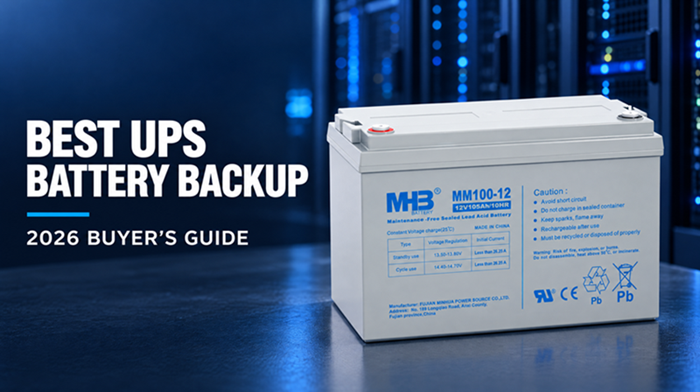
Battery systems are a critical component of the UPS system because they provide immediate backup power when the normal electrical supply is interrupted.
Depending on the facility design, larger battery energy storage systems can also support broader energy management functions.
These may include:
-
Backup power
-
Peak demand management
-
Load shifting
-
Renewable energy integration
-
Grid support
-
Power resilience
-
Emergency power availability
As data center electricity demand increases, reliable battery systems become increasingly important.
Battery Energy Storage for Data Centers
Battery energy storage systems, commonly known as BESS, store electrical energy and release it when required.
Unlike a conventional generator, a battery system can respond very quickly to a power interruption or changing load conditions.
For data center applications, battery storage can be considered at several levels.
1. UPS Battery Backup
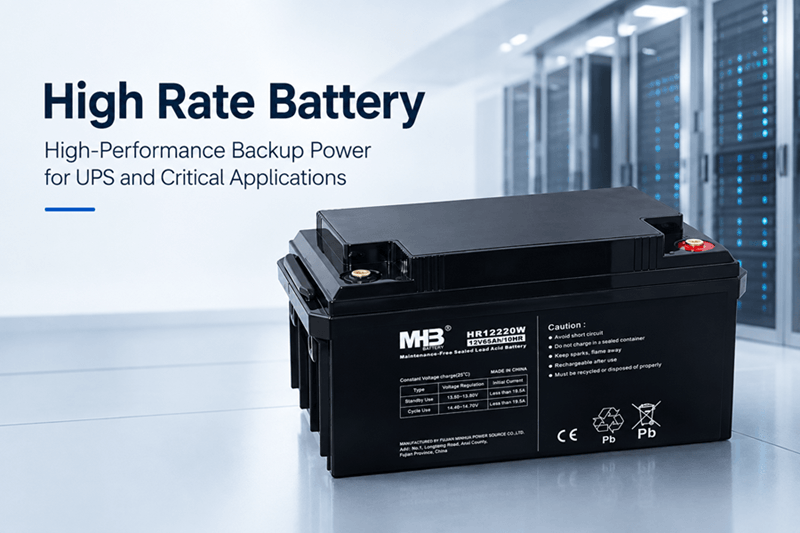
UPS batteries are primarily designed to provide immediate backup power to critical loads.
When the utility supply fails, the UPS battery system can provide power while the facility transitions to another power source or until the load is safely shut down.
This makes UPS batteries particularly important for:
-
Server rooms
-
Data centers
-
Network facilities
-
Telecommunications infrastructure
-
Industrial control systems
-
Critical facilities
2. Energy Storage Systems
A larger battery energy storage system can perform functions beyond traditional UPS backup.
Depending on system design, BESS can be used for:
-
Peak shaving
-
Load shifting
-
Renewable energy storage
-
Grid support
-
Energy cost management
-
Backup power
California has identified battery storage as an important technology for maintaining grid reliability, particularly during periods of high demand and for storing excess renewable generation.
3. Hybrid Power Architecture
Large facilities may combine several technologies.
For example:
Grid + Solar + BESS + UPS + Generator
This type of architecture can provide multiple layers of power protection.
The UPS system protects critical equipment from instantaneous interruptions, while a larger energy storage system can support longer-duration energy management and backup functions.
UPS Batteries vs. Battery Energy Storage Systems
UPS batteries and BESS are related technologies, but they are not identical.
| Feature | UPS Battery | BESS |
|---|---|---|
| Primary purpose | Backup power | Energy storage and power management |
| Typical application | Data centers and critical loads | Grid, commercial and industrial facilities |
| Response | Very fast | Very fast |
| Main priority | Power continuity | Energy management and resilience |
| Typical battery technologies | VRLA, AGM, lithium-ion | Lithium-ion and other technologies |
| Application scale | Equipment / facility level | Facility / grid level |
For a data center, the right solution depends on the required backup duration, load profile, redundancy requirements, operating environment, maintenance strategy, and total cost of ownership.
Choosing the Right Industrial Battery for a Data Center
Selecting a battery for a data center requires more than simply choosing the highest capacity.
Important factors include:
Battery Capacity
Battery capacity must match the required load and backup duration.
A system supporting a high-power data center for several minutes will have different requirements from a system designed for extended backup.
Battery Life
Data center operators generally require predictable battery performance over many years.
Battery selection should therefore consider:
-
Design life
-
Cycle requirements
-
Float life
-
Operating temperature
-
Maintenance requirements
-
Expected replacement intervals
Reliability
Battery failure can compromise the reliability of the entire backup power system.
For this reason, battery quality, manufacturing consistency, quality control, and testing are important considerations.
Temperature
Temperature has a significant impact on battery performance and service life.
Data center battery rooms should therefore be designed and maintained according to the battery manufacturer's operating requirements.
Maintenance
The maintenance requirements of a battery system should be considered during the initial selection process.
For large installations, operators may also evaluate monitoring systems, inspection procedures, replacement planning, and lifecycle costs.
Why VRLA Batteries Remain Important for Backup Power
Valve-regulated lead-acid batteries, or VRLA batteries, remain widely used in backup power applications.
VRLA technology includes AGM and Gel battery designs and can provide several advantages for stationary applications.
Depending on the application, VRLA batteries can offer:
-
Proven technology
-
Reliable standby performance
-
Low maintenance requirements
-
Flexible installation
-
Wide range of capacities
-
Competitive total cost
-
Compatibility with many UPS systems
For data center backup applications, the battery must be selected according to the UPS manufacturer's requirements and the facility's actual load profile.
AGM Batteries for UPS Applications
AGM batteries use an absorbent glass mat structure to immobilize the electrolyte.
This design makes AGM batteries suitable for many stationary backup applications.
Common applications include:
-
UPS systems
-
Data centers
-
Telecommunications
-
Security systems
-
Emergency lighting
-
Industrial control systems
AGM batteries can be supplied in a wide range of voltage and capacity configurations, allowing system designers to build battery banks according to the required DC voltage and backup capacity.
Battery Storage and Renewable Energy in California
California's energy transition is creating greater demand for flexible energy storage.
Solar and wind generation are variable resources. Electricity generation does not always occur at the same time as electricity demand.
Battery energy storage can help address this mismatch by storing electricity when it is available and releasing it when demand increases.
California's battery storage capacity has expanded significantly, and the state expects substantially more storage to be required in the coming decades.
For large electricity users, including data centers, this development creates opportunities to combine:
Renewable Energy + Battery Storage + UPS + Grid Power
Such systems can improve energy flexibility while maintaining the reliability required by mission-critical equipment.
The Importance of Battery Backup for Data Center Reliability
A data center cannot rely on a single layer of power protection.
A robust power architecture may use redundant power supplies, UPS systems, battery banks, generators, switchgear, and multiple utility connections.
Battery backup is particularly important because it can respond immediately when the normal power supply is interrupted.
This makes batteries a critical part of the transition between power sources.
For example:
Normal Operation
Grid Power → UPS → IT Load
Utility Failure
Battery → UPS → IT Load
Extended Outage
Generator / Alternative Power Source → UPS → IT Load
This layered approach helps protect critical equipment from interruptions and provides operators with additional time to transition to an alternative power source.
Future Opportunities for Battery Storage Around Lodi
The future of energy infrastructure around Lodi is not limited to conventional power generation.
Recent developments involving the Lodi Energy Center include efficiency upgrades and projects related to grid reliability. The city has also highlighted hydrogen-related energy development, while California continues to expand battery storage capacity.
These developments demonstrate an increasingly diversified energy infrastructure.
As electricity demand from industrial facilities and digital infrastructure grows, battery storage may play an increasingly important role in supporting:
-
Grid reliability
-
Renewable energy integration
-
Peak demand management
-
Data center backup power
-
Industrial power continuity
-
Distributed energy resources
For battery manufacturers and system integrators, this creates opportunities to provide reliable energy storage technologies for a wide range of applications.
MHB Battery Solutions for Data Centers and Industrial Applications
MHB Battery focuses on industrial battery solutions for applications where reliable backup power is essential.
Our product portfolio includes battery solutions for:
-
UPS systems
-
Data centers
-
Telecommunications
-
Industrial backup power
-
Solar energy systems
-
Energy storage applications
-
Emergency power systems
For data center applications, battery selection should be based on the actual electrical load, required backup time, UPS configuration, operating environment, installation requirements, and lifecycle expectations.
MHB can provide industrial battery solutions designed for different backup power requirements and system configurations.
Whether the application involves a conventional UPS battery bank or a larger industrial energy storage system, choosing the appropriate battery technology is essential for achieving reliable long-term performance.
Conclusion
The Lodi power plant battery storage data center project keyword reflects a broader energy trend rather than a single confirmed MHB project.
Lodi Energy Center remains an important part of the region's power infrastructure, while recent upgrades and energy initiatives demonstrate the continued evolution of California's power system. At the same time, California is rapidly expanding battery energy storage to improve grid reliability and integrate renewable energy.
For data centers and other mission-critical facilities, batteries will continue to play an important role in maintaining power continuity.
UPS batteries, VRLA batteries, AGM batteries, and larger battery energy storage systems can each serve different functions within a modern power architecture.
As data center electricity demand continues to grow, reliable battery technology will remain an important part of the infrastructure supporting the digital economy.
MHB Battery provides industrial battery solutions for UPS, data center, telecommunications, and other backup power applications, helping customers build reliable battery systems for critical power requirements.